

What do the place names Piddington, Portsmouth and Dovedale have in common? They are all English and evoke associations with traditional, picturesque scenes: Portsmouth with its golden beaches and lively nightlife, Piddington as an example of a traditional small village, and Dovedale, a national park in the Peak District, with magnificent, unspoilt nature. But none of these places is what it was only a few years ago. They are now all in the process of changing beyond recognition.
The story of the small village of Piddington began earlier this summer, when it suddenly made the news. The village, which has just over 300 inhabitants, is a peaceful little place in Oxfordshire, but when it became known that the British authorities were planning to house 1,200 illegal migrants there, there was an uproar. The residents held a meeting at which 96 per cent agreed that a vote should be held to determine whether they should remain part of the United Kingdom – they simply want to secede from the country because they fear for their own future and that of their children when more than a thousand migrants, mostly men, are to be housed right next to the park where the children play and people walk their dogs.
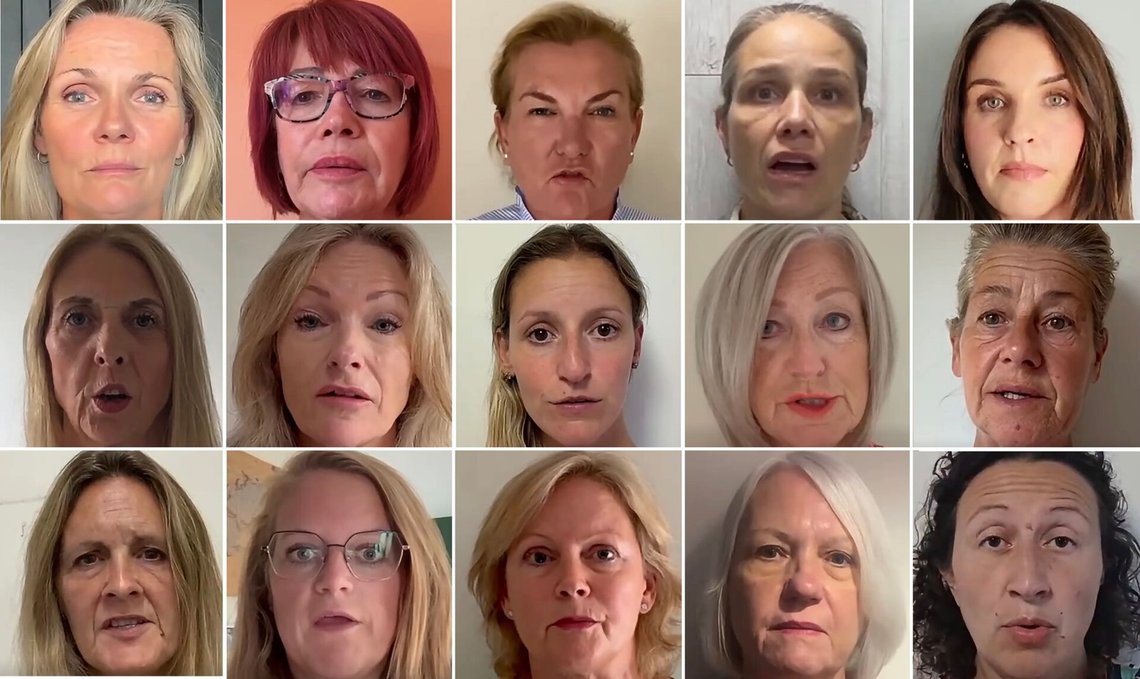
It has subsequently emerged that the authorities are planning for the former military base, where the migrants are to be housed, to accommodate as many as 3,500 people. Piddington remains the same peaceful place for now, but the residents fear for the future. They know what awaits them if the village is invaded. For anyone wondering, the residents of Piddington are perfectly ordinary people, and neither xenophobes nor fascists. This video shows the sincere concerns of the women of the village, as they appeal to the women in Parliament:
They are afraid, with good reason. One need only look to Dovedale, a beautiful national park in the Peak District, to see what can happen when an entirely different population group, with an entirely different culture, is imported into an area that has never before experienced ‘diversity’. In Dovedale, widespread cannabis use and littering with disposable barbecues and other rubbish, as well as filthy toilets, have become a common sight. It is the result of Muslim and Asian families beginning to visit the area, often in large groups, encouraged and facilitated by the organisation Peak District Mosaic, the news site Visegrad24 reports. According to its website, this organisation seeks to invite ‘new audiences’ to the area and ‘create and nurture engagement’. But according to Manchester Evening News, Dovedale has now become a ‘no-go zone’, a place that local people prefer to avoid.
Portsmouth – the people rise up
A third example of a previously well-functioning, safe city that has had a taste of enrichment through diversity is Portsmouth – a popular holiday destination, with golden beaches for bathers during the day and packed bars and nightclubs at night. But the relative idyll has now been shattered.
A few days ago, the first boat carrying illegal migrants arrived in the city, all the way from Normandy. It is a longer journey than the usual one to the Kent coast. ‘This crisis is spreading across our southern border into other counties, and for the first time illegal migrants have landed in Portsmouth,’ said Suella Braverman, a former Tory minister and now an MP for Reform UK.
‘It means they have become more ambitious, they have become bolder, and they have become better at reaching the United Kingdom. Far from stopping the boats, and from stopping the migrants, the government is instead losing the battle.’
In Portsmouth, a 14-year-old boy was recently raped by an Iraqi man ‘of no fixed abode’. In my youth, Portsmouth was a popular place to go on a language-study trip – now this place, too, is being destroyed. The residents themselves are far from apathetic. They have had enough. As the boat carrying the illegal migrants was preparing to dock, hundreds took to the streets to block the migrants’ onward transport. They covered their faces with balaclavas because they feared being arrested afterwards. The protest was peaceful, but the demonstrators were serious. They no longer trust the authorities to ensure their safety – they are taking matters into their own hands. It is a warning sign that, among others, Professor David Betz has spoken about extensively. At that point, we are approaching civil war-like conditions, and the social fabric will disintegrate.
Higher taxes for a growing state
‘If you want to destroy a country – make the taxes so high that the rich people leave, and the welfare system is so generous that immigrants want to flock here,’ says William Nutting, an analyst at the financial advisory firm Nutstuff. The United Kingdom is well on its way to doing precisely this. With Andy Burnham at the helm, it does not look as though the economy will find its feet; on the contrary, there will be more of the same: higher taxes and ever-increasing expenditure on social benefits. The rich have already been fleeced, so now it is the middle class’s turn.
Some are leaving for the small island between Scotland and Ireland, the Isle of Man, incidentally the island that inspired Sodor in the Thomas the Tank Engine series. Young people who are neither millionaires nor billionaires, but who cannot find work, may go to the United States or Australia. Many of the billionaires have already left.
The Sunday Times Rich List shows that the United Kingdom now has 157 billionaires, down from 177 in 2022. Last year saw the largest decline in the list’s history, with nine fewer billionaires in a single year.
German conditions
Not everyone can, or wants to, leave their country. Fortunately, one might say. Scottish newspapers are now warning of ‘German conditions’ – the elites are afraid that Scots, and other Britons, will take inspiration from what happened in Saxony-Anhalt, where the AfD made spectacular electoral gains a few days ago. The aim is to paint the devil on the wall before the narrative completely unravels – or is it too late?
What is sensational about the AfD’s triumph is not its politics (which, incidentally, differs considerably from Reform’s on many points, and goes somewhat further on remigration and is more pro-Russian than Reform), but the shift in the electorate. Turnout was enormous, at fully 77.8 per cent, up from 60.2 per cent in 2021. When voters who otherwise cannot be bothered to vote flock to the polling stations, something important is afoot. Whereas modern Western politics is built on apathy – the parties are so similar that there is no point in voting for any of them – the politics whose contours we are now beginning to see represents a genuine alternative to the status quo.
The United Kingdom is drowning in debt, welfare dependency, uncontrolled immigration, exorbitant energy prices and a state apparatus that spends ever more money while performing its duties increasingly poorly. Repairing it will require discipline and competence. As in Germany, the United Kingdom still has months and years ahead of it in which consensus politics will be allowed to continue its destruction of the societies it is actually supposed to protect. But we are at a crossroads, and there is a willingness to fight here in the island kingdom, just as there is in Germany. We can only hope that whatever comes next, whether through Reform UK, a reformed and modernised Tory Party under Kemi Badenoch, or an alliance, is capable of reversing and revitalising what has already been destroyed.


