



Winter is approaching with record-low water levels in the hydroelectric reservoirs in southern Norway. This is not due to low rainfall, but to record-high exports over a long period. Net exports from southern Norway to the continent amount to roughly the same as household consumption, and this continues despite depleted reservoirs.
The news that was leaked the day before the national budget was released was that the Norgespris tariff is to be increased from 40 to 45 øre per kWh. Including VAT, this represents a price increase from 50 øre to 56.25 øre.
In addition, the electricity levy is rising from 7.13 to 7.32 øre. Including VAT, the price of electricity, including the Norgespris, from 58.91 øre to 65.4 øre. With an average consumption of 15,700 kWh per household, the average electricity bill will increase by just over 1,000 kroner a year.
On top of this, the grid charge is to be increased by 5–7 per cent.
The revenue from households’ increased electricity costs goes mainly to the State, which is responsible for energy policy; to Statkraft, which produces half of Norway’s electricity; and to Statnett, which is responsible for regional distribution, including exports and imports.
Record-low reservoir levels
These same three bodies are thus responsible for the record-low reservoir levels in Norwegian hydroelectric reservoirs for the 13th consecutive week.
The reservoir levels in southern Norway’s hydroelectric reservoirs stood at 34.8 TWh in week 41, compared with the normal level of 48.6 TWh. The difference of 13.8 TWh corresponds to almost half the annual consumption of households in southern Norway, which stood at 29 TWh in 2025.
The following figure shows the status of reservoir levels in southern Norway as at week 41:
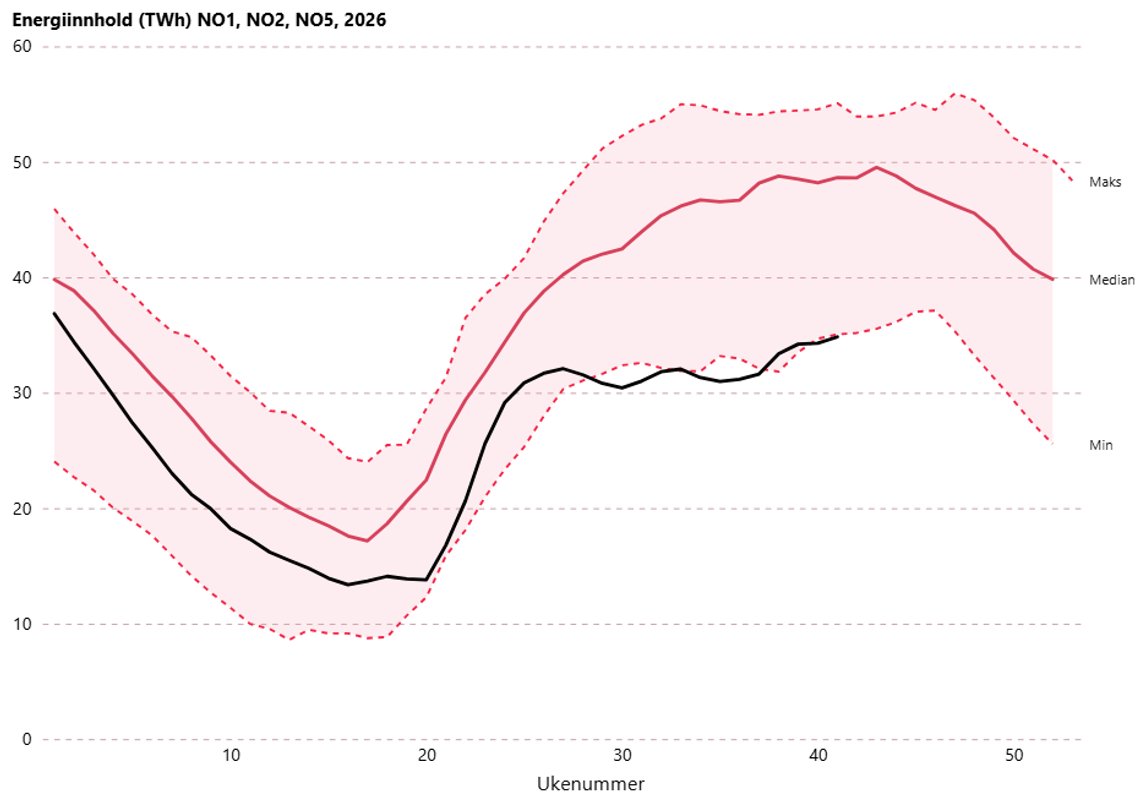
Reservoir levels in southern Norway as at week 41. The red line shows the median fill level. The solid black line shows this year’s fill level. Source. NVE
Following record-high net exports
In 2025, net exports from Southern Norway to the Continent set a new record at 26 TWh. Never before has Norway exported so much electricity. The result is record-low levels in the hydro reservoirs, despite a rainy summer, particularly in Western Norway.
The following figure shows annual net exports from power region NO2 to the Continent (Germany, Denmark, the Netherlands and the UK):
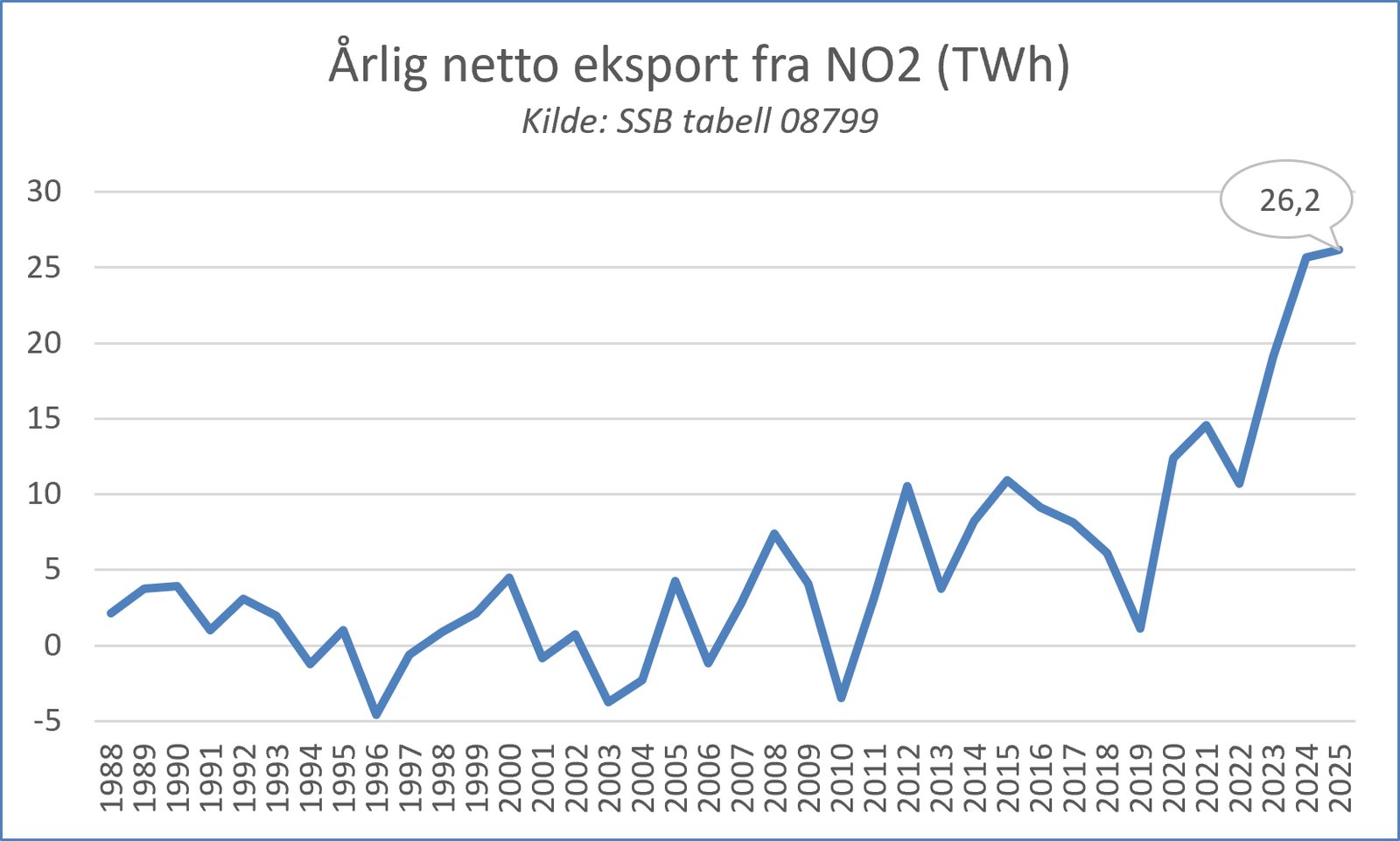
Net exports to the Continent have continued this year, albeit at a slightly lower rate than last year. As of August, net exports from NO2 to Germany, England, Denmark and the Netherlands stood at 6.1 TWh, compared with 17 TWh in the same period last year.
Driving up the market price
In the market, the electricity price in Southern Norway has reached 1.5 kroner per kWh, whilst it remains at the historically normal level of 26 øre in Northern Norway. This is affecting the business sector. Several companies have reported insolvency proceedings during the autumn.
The following figure shows the average annual price of electricity in Eastern Norway (region NO1), which is connected to Western Norway (NO5) and Southern Norway (NO2).
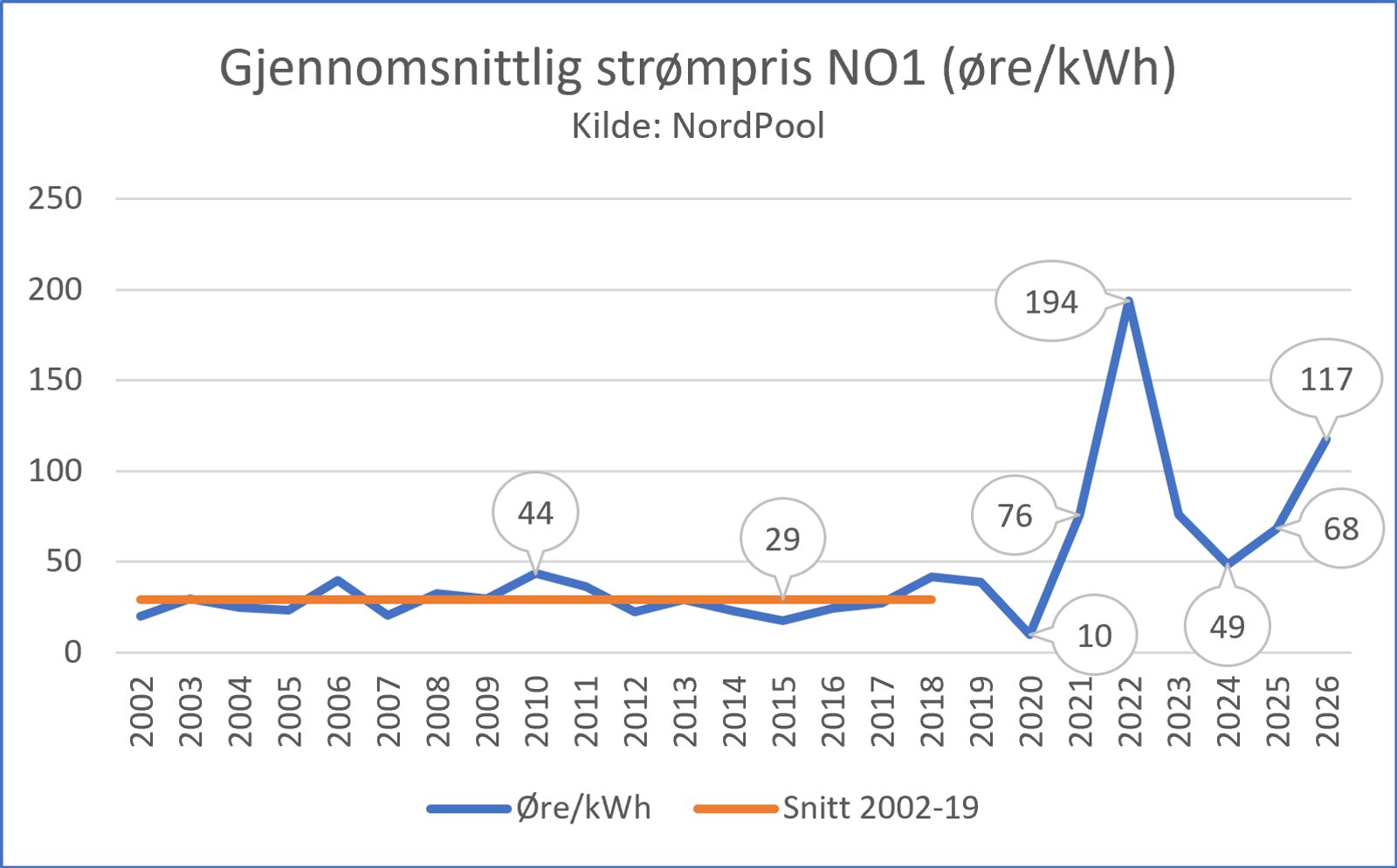
Annual average prices in NO1. The average prior to the cables to Germany and England is marked at 29 øre per kWh. Source: Nord Pool
As of mid-October, the average market price in Eastern Norway is 117 øre/kWh. The low reservoir levels in Southern Norway, which have led to electricity prices exceeding 1.5 kroner/kWh, are likely to push this average up towards the end of the year.
Contrary to the assumptions
The licence application for the cables to Germany and England states in black and white that Statnett regards private companies as competitors. In the licence application, Statnett argued that if the cables were not built, electricity prices would still be high due to increased domestic demand. This issue was never debated in the Storting or in any other official forum in Norway.
The licence application further stated, as its first and most important point, that German nuclear power and British coal-fired power were to ensure the security of supply for the Norwegian-Swedish power system in years with low hydrological flow. Today, this power generation has been phased out. Consequently, the conditions for the cables to Germany and England, as described in the licence application, no longer apply.


