



The Nobel Peace Prize is one of the world’s most prestigious awards. It is intended to honour individuals and organisations that make a significant contribution to peace, reconciliation and disarmament. However, several of the awards over the years have raised an uncomfortable question: has the Peace Prize become a political tool rather than a recognition of concrete achievements for peace?
When political stances and symbolic gestures appear to carry more weight than actual achievements, the Nobel Committee risks undermining the prize’s credibility. Barack Obama was awarded the Peace Prize in 2009, less than eight months after becoming President of the United States. The Committee cited his work in the fields of international diplomacy, cooperation and a world without nuclear weapons. However, at that time, he had few concrete achievements in the field of peace to show for himself. The prize was therefore perceived by many as a reward for hope and expectations rather than for what he had actually achieved. Should the Peace Prize reward what people have done, or what the Nobel Committee hopes they will one day do?
The award to Yasser Arafat in 1994 was also highly controversial. He shared the prize with Israel’s Prime Minister Yitzhak Rabin and Foreign Minister Shimon Peres for their efforts towards peace in the Middle East through the Oslo Process. Arafat’s past and his role in the Palestinian conflict meant that the award faced strong criticism. For many, this became an example of how difficult it is to distinguish between rewarding genuine peace work and sending a political signal.
In 2025, the Peace Prize was awarded to Venezuela’s opposition leader María Corina Machado for her work in favour of democratic rights and a peaceful transition from dictatorship to democracy. Her struggle for democracy is an important political issue. But here too, we should dare to discuss what the criteria for the Peace Prize should be: the struggle for a goal, or documented results that actually bring people closer to peace?
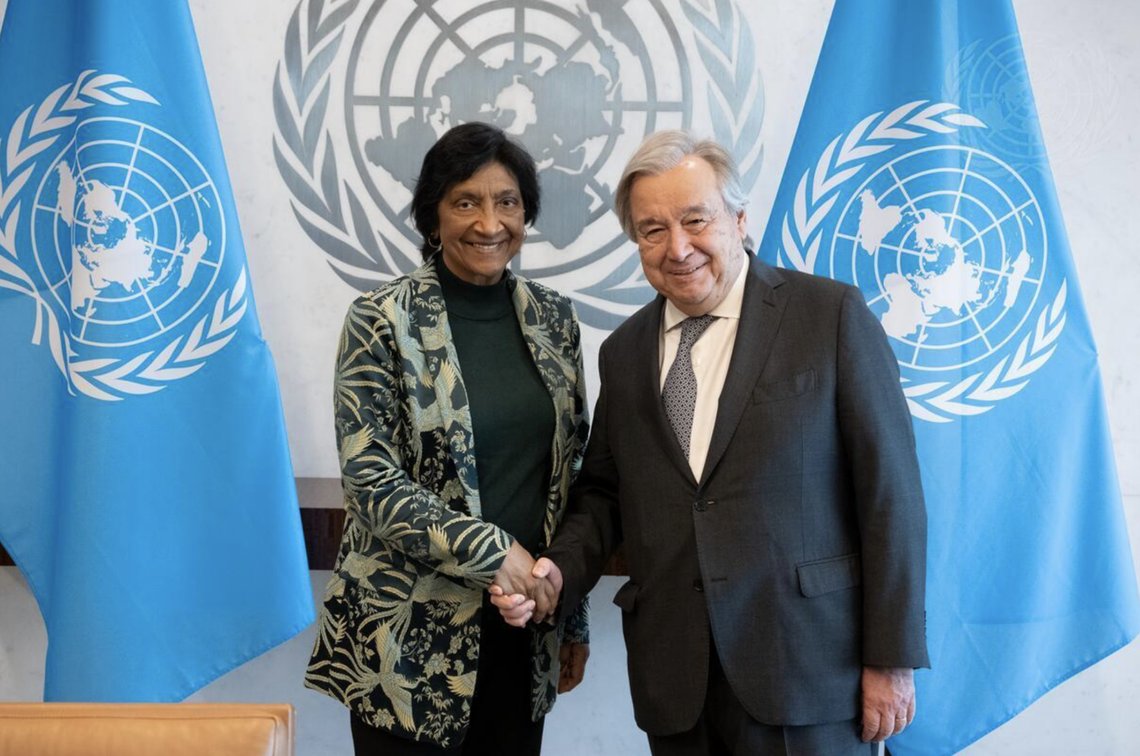
In 2026, the Nobel Peace Prize was awarded to Navi Pillay, former UN High Commissioner for Human Rights. But it is impossible to discuss this award without addressing her role in the Gaza conflict. As head of the UN Commission of Inquiry, she was behind the conclusion that Israel had committed genocide in Gaza. This is one of the most serious accusations that can be levelled against a state.
It is important to distinguish between the commission’s conclusion and a legally binding judgement. The International Court of Justice has not yet handed down a final judgement in the genocide case against Israel. Nevertheless, Pillay has publicly endorsed the commission’s categorical conclusion. Israel rejects the accusation.
We must therefore also dare to ask the question: Has the Nobel Committee assessed her work independently of the political conflict, or have her harsh accusations against Israel made her a particularly attractive candidate for political circles on the left? It is legitimate to ask whether such political sympathies have also influenced how the award was received and assessed. When the Peace Prize is awarded to a person who stands behind such a serious and controversial accusation against Israel, the Nobel Committee must face questions as to whether the prize rewards independent peace work, or whether it simultaneously sends a political signal.
A Peace Prize must not become a reward for adopting the views that are most to the liking of certain political circles. If the Nobel Committee wishes to preserve the prize’s credibility, it must demonstrate that the same principles apply regardless of which state or political side is accused.
A peace prize should, first and foremost, be about peace. It should recognise documented contributions to reconciliation, disarmament, dialogue and the reduction of war and violence. It should not primarily be a symbol of what the Nobel Committee wants the world to think.
This does not mean that all laureates must have brought about complete peace before they can receive the prize. Peace work is often a long-term endeavour, and some conflicts cannot be resolved in the short term. But that is precisely why it is important that the Committee clearly justifies its choices and applies the principles consistently.
The Nobel Peace Prize is not intended to be a prize for the right or the left. Nor should it be a reward for supporting one side or the other in a conflict. It should be a recognition of work that brings the world closer to peace.
If the Nobel Committee wishes to preserve the prize’s international prestige, it must set strict requirements regarding documentation, consistency and independence. It must also be prepared to have its own decisions scrutinised and criticised. For what is the value of the world’s most prestigious peace prize if an increasing number of people perceive it as a political tool rather than a recognition of peace work?
A peace prize that loses its credibility also loses some of its power.


