



The whole of Britain is being hit by a wave of violence and crime. Outside central London, Middlesbrough is the worst-affected city on English soil. Nine people have been killed in one week.
The city, which lies a little south of Newcastle in north-east England, is being hit by war-like conditions between criminal gangs fighting one another, and the police. Innocent civilians end up in the line of fire, without this appearing to trouble the gangs.
England in particular has been badly affected by criminal migrants in recent years, since the country’s authorities show no interest in stopping the flood of illegal migrants crossing the Channel in small boats.
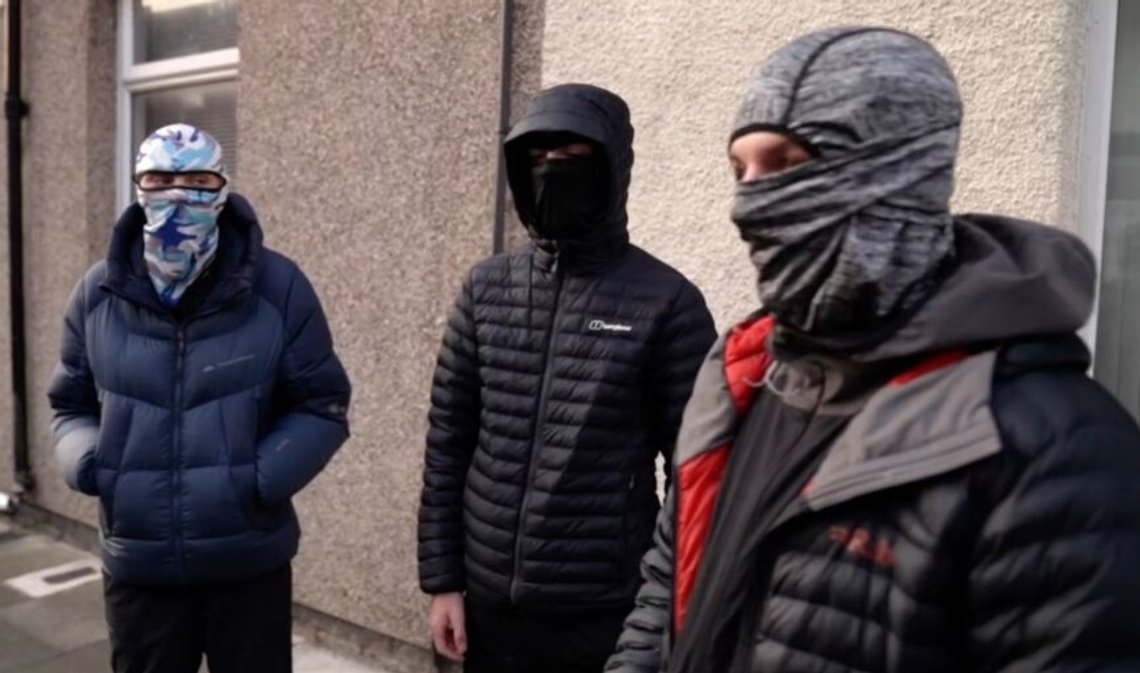
But it is not immigrants who are behind the escalating violence in Middlesbrough. As the pictures show, these are criminal gangs consisting mainly of young, white British gangsters. In the past, this category of criminals would often have been described as part of the working class, but today the situation is far worse.
Around 31.3 per cent of all households in Teesside are dependent on Universal Credit (social security benefits). In Middlesbrough in particular, the level of dependence on social benefits is among the highest in the country, owing to severe poverty, although the exact figure depends on the type of benefit in question.
Many of the young criminals come from this group, which is by no means a working class, but represents the growing proportion of English people who have simply fallen outside society and live at the taxpayers’ expense. A significant proportion of this group regularly commits serious crime.
This is not unique to England; the same thing is happening across Europe – Norway included. For children growing up in such an environment, which to a large extent consists of broken families, where the parents often struggle with their own substance-abuse problems and mental instability as well, it is not difficult to understand that the hope of a good future is a distant prospect for many of these young people, without this in any way whatsoever excusing their behaviour.
The decay is total. When a kind of memorial gathering was to be held for Michael Cahill (23), one of those who died following the police pursuit last Saturday, Cahill’s mother helped create chaos.
In a social-media post, she urged people with “bikes, jeeps, cars [and] quad bikes” to gather to “give him the send-off he deserves”, according to The Times.
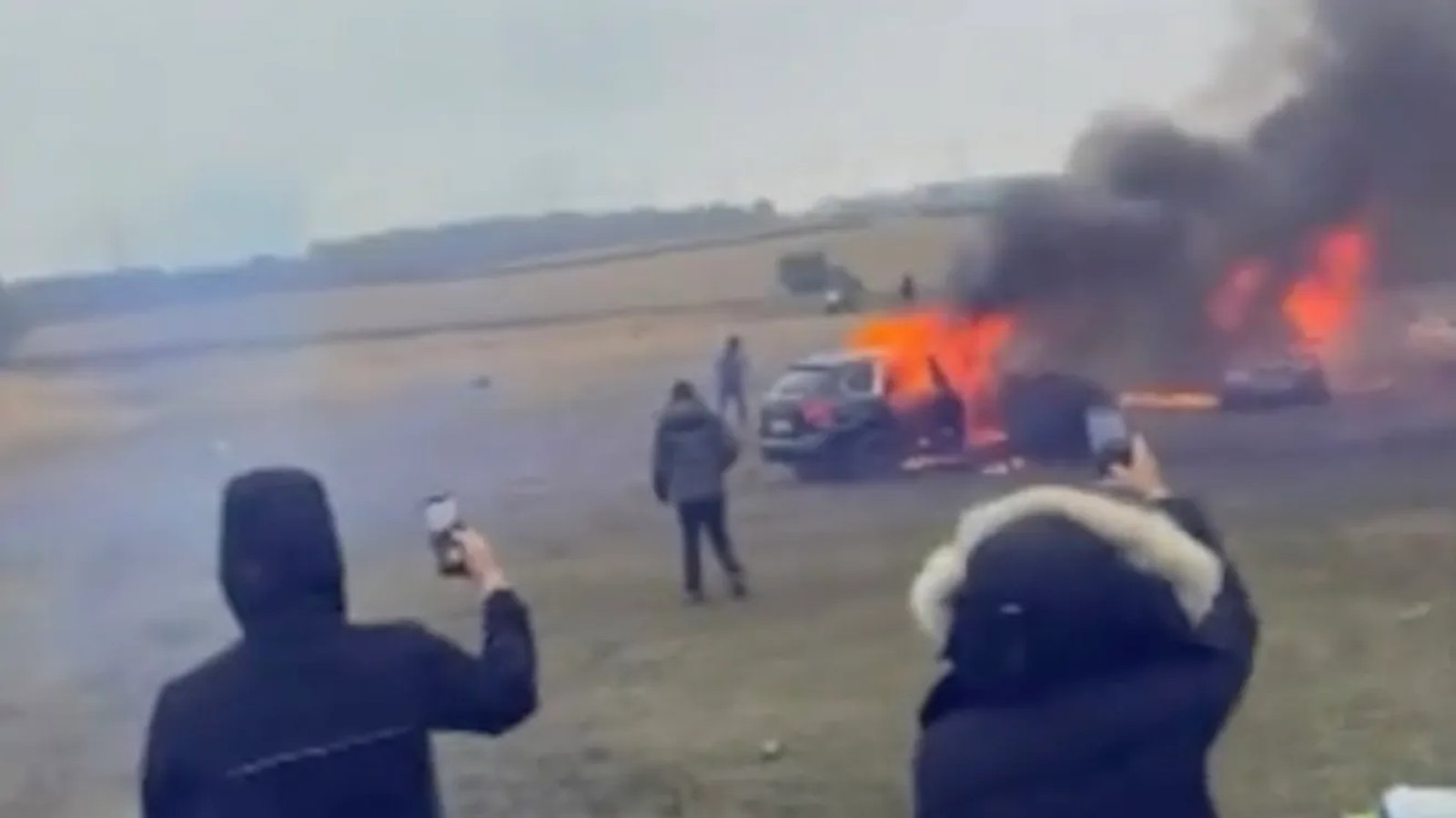
Police drones monitoring the memorial gathering were attacked with rockets. Cars were deliberately driven into one another, doused in petrol and set on fire in a field in Co Durham. The lads in hoodies filmed it on their mobile phones; they could not have cared less.
On Friday morning, local residents had to fill bin bags with all the rubbish the gangsters had left behind. A woman who lives nearby said:
“It was absolutely terrifying. It feels lawless. It’s as though law and order have broken down.”
The thugs are even said to have terrified some horses in the area by driving around them, solely to torment the innocent animals. Neighbours had asked the drivers to stop racing around the horses, but such appeals were ignored.
“Then they started crashing into each other, and I just thought: How stupid can you actually be? That’s how their friend died.”
Just as in large parts of Western Europe, the police appear to be entirely without effective means of action, paralysed by social workers and social justice warriors with the mindset that these gangsters are actually to be pitied. Most politicians follow the same path, but not all. The former mayor of Middlesbrough, Tory politician Andy Preston, says that criminals can no longer be confronted in Middlesbrough. They are “untouchable”.
That is why seven-year-old Valentina Foster and her aunt Natalie McDonald (34) died when the house they were in was set on fire. Police are investigating the fatal fire as murder. We do not know very much about the aunt, but seven-year-old Valentina was hardly a hardened criminal or a member of any gang.
The little children are there, however, and they appear to be guaranteed a path into the criminal milieu. A mother of three compared the areas of Grangetown, South Bank and Pallister Park to the Bronx, and said:
“There are children aged five or six standing out there in the street telling you to fuck off if you get in their way. They don’t care, they have no rules or guidance, and the problem is that once they’re here, they don’t get away from here. So they grow up and become criminals.
The gangsters can do whatever they want to each other, but in addition innocent people are being killed who have nothing to do with their drug dealing and harassment.”
Two years ago, the BBC interviewed some of the young drug dealers in Middlesbrough. They followed a simple rule that says it all:
“If you don’t stab them, they’ll stab you.”
In their eyes, it is about being the first to reach for the knife, in other words.
It looks hopeless. The police are bound hand and foot by politicians who spend their lives in safe areas, and completely ignore the fact that large sections of so-called ordinary people live in constant fear, unless they happen to be among the criminals who actually create that fear.
Criminal immigrants are accommodated in nice hotels costing 1,400 kroner a night. Ordinary, law-abiding Britons have to manage as best they can. Nor can they simply move away from the worst areas, since house prices in safe neighbourhoods have exploded.
We see the same thing here at home; not everyone can simply move to the countryside if they still want to support themselves, their family and the greediest state in the world.
It is not so difficult to understand the dramatic falls in birth rates in Europe. Who really wants to bring children into the world in such a situation, particularly since one must expect financial burdens, unless one happens to be a Somali “single mother” with eight children and a million-kroner income from the State?
But as some of us learnt in the Armed Forces: It is in the darkest moments that one has the greatest need for courage. It is when everything looks hopeless that one needs hope most of all.
In the meantime, we can “console ourselves” with the fact that people living in Middlesbrough have it worse than we do, after all.


