

Day 6: A Tour of Western Ukraine
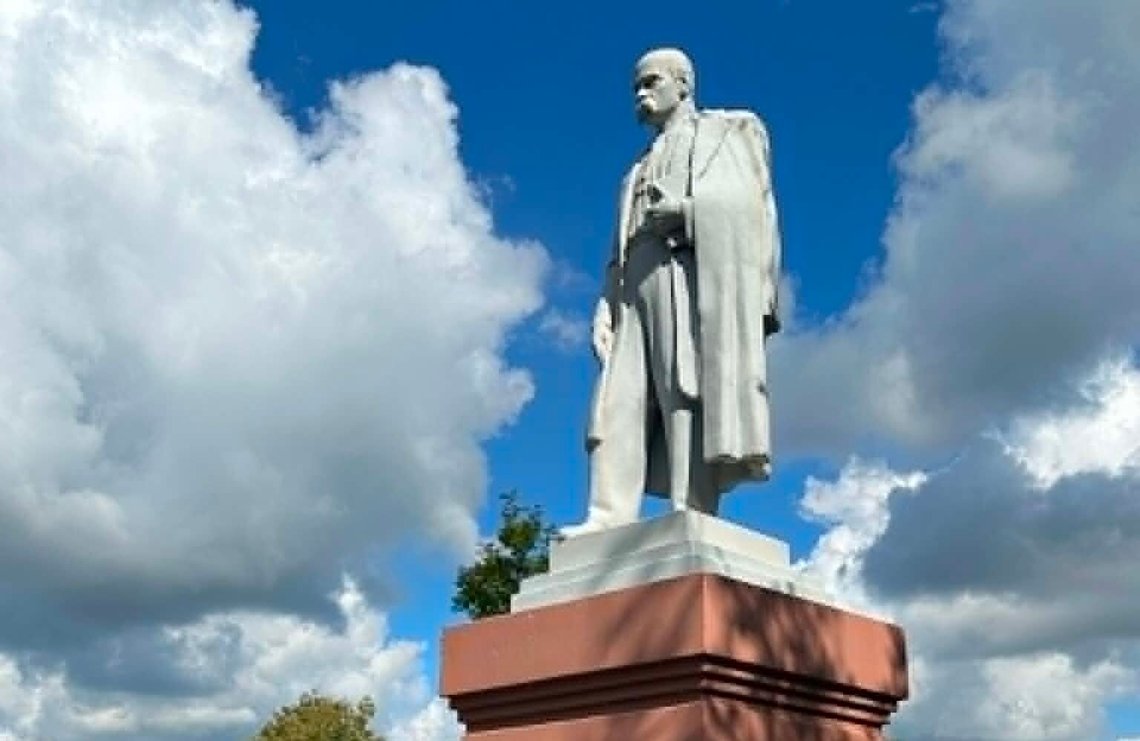
5 August. I have begun collecting selfies of myself with Taras Shevchenko, Ukraine’s great Romantic national poet.
His poems must be exceptionally good, for every Ukrainian town, even the small ones, has a statue of him, in the town hall square or some other prominent public space.
Shevchenko was born in 1814 as a serf, quite simply a peasant bondsman, the property of the landowner, in Moryntsi, roughly at Ukraine’s geographical centre.
He was orphaned at an early age, but his gifts as both poet and painter led friends and benefactors to buy his freedom and secure him a place at the Academy of Arts in St Petersburg.
From 1840 onwards, the poetry began to pour forth, about the Ukrainian land and people, the plight of the serfs and dreams of a dignified future in freedom.
Tsar Nicholas I was not among his admirers and had him exiled in 1847 to a garrison on the eastern steppes, with an explicit ban on all artistic activity.
He continued to write poetry nevertheless, secret dreams of returning home, and after the Tsar’s death he was released, but forbidden to visit Ukraine. There was one brief visit, in 1859, which resulted in another arrest and exile, ruined health and an illness that killed him the day after his 47th birthday.
But by then he had cemented the Ukrainian written language and dreams of independence. Symbolically, therefore, he is welcomed home in every Ukrainian settlement.
With one exception, as far as I have seen: Rohatyn, the small town with a great female figure, Roxelana, the young, spirited priest’s daughter who was captured and sold by Crimean Tatars into the Ottoman harem. Before long she was the favourite of Suleiman the Magnificent and, quite unheard of, indeed scandalous for a former slave woman, his only legal wife.
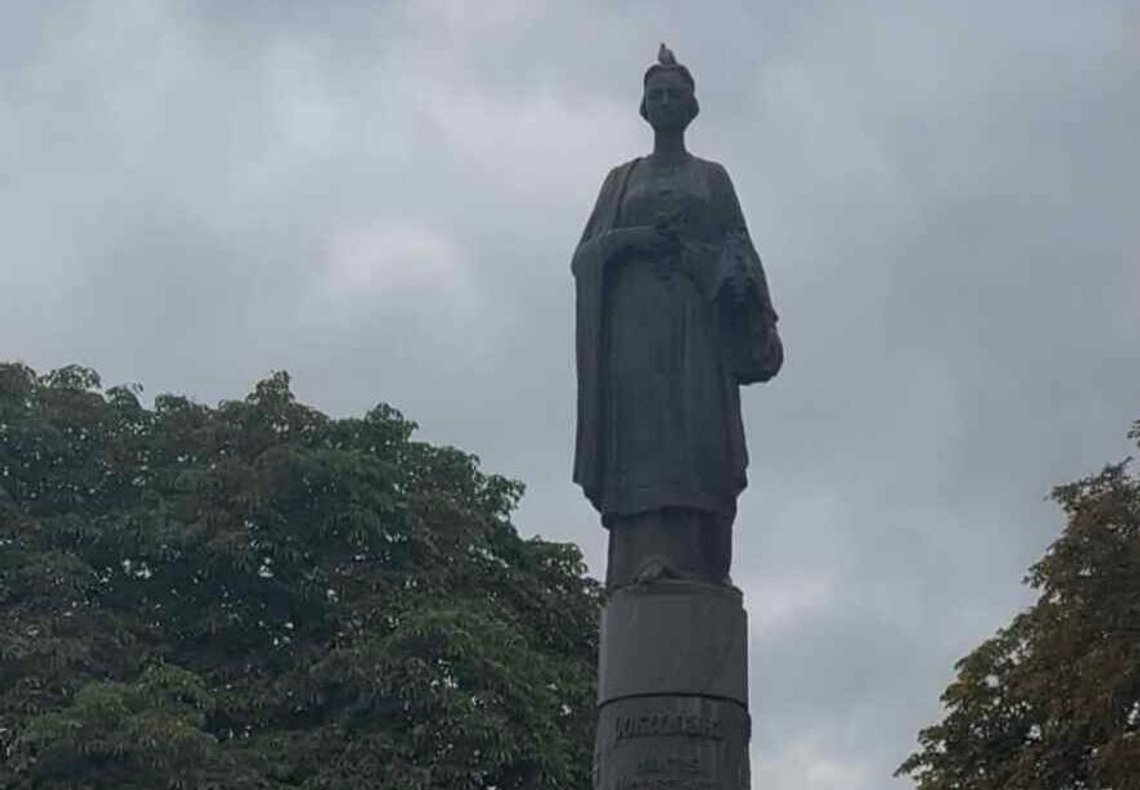 Alexandra Anastasia Lisovska, known as Roxelana and Hürrem (‘The Cheerful One’) Sultan, an Orthodox priest’s daughter who won over Suleiman and the Ottoman Empire. Photo: CB.
It is something to ponder, in relation to the darker-skinned and hairier Arabs who emerged from the desert in the eighth century, and the eastern Turkic peoples who founded the Ottoman Empire. Slavs were popular as slaves, and green-eyed Circassian girls were particularly sought after.
It is also worth remembering all the African slaves who left no descendants, at least not the African men, whom the Arabs castrated, almost every one of them. Contemporary accounts and history have little to say about them.
But the fact is that the Koranic word for ‘African’ is, of course, the same word as that for ‘slave’: Abid. With the stress on -bid. With the stress on the A, it becomes a name, as in Abid Raja, for example, where Abid refers to ‘Allah’s slave’.
Enough of that, for we are now in an area blessedly free of Islam, and the road winds up into the mountains. It actually begins to look a little like Norway (only without Islam, that is), as we pass several fit Ukrainians on roller skis (!) and, before long, a ski jump.
We are in Vorokhta, with a lovely wooden church nearby, on the UNESCO list, and a mountain hotel beside a mountain stream. After an excellent borscht, and of course a photograph with Shevchenko, the road once again turns north-east.
 Chervonogorodsky Falls, a 16-metre cascade, up to 20 metres wide. Photo: CB
We stop in another scenic area, with a 15-metre waterfall (not enough to impress a Norwegian who has seen Vøringsfossen, but still), and here two Ukrainian officers appear, home on leave. One of them, who speaks a little English, knows the entire history of Norwegian football. I have to extricate myself before exposing my ignorance, but not before a photograph has been taken together.
We continue through the same lush valley, which resembles Jurassic Park, and come to the ruins of Chervonohorod Castle, perched on a cliff above the river and offering a good illustration of the area’s eventful history. Built in timber by Lithuanian Ruthenians in the fourteenth century and destroyed by Tatars and Vlachs in the sixteenth, it was rebuilt in stone with towers and battlements around 1600. In 1648 it was captured by the army of the Ukrainian Cossack leader Khmelnytsky during the war against the Polish-Lithuanian Commonwealth, and in 1672 Ottoman forces laid it in ruins.
 Chervonohorod Castle, originally dating from the fourteenth century, but destroyed and rebuilt many times. There is talk of the Polish noble family who built the palace, completed in 1820, returning to rebuild it once again. Photo: Christian Borchsenius
In 1778 it was rebuilt as a palace, with an Italian terrace and garden, by the Polish nobleman Karol Poninski (completed in 1820). But we are talking about Europe’s most troublesome neighbourhood, and the building was badly damaged during the First World War, and even more so during the Second. Under communism, the decay continued, and the penultimate tower collapsed as recently as 2013.
It is striking that the Young Pioneers built a residential camp school right beside the ruined aristocratic residence, yet the communist buildings, erected in peacetime, are in worse condition after only a few decades.
Yes, whether the elite calls itself socialist when standing for election in pursuit of more power and privileges for itself, or seizes power and governs as the communists they are, they create undignified lives for the working class and wretched buildings for the future.
Will Western Europe and America learn the lesson without introducing the idiocy at home as well?
Surely we already have enough with the influx of Africans wanting a share of our sovereign wealth fund and welfare state? Muslims wanting to take over the entire governance of our society? And our own green youths of every age, who want your car, your steak, your holiday journey, and preferably your soul and the inside of your head as well, like the fanatical missionaries they are.
One breathes more easily as a conservative in Western Ukraine.
Previous diary articles:
Day 1: From Warsaw to Lviv
Day 2: Lviv and Olesko
Day 3: Lviv -> Kyiv
Day 4: Kyiv -> Ivano-Frankivsk


