

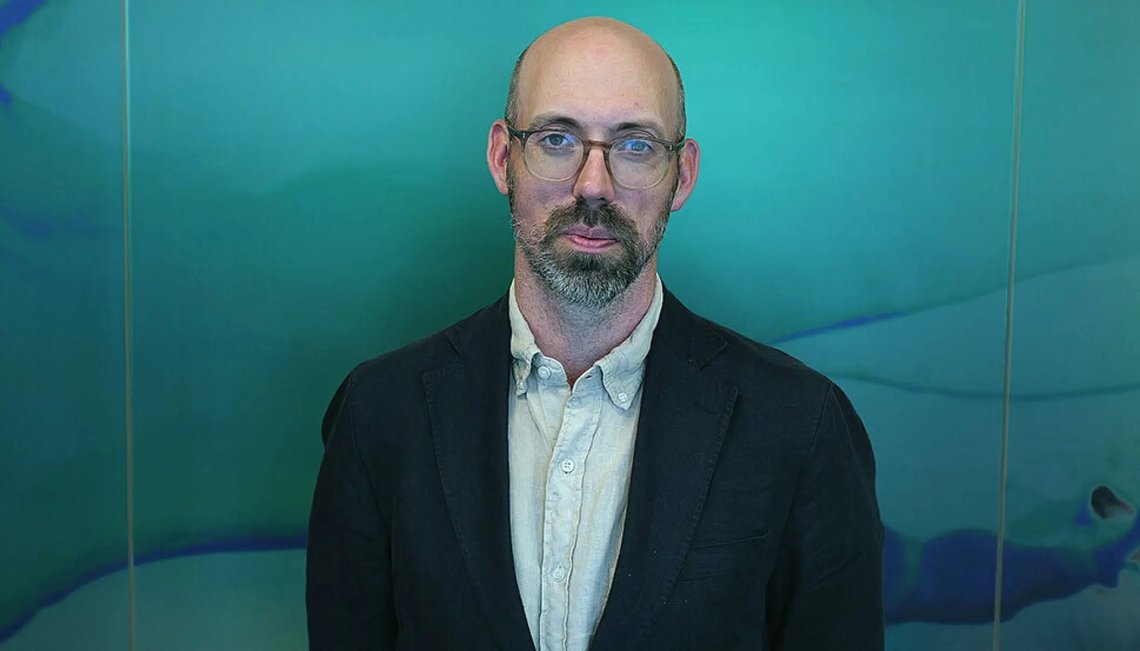


Anders Ravik Jupskås, who leads the Centre for Research on Extremism (C-REX) at the University of Oslo, describes Elon Musk as “right-wing extremist” in connection with the launch of an anthology he has edited on right-wing extremism in Norway.
Jupskås’s statement was given on Wednesday last week in an interview with the newspaper Uniforum, which is published by the University of Oslo, since republished by Universitetsavisa, which is published by NTNU in Trondheim.
The book, which is written by researchers at C-REX, attempts to make extremism fundamentally about something other than violence, for example opposition to foreign-cultural mass immigration:
– The purpose of the book is to show that extremism is a phenomenon that is about a set of ideas, which is not only about carrying out violence or supporting the use of violence. It is also a set of anti-democratic attitudes. One has a notion that some groups do not belong in the nation, it may be ethnic, religious or other minorities. And those who defend these groups are political opponents, and thus enemies of the people. We are concerned with how this us-and-them way of thinking lies underneath, says Jupskås.
Jupskås points to the digital sphere as a problem:
– The entire digital landscape is very unregulated. There I think that the democratic elite in the Western world has been incredibly naive. Now we also see that more and more in Norway, especially the younger ones, get their news via platforms such as Snapchat, TikTok and Instagram.
He highlights especially Elon Musk and alternative media:
They are controlled either by opportunists who want to make money, like Mark Zuckerberg (the man behind Facebook, ed. note) or right-wing extremist capitalists like Elon Musk. In addition to making a lot of money, he uses his social media platform as a radicalisation machine. Europe is in the process of doing something, but hateful messages and violence videos spread incredibly fast. The same applies to the comment sections in alternative media.
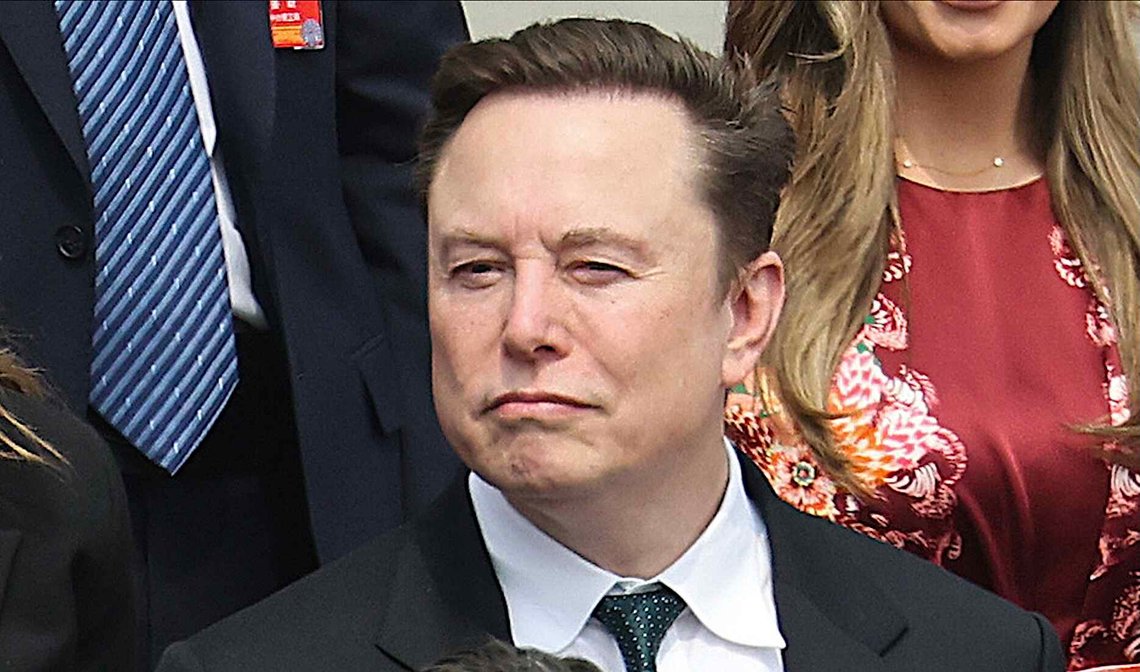 Elon Musk during a welcoming ceremony for Donald Trump during the U.S. President’s visit to Beijing with his delegation on 14 May 2026.
Lately, several members of the Norwegian public sphere have tried to make something far-right stick to the X-, SpaceX- and Tesla owner.
In the newspaper Dagen on 13 June, Espen Ottosen writes:
In the USA, Elon Musk – the world’s richest man, who is now also the world’s first dollar trillionaire – in many posts on X has given support to those behind violent protests in Northern Ireland.
The German broadcaster ZDF, which on 12 June had put forward similar claims, saw itself forced to withdraw them after Musk threatened that he would otherwise sue ZDF.
Ottosen also brings up again the accusation that Musk made a “possible” Nazi salute during Donald Trump’s inauguration as president in January 2025.
In Aftenposten on 20 June, the trade unionist and Labour politician Jonas Bals formulates himself as if there is nothing to doubt about it, when he accuses Norwegian newspapers of “describing a Hitler salute as a ‘controversial gesture’”, to himself without reservation say that “Elon Musk gave the Nazi salute”.
Bals also mentions Northern Ireland, and goes even further than Ottosen:
The world’s richest man, Elon Musk, has cheered on pogroms like those we saw in Belfast last weekend.
There is thus a negative consensus about Musk in the public sphere that encompasses both politics, academia and the media – three elements that help constitute a deep state both in Norway and several other Western countries. Musk is also a thorn in the side of the power elite in the EU and the United Kingdom.
The C-REX director, who crowns this consensus with his statement to Uniforum, is also on the hunt for money:
The Centre for Research on Extremism has existed for ten years. The anthology is also a status update for the centre. In September they are applying for funds to be able to continue.
On Dagsnytt 18 on NRK on 9 February 2016 the then PST director Benedicte Bjørnland said that being “expressed anti-Islam” is enough to be categorised as right-wing extremist by the agency, which Bjørnland said had a “quite broad” embrace in the use of the term.
The word “extremist”, which is derived from Latin, means “outermost” and has thus normally been used about those who find themselves on an outer edge. Bjørnland’s broad embrace thus gave the term a different content.


