

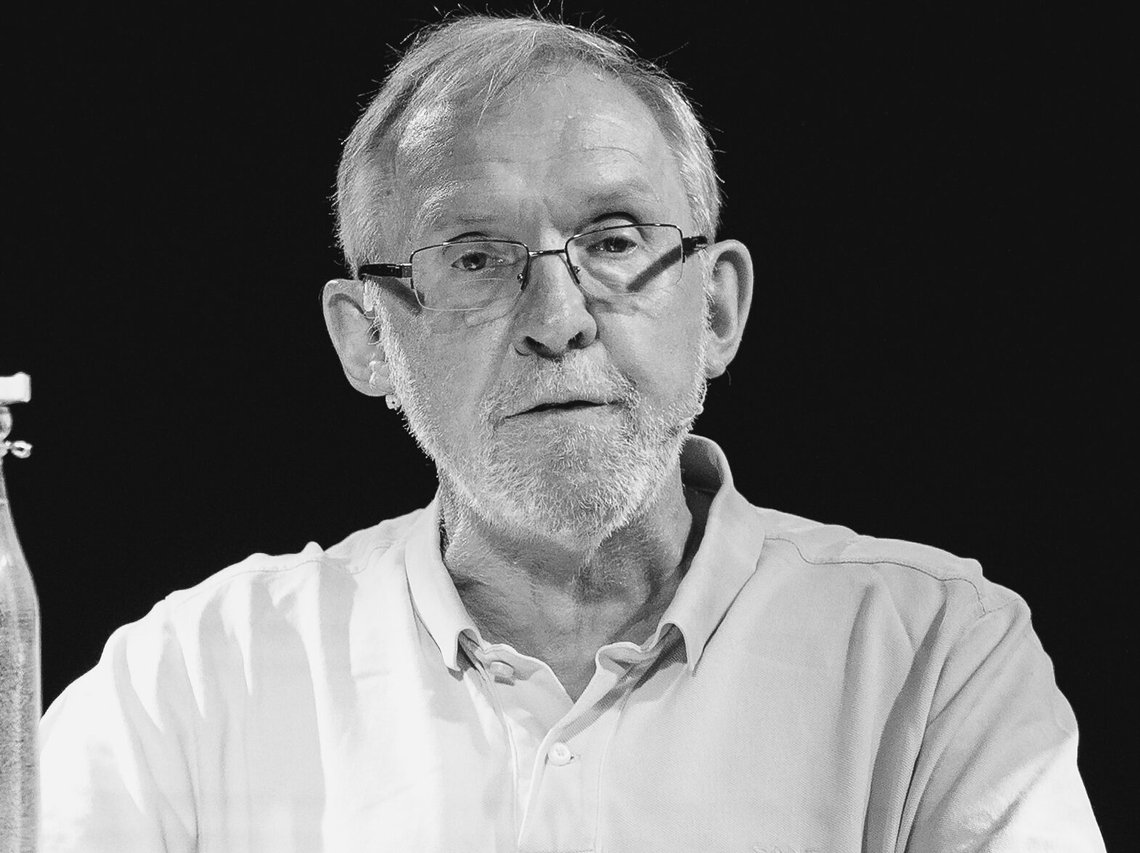


15 years after the 22 July terror, Aftenposten’s long-standing political editor Harald Stanghelle makes a new attempt to glue the right-wing populist wave to Anders Behring Breivik.
It is in a commentary with the title Oppgjør som ikke holdt in his old newspaper on Tuesday that Stanghelle laments what in his view was an insufficient political reckoning with the «ideological baggage» of the 22 July terrorist. The press veteran believes that this has given «resonance» for a wave of hatred.
In the attempt Stanghelle resorts to a couple of dirty tricks that both concern censoring parts of reality – both about the 22 July terrorist himself and about the general political development in Western Europe and North America.
First, he distorts Breivik’s universe of grandiose delusions.
It is paradoxical to think that 15 years ago the 22 July terrorist’s political worldview was so alien that the court’s first court-appointed psychiatric experts used it almost as «proof» that he suffered from pathological delusions.
But it was not at all ABB’s «political worldview», if such a thing exists, that led Torgeir Husby and Synne Sørheim to conclude that the terrorist was psychotic. It was rather his delusions that he stood at the head of an international knightly order named Knights Templar that was fighting a civil war in which he himself played a historically decisive role, and in which he himself had committed mass murder out of love.
Both in the manifesto and in several of the first psychiatric conversations Breivik invoked this grandiose role, in which he titled himself with terms such as «Knight Justiciar». He was still living in that role when he expressed the wish to appear in his self-composed uniform during the trial. None of those who had dealings with the 22 July terrorist shortly after the mass murders doubted that Breivik was completely mad, not even his defence lawyer Geir Lippestad. In conversation with the psychiatrists his mother also acknowledged that he had become completely insane.
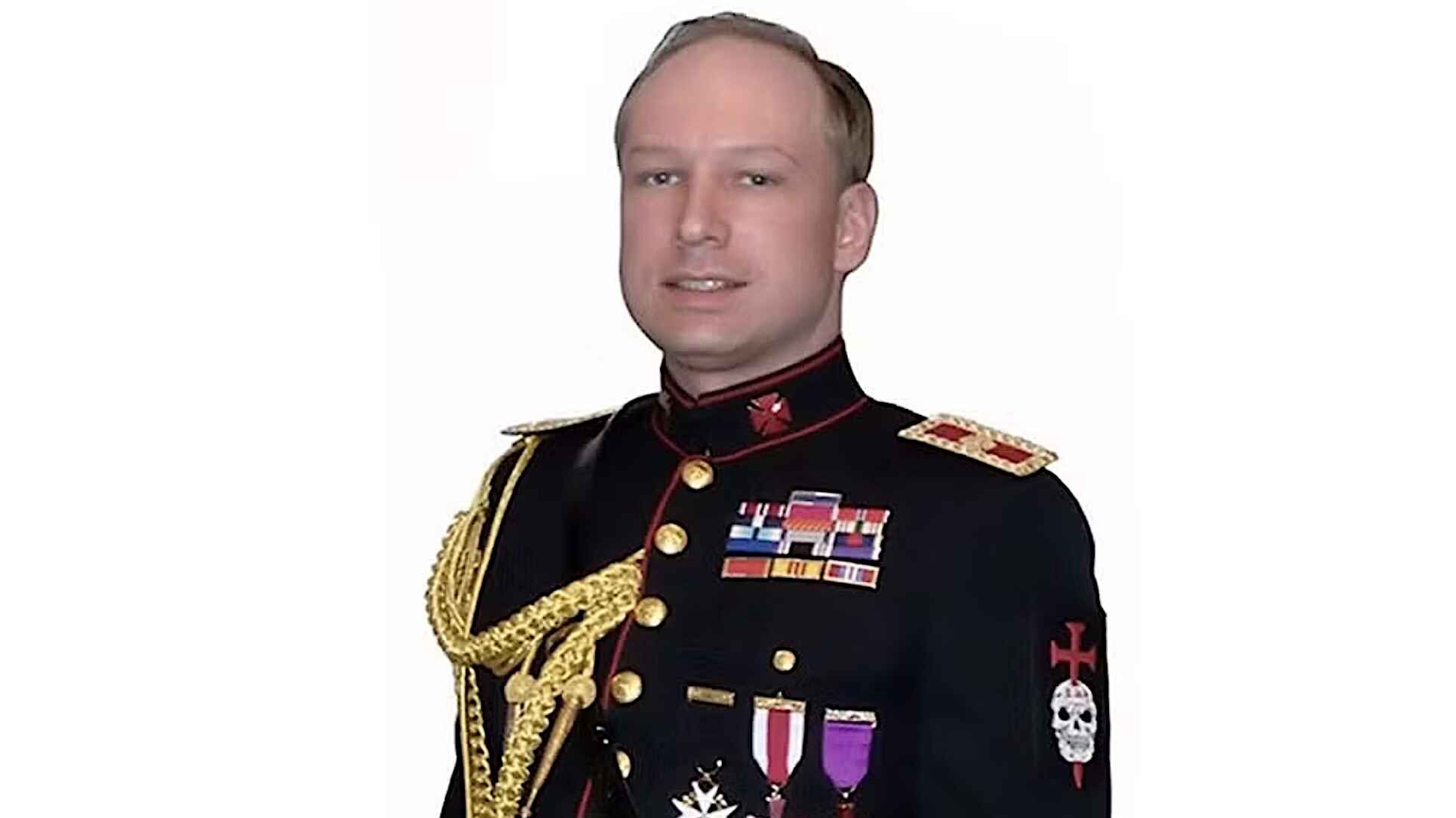
Some signs of this reached the public shortly after the deed. When he had been arrested on Utøya, where he had called the police and presented himself as «commander in the Norwegian resistance movement», he attempted to negotiate with the police – which testified to a total lack of understanding of himself and his own situation. Later one could witness new attempts at negotiation in court.
The public is to believe that it was Breivik’s alleged political thinking that led the psychiatrists to use the word delusions, when in reality it was his self-experienced grandiose role, which among other things led him to compare himself to the Spanish Queen Isabella (1451–1504). Breivik saw himself as a possible future king of Norway, and had already chosen the name «Sigurd the Crusader the Second». Breivik himself tried to talk his way out of all this in court, when he understood that he risked being found not criminally responsible.
Well aware that people’s memory is short, Stanghelle conveniently refrains from reminding of these absolutely central things, instead gluing Breivik to anyone who is angry with the Labour Party. He continues:
Now we know better. Or at least we ought to.
For in 2026 what was called «the darkest corners of the net» is common property. It is also the betrayal narrative about the Labour Party and the hatred against the AUF. What was extreme in 2011 has become the new normal. And more frightening: The acceptance of extreme statements is much higher than a few years ago. Not least this applies to the ideological baggage that led to the mass murder on Utøya.
The intention is clear: to scare those who have the sense that they are losing their country because of mass immigration, multiculturalism and Islamisation into believing that they are carrying a little Breivik in their belly.
The difficulty for Stanghelle is that there are several hundred million people in the West who have realised that they are in the process of losing their country. This is the background for the populist wave both in Western Europe and the USA. It has made Donald Trump President of the USA and Giorgia Meloni Prime Minister of Italy. Next year it has good chances of making Marine Le Pen President of France. And both in Germany and Britain new populist parties top the opinion polls. These are democratic responses to decades of misrule.
There is little doubt that the Labour Party and the AUF, and even survivors from the Utøya terror, have received very ugly harassment that no reasonable people wish upon them. But it is not because there are suddenly many people who have made the mythical «ideological baggage» of the 22 July terrorist their own. It is because they themselves are losers in the globalist revolution and are venting their anger on those who have administered it in Norway. And some of them think that this has been a betrayal.
But their expressions of displeasure are not the political answer. This is coming rather in what both Elon Musk, Tommy Robinson and Victor Davis Hanson have called the counter-revolution. Anders Ravik Jupskås, who leads the Center for Research on Extremism (C-REX) at the University of Oslo, has also begun to call Elon Musk «right-wing extremist».
Precisely that testifies most of all to the fact that both he and the rest of Over-Norway live inside a mental cheese bell that they want to push the whole of Norway into. That is not going to succeed. The success of the Progress Party, which was also attempted to be dragged through the mud after 22 July, testifies to that. The FrP admittedly constitutes a kind of light version of the populist wave in other Western countries, but nevertheless represents the same phenomenon.
What Over-Norway is trying to do is thus to stop history itself, which is not going their way. They will not manage that, no matter how many times they may wave the Breivik ghost.


