

A strange feature of the present day is that there is almost never any debate about the very biggest issues. For example, Norwegian democracy has gradually been dismantled over the course of the last generation, but almost nobody cares.
Another example is that the European Soviet Union, which has destroyed Norwegian sovereignty, is working hard to destroy its own economy as well, and one of the harshest measures it is using is its climate and energy policy. A subtle tool that this malevolent entity uses for this purpose is the ETS (Emissions Trading System), that is, the Union’s system for trading quotas on greenhouse gas emissions.
In short, the plan is to tax CO2 emissions more and more heavily over time, under the utopian – no: clinically delusional – hopes that, as a consequence, the economy will magically transition to ‘zero emissions’ by 2050, without suffering any harm as a result. For remember: Europe currently meets two-thirds of its energy needs with fossil fuels, which inevitably result in CO2 emissions – a decline from four-fifths twenty years ago, achieved at colossal cost. Nor should we forget that all life and all activity require energy.
In a normal world, one would think that such a formidable threat to the prosperity of the vast majority of us would be high on the media’s agenda, but that is simply not the case. Classical logic (modus tollens) would then suggest that the world is not normal. I should have known!
An otherwise excellent publication such as Energy and Climate, which has long kept a close eye on developments in the EU, has written quite a bit about the ETS, but it’s been three weeks since the last article.
NTB last reported on the ETS on 17 July, although on 12 October the agency considered covering a meeting between the EU’s climate and environment ministers on the ETS system in the Council of the European Union. But do you think anything came of that? No, of course not.
Later that same week, there was another meeting at a higher level on the same topic, this time between the EU’s heads of government in the European Council. The crux of the dispute was whether the planned tightening of the ETS rules – which will make absolutely everything more expensive – should be softened slightly.
What could possibly be more politically important than this?
As usual, you can visit Euronews to catch up on the latest developments: It turns out that EU countries are deeply divided on the issue. Italy, Greece, Poland, Hungary, the Czech Republic and Slovakia argue that CO2 taxes are damaging Europe’s competitiveness, whilst the Nordic countries – Finland, Denmark and Sweden – think they’re a brilliant idea, and now, in any case, they’ve invested so much in it that there’s no turning back, and we’re going to ‘decarbonise’ come what may – probably at the cost of our lives.
“Any weakening of the ETS would undermine the predictability on which investment decisions depend and risk slowing the pace of industrial decarbonisation,” reads a letter penned by the three EU countries and seen by Euronews.
The Northern Europeans received a response from the Czech Prime Minister, Andrej Babis:
Babis said EU climate policies are “ideological stuff” that ignore economic realities. He added that carbon allowance prices skyrocketed far past original forecasts, arguing that the system rewards financial gamblers while punishing traditional manufacturing and regular citizens.
Babis and his Italian counterpart Giorgia Meloni recently urged Brussels to provide immediate economic oxygen to struggling European factories.
Yet even Euronews accepts the intellectual premises of climate ideology as the basis for the discussion:
EU countries are using the current geopolitical shock as leverage to recalibrate carbon market rules, depending on their national energy mixes. Fossil-heavy nations are pushing for lower carbon price pressures, while green-forward nations demand steadfast transition timelines.
‘Environmentally friendly’? CO2 is not a poison. It makes up five per cent of the air we all breathe out, and plants cannot grow without CO2. It is therefore impossible to produce food without CO2. In other words, without CO2 , we would all die of starvation. Yet there is somehow a stigma attached to the countries that have not bought into the fallacy that it is a life-threatening gas.
But they are, in fact, defending you and me: the six countries mentioned above – and probably several others besides – will postpone ETS2 – a major expansion of emissions trading to even more sectors, such as the heating of buildings – until 2030, and have persuaded the EU to carry out an impact assessment first. That is something.
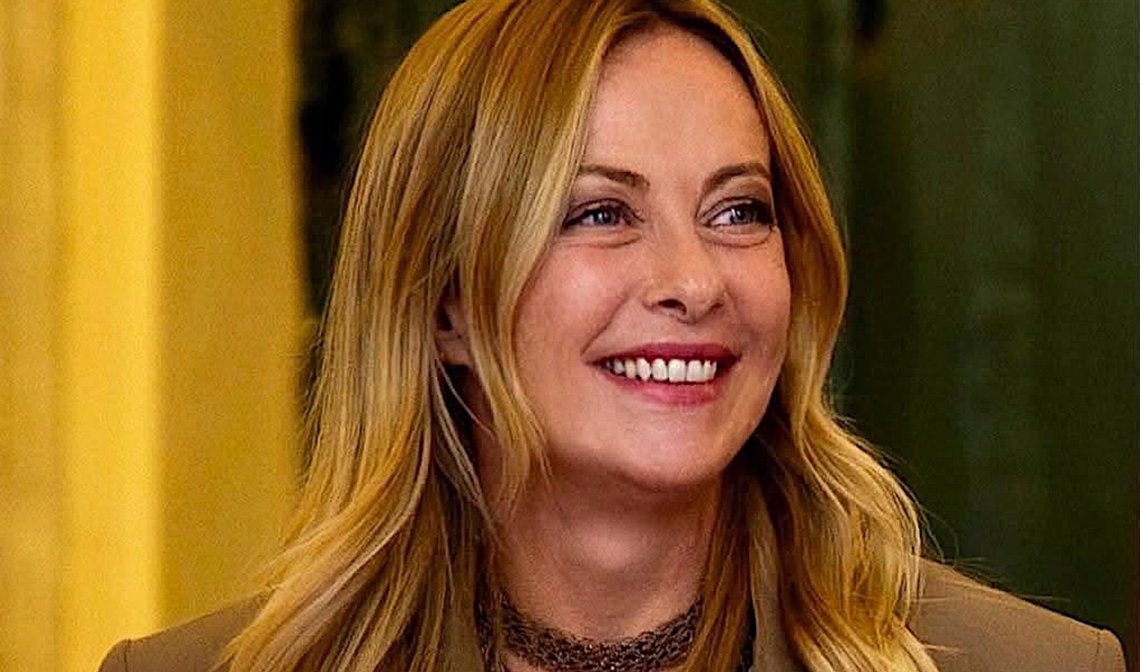
The most sensational statement made during this meeting of the Council of the European Union, however, has not become widely known: Italy’s Prime Minister Giorgia Meloni, who has long understood perfectly well what a farce the EU’s climateand energy policies entail, told her colleagues at 10 pm on Friday 16 October, when most were presumably fed up with the whole meeting (whilst Meloni is unusually persistent in meetings):
“Do you realise that if this price trend continues, then everyone – and I mean everyone, not just in my country, but in yours too – will sooner or later be chasing us with pitchforks?”
Corriere della Sera explains why this inflammatory speech did not cause a sensation: Meloni spoke in Italian, and the simultaneous interpreter who conveyed her message in English did not recognise the Italian word for ‘pitchfork’.
Italy’s linguistically gifted Prime Minister, who possesses an extraordinary rhetorical talent in her mother tongue, speaks almost perfect French and Spanish, but only passable English – which she nevertheless uses quite frequently in international contexts. But when she gets carried away and wants to speak faster than her command of English allows, she switches to Italian. Perhaps she couldn’t remember the word ‘pitchfork’ on the spot?
But the EU is, after all, the world’s largest employer of translators and interpreters, and meeting participants receive the services they need from them live via their earpieces, so surely that matter is in safe hands?
Not this time. The Italian word for a pitchfork is forcone (plural: forconi) and was apparently unknown to the interpreter. The word forchetta sounds similar (with ‘che’ pronounced ‘ke’), but is the term for an ordinary fork used for eating. The suffix -one is an augmentative, which would suggest that a literal translation of ‘forcone’ is ‘big fork’, which is at least on the right track. The result of the interpreter’s mental exertions was, oddly enough, ‘two forks’ in English. The recipients of the message were presumably baffled by the idea that the public would be chasing after them with two forks in their hands.
Kyriakos Mitsotakis, the Greek Prime Minister, tries to patch things up, but only makes matters worse. He comes to the aid of the Italian Prime Minister – and, above all, the interpreter – but his attempt to explain it better is clumsy: for him, ‘forconi’ are agricultural tools used to remove manure.
At this point, the previous atmosphere – characterised by tension, fatigue and even irritation among many – suddenly dissipates. Meloni’s ‘forconi’ makes some people laugh, whilst others simply give up.
And so the meeting fizzled out. Her Western European colleagues were probably not all that keen on the world picking up on this message. Wasn’t it high time to make a run for it anyway?
And so it came to pass that the audience failed to heed the warning, issued in vain by the Italian Prime Minister: if climate policy continues as it is, people will become so hard up that they’ll be absolutely livid, and then it won’t be much fun being a politician.
But my colleagues will probably take one thing on board: we must be prepared to jump off this train when the time is right.
Preferably today, thank you very much. Why don’t those who are supposedly demonstrating against the high cost of living direct their accusations at those who are making almost everyone poorer?
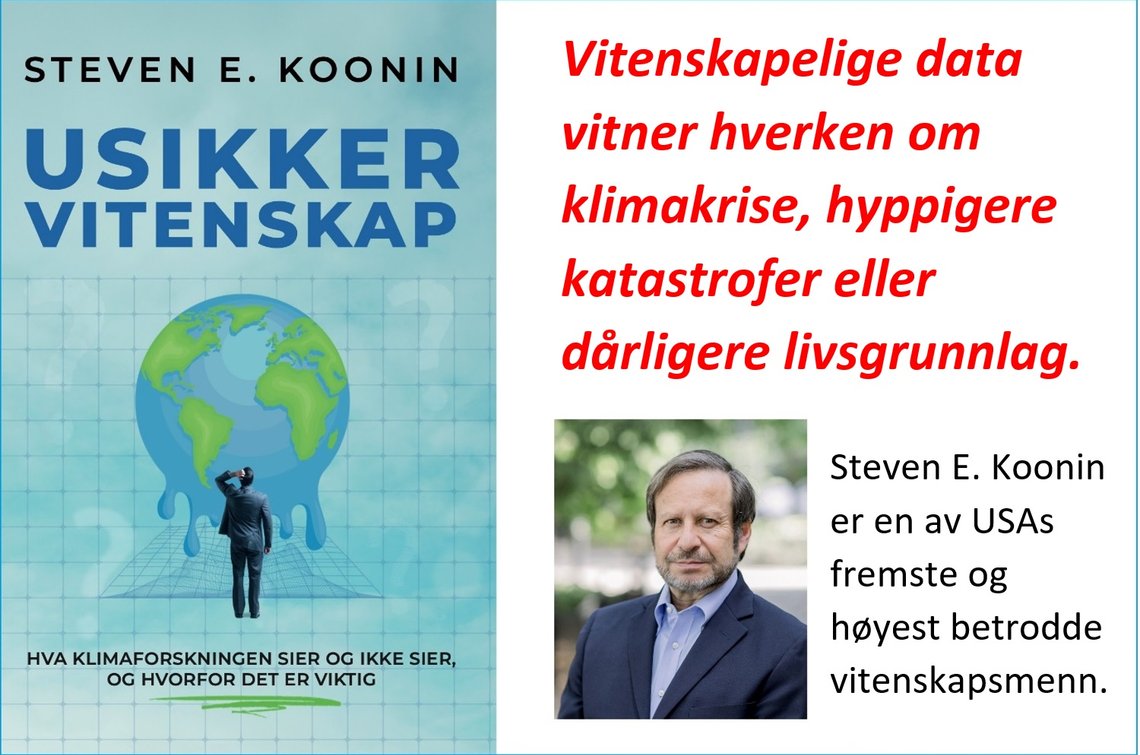
Buy ‘Uncertain Science’ by Steven E. Koonin as a paperback and as an e-book.