

A renowned German economist believes that Germany is in the midst of its worst crisis since the Second World War. Part of the reason lies in geopolitical developments, but the country has also, all too often, made the wrong decisions.
Hans-Werner Sinn believes that Germany must reverse the course set by Angela Merkel.
Sinn is an outspoken and therefore controversial economist who headed the Ifo Institute until 2016. Sinn’s uncompromising nature has also made him one of Germany’s most respected economists.
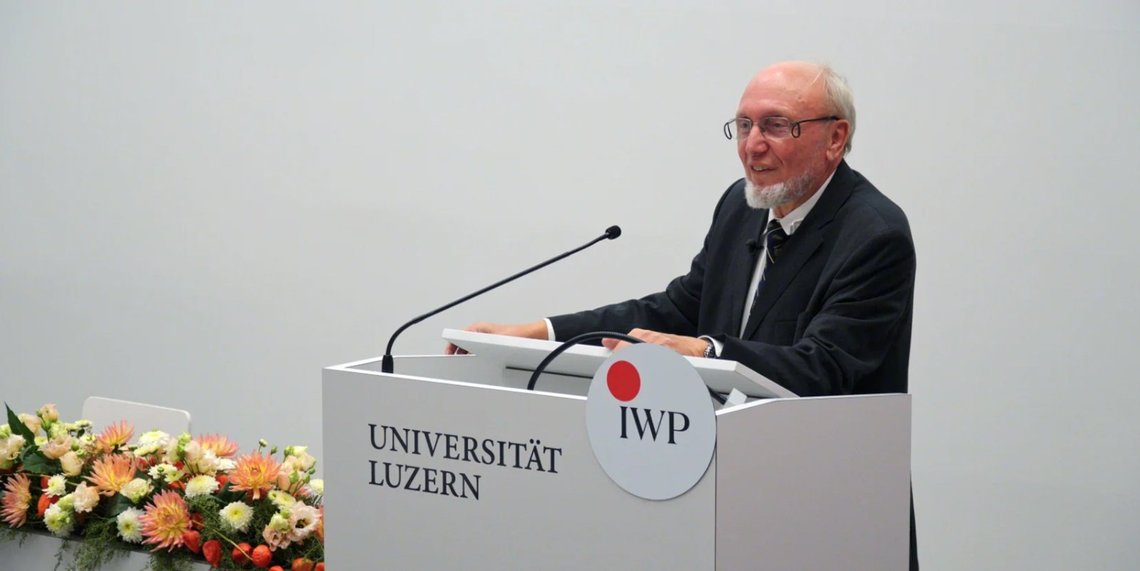
In a lecture he recently gave at the Institute for Swiss Economic Policy (IWP) at the University of Lucerne, he addressed the mistakes made in German and European economics over the past few decades, writes Die Welt.
Sinn dissected global economic and geopolitical developments, and in a ruthless analysis he broke down the consequences for Europe, and for Germany in particular.
“We are in a crisis of the greatest magnitude since the war, and it is almost impossible to overcome.”
Germany, which was long the driving force behind the European economy, has been at the bottom of the OECD’s economic growth rankings since 2018, alongside Japan.
Sinn is critical of how Germany is increasing its debt to finance defence and infrastructure spending, which he believes only leads to a short-term boost in demand, but no real growth. He regards this as a deep-seated structural problem.
“Why is so little being invested? Why aren’t we growing?”
The sanctions policy against Russia is “so sophisticated that it does not harm the US economy, but actually stimulates it, because we are now buying American energy instead of Russian,” argued Sinn. The sanctions policy, he said, is a “threat of self-harm”.
Security policy
When it comes to security policy, Sinn believes that EU countries must present a united front – a political-military union that would strengthen the EU and “immediately command Putin’s respect”.
The EU could then “make peace with Russia from a position of strength”.
“If we do not do this, 800,000 Ukrainian soldiers will join the Russian army, and then, together with the 1.5 million Russian soldiers, we will have 2.3 million highly battle-hardened soldiers on the Russian side.”
Not everyone shares Sinn’s fear of a military union between Ukraine and Russia. Relations between Kyiv and the Kremlin are frosty after nearly five years of war, and the conflict has been ongoing since 2014, particularly in connection with Russia’s annexation of Crimea, as well as the unrest in the Donbas region, which the Kremlin now regards as Russian territory.
British history professor says Yalta 2.0 is ‘a terrible idea’
Sinn points to the rising US debt and believes the US has been living beyond its means for decades by flooding the world with its ‘bonds and bills’. US President Donald Trump has his ‘back against the wall’ and is therefore a dangerous figure, according to the economist.
NATO is clearly not far from a crisis, but there is little doubt that the European NATO countries, as well as the EU itself, have contributed significantly to this, with their openly hostile attitude towards Trump since 2015, and decades of military build-down.
Admittedly, pressure from the US, combined with fears of Russia, has finally made Europe wake up, and military rearmament is underway. But it will take a long time before real military strength is restored.
At the same time, many countries are struggling with massive security problems within their own borders due to the massive influx of immigrants. As we have seen in recent weeks in the riots that began in France: The enemy is within the gates.
Demographics
Germany is struggling with demographic trends that are causing problems, including its lowest birth rate since the Second World War in 2025.
“Nobody thinks any more that children have anything to do with pensions.”
By 2035, the number of people aged over 65 will have increased by nine million compared with the year 2000, whilst the working-age population will have shrunk by 6.6 million.
This is a well-known problem affecting virtually every country in Europe. Sinn is critical of the East German states’ lack of understanding of the situation.
“The fact that they opposed abolishing the retirement age of 63 and thus stabbed Merz in the back is outrageous and economically irresponsible.”
He believes that the authorities must create incentives to increase the number of children. If immigration is to have any positive effect, Sinn believes the focus must be on skilled immigration based on a points system. We must focus on people who have the ability and the will to work.
It is obvious that the constant influx of welfare migrants is exacerbating the economic crisis throughout Western Europe. At the same time, both uncertainty and division are on the rise.
The solution must be to increase employment amongst those arriving in the country, as the current situation is unsustainable.
The fact that there is something structurally wrong with the German social system is evident from a look at the employment rates of Ukrainian refugees: Whilst Estonia and the UK achieve figures of almost 70 per cent, Germany is at the very bottom, with 37.5 per cent.
Economic pressure must be brought to bear here. Immigrants who do not work currently receive far too much in social benefits, and for many it is not worth taking jobs that are not well paid. This can only be resolved by reducing benefits for the unproductive so drastically that they are forced to find work in order to achieve a certain standard of living, according to Sinn.
The situation in Norway in this regard is far worse than in Germany. The reason is that our support schemes are so generous that it becomes pointless for a large proportion of immigrants to find a job. A huge number of people of working age are outside the labour market. Even, the Labour Party government intends to assess the need for labour immigration!
At a time when the national economy is weakening, and both businesses and workers are struggling hard, more people should soon be asking the question: Why on earth should European taxpayers support foreigners who arrive in the country uninvited and are unable to support themselves?
The Government will assess the need for labourimmigration to Norway
The Merkel Disaster
A significant part of the lecture dealt with the political missteps during Angela Merkel’s time as Chancellor. Two catastrophic decisions in particular can be mentioned here, which have had dramatic consequences for the whole of Western Europe.
Merkel’s Energiewende is one of the main causes of the energy crisis currently being experienced by Germany and large parts of Europe. Merkel decided to phase out German nuclear power, driven by panic following the Fukushima accident in Japan in 2011. This made Germany heavily dependent on Russian gas, and when President Trump pointed this out, he was met with virtual derision from German officials.
When the war in Ukraine broke out, followed by the sabotage of Nord Stream, the crisis Trump had warned about became a reality. Climate hysteria and a blind faith in ‘renewable’ energy such as wind power did not exactly improve the situation. Sinn therefore draws the following conclusion:
‘My political recommendation is: Reverse 15 years of Merkel!’
The so-called energy transition is based on assumptions and promises that have all turned out to be ‘nonsense’, according to Sinn.
“The opposite is true. We led the way with this policy, and what was the result? An economic disaster.”
This is not the first time Sinn has criticised the climate policy of Germany and Europe.
For many years, Kent Andersen of Documents has been writing about what Sinn now claims: the climate targets are completely unrealistic and the wrong remedy.
“I do not deny the climate impact of CO₂, but the whole thing must be feasible and sustainable,” said Sinn.
He points out the obvious: Europe is almost alone in the fight against climate emissions – there is no such thing as a global ‘climate club’.
His solution is that we should instead focus on adapting to any climate change.
It would be a great advantage for us Norwegians if our political leaders were to take on board some of the advice Sinn offers in his lecture. But the likelihood of such a thing happening is, I suppose, to be regarded as completely unthinkable.