

If a country takes in more immigrants than it is able to integrate, it will face social problems. This statement does not come from the Progress Party. It is all the Catholic bishops in the Nordic countries.
The so-called pastoral letter on migration opens with the Christmas story. The Son of God came to earth as a migrant, found no room at the inn and had to flee to Egypt.
A few paragraphs further down, the tone changes.
Every country must assess how many migrants it has the capacity to receive, the bishops write. If a country takes in more than it is able to integrate properly, social problems arise. These problems, in turn, lead to tighter restrictions.
They also warn against migrants who isolate themselves and do not even try to adapt. Over time, this leads to unrest and conflict, they write.
The bishops draw support from the Catechism of the Catholic Church. Immigrants must respect the heritage of the country that welcomes them, obey the laws and bear their share of the burdens. However, they must not be pressured into forced assimilation.
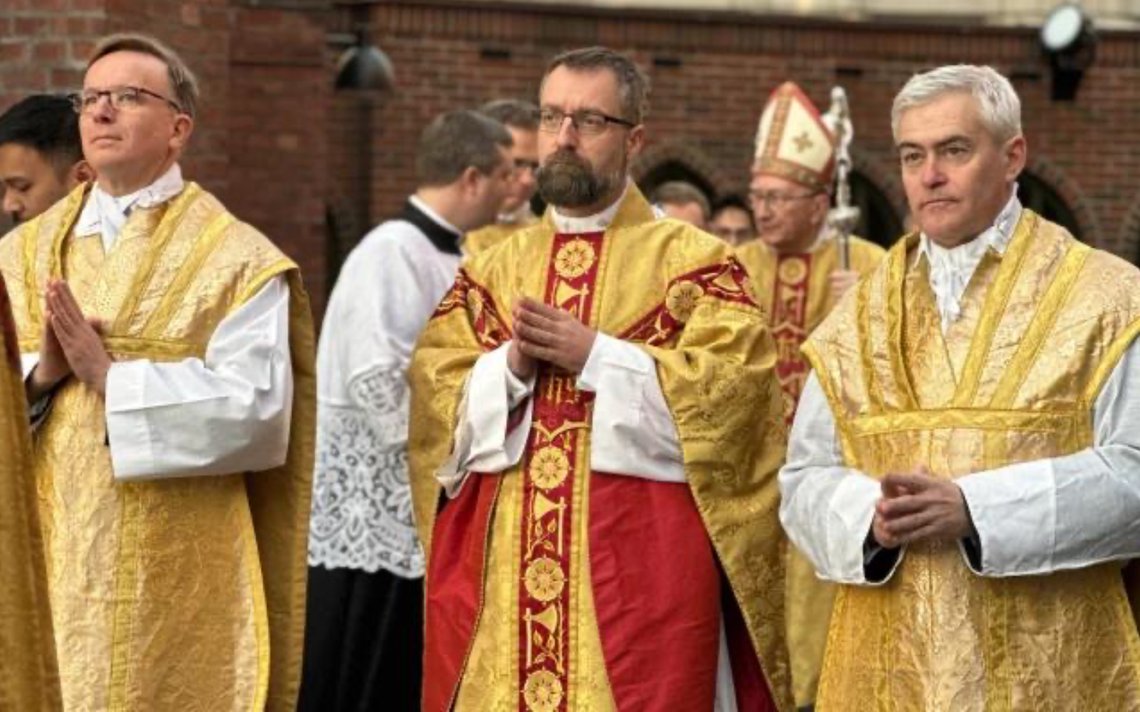
The letter is signed by all six bishops of the Nordic Bishops’ Conference. Among them are Erik Varden in Trondheim, Fredrik Hansen in Oslo and Cardinal Anders Arborelius in Stockholm.
“It is important that we speak truthfully about the challenges posed by immigration,” says Varden, who chairs the Bishops’ Conference, according to NTB.
He adds that responsibility for people in need must not be lost sight of.
For the letter has another side to it.
Europe is closing its borders, the bishops write. These restrictions may make it almost impossible to enter, even for refugees and asylum seekers who are protected by international law.
Then they go even further. In some cases, it is now considered a good thing to send out as many people as possible, including those who are well integrated and contribute to society.
‘Many European countries are increasingly closing their borders. Our era has a tendency to build walls rather than bridges between people and countries. Every country must, of course, assess how many migrants it has the capacity to receive. When this does not happen, and countries accept more people than they are able to integrate properly, social problems arise. These, in turn, lead to further tightening of policies, making it virtually impossible to enter our countries, even for refugees and asylum-seekers who are protected by international rules that our countries are obliged to follow,” the letter states.
The bishops then turn their attention to the debate itself. They believe the tone has become harsher, less nuanced and more aggressive. It could develop into “a form of manipulation that we must resist”, the bishops write, referring to Pope Leo XIV, who has asked the faithful to disarm their language.
There is no mention of which countries are involved, who is attempting to manipulate people through language, or anything about the elephant in the room: Islam.
The tone is different from the last time the bishops wrote about refugees. In September 2015, when the refugee crisis reached the Nordic countries, they warned in a joint pastoral letter that racist and xenophobic tendencies were growing stronger, particularly on social media. Ten years earlier, in 2005, they described a lack of generosity towards refugees and asylum seekers as an alarming sign in the Nordic region.
The bishops also write about their own church. According to them, there were centuries of persecution, and the Catholic Church was rebuilt in the Nordic region by migrants who brought their faith with them.
The figures show just how much. In Norway, membership grew from around 41,500 in 2006 to over 165,000 in 2020. Most of this growth came from labour migration from Catholic countries.
In September, Varden opened the Bishops’ Conference’s autumn meeting in Paderborn, Germany, with a warning against rising populism.
“As Christians, we must protest loudly,” he said, according to the Bishops’ Conference’s press release.
In the same speech, he said that the task is to balance national unity and identity against openness towards strangers in need.
The pastoral letter concludes with this same balance. Countries must be realistic about what they are capable of, both in human and material terms, the bishops write. But believers must never turn away a brother or sister who is suffering and asking for help.
The letter does not specify how many is too many.