
 Espen Teigen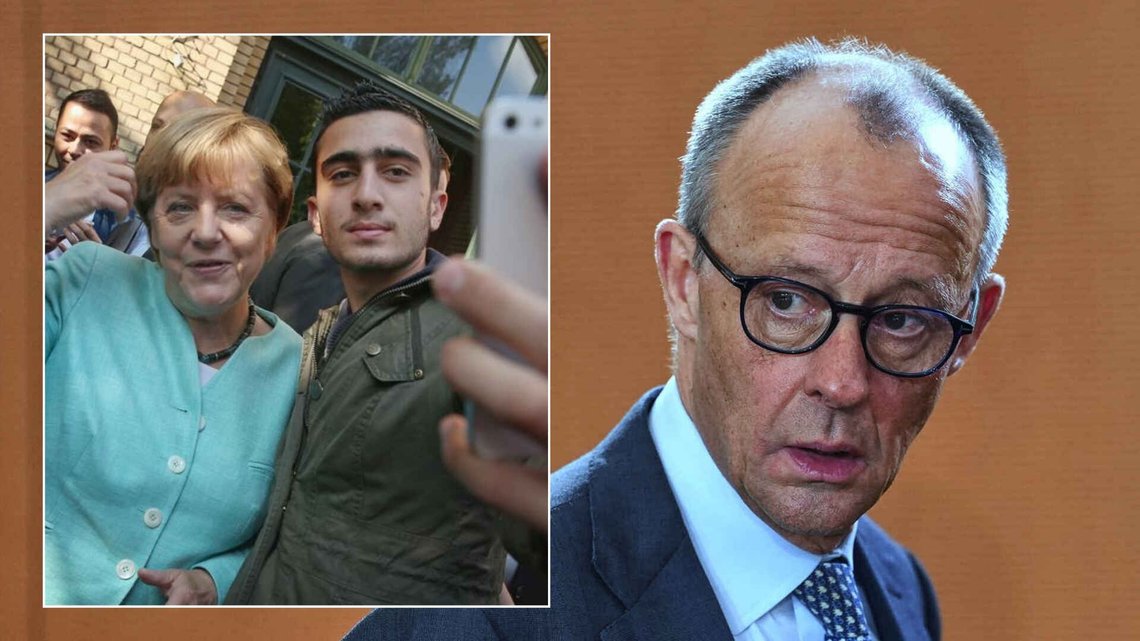
Germany is now left holding the short straw after Angela Merkel threw the borders wide open. That is the admission of her own successor.
Ten years after the record years, Germany’s Federal Chancellor Friedrich Merz is now speaking about immigration in very different terms from those used by the establishment at the time. Whereas Angela Merkel promised “Wir schaffen das” (“We can do it”), Merz states that the refugee crisis imposed “enormous costs” on the welfare state—and uses this as an argument for cutting welfare.
The remarks came during ZDF’s summer interview on Sunday, 19 July, where the Chancellor was challenged over the government’s unpopular reforms, strained public finances, and declining approval ratings.
When the conversation turned to the extensive cuts to the social security system, Merz himself raised the cost of migration.
“We are convinced that we have succeeded in bringing the refugee crisis under control. That entailed enormous costs, including for the social security system,” Merz said.
Germany received more asylum seekers than any other country in Europe during the migrant crisis of 2015 and 2016. Merkel’s “Wir schaffen das” (“We can do it!”) became the defining symbol of Germany’s open-door policy and was quoted far beyond the country’s borders.
Now her party colleague and successor is using those same years as justification for tightening policy. In the interview, Merz defended the government’s reform package for pensions, long-term care, and health insurance, and announced that changes to social assistance, care provision, and pensions would follow.
“Our foremost priority was above all to stop the threatened further increase in social security contributions. And we will succeed in doing so through these reforms,” the Chancellor said.
Germany’s combined social security contributions have now exceeded 40 per cent of wages—a threshold long regarded as the political ceiling. According to Merz, the limited fiscal room for manoeuvre is also the reason why the government cannot reduce taxes beyond what has already been announced.
Germany’s Chancellor Merz on the refugee crisis:
We have tried to get the refugee crisis under control, and I believe we have succeeded.
That also involved enormous costs for our social security systems. At the moment, we are trying to slow the rise in those costs, and that is… pic.twitter.com/6KLiixdgsk
— Clash Report (@clashreport) July 20, 2026
That a sitting head of government should so openly link the migrant crisis to pressure on the public finances is among the clearest admissions to date.
The admission is significant far beyond Germany. The optimistic line also dominated in the Nordic countries. In Sweden, then Prime Minister Fredrik Reinfeldt urged the Swedish people to “open your hearts”, while Stefan Löfven repeatedly maintained that immigration was crucial to the future labour force.
“It will become a gain for society further down the line,” Löfven stated of mass immigration during an SVT debate.
Those who pointed to the costs at the time were dismissed by that same establishment. Ten years later, it is a conservative Federal Chancellor who is balancing the books—and the conclusion is unequivocal.


