

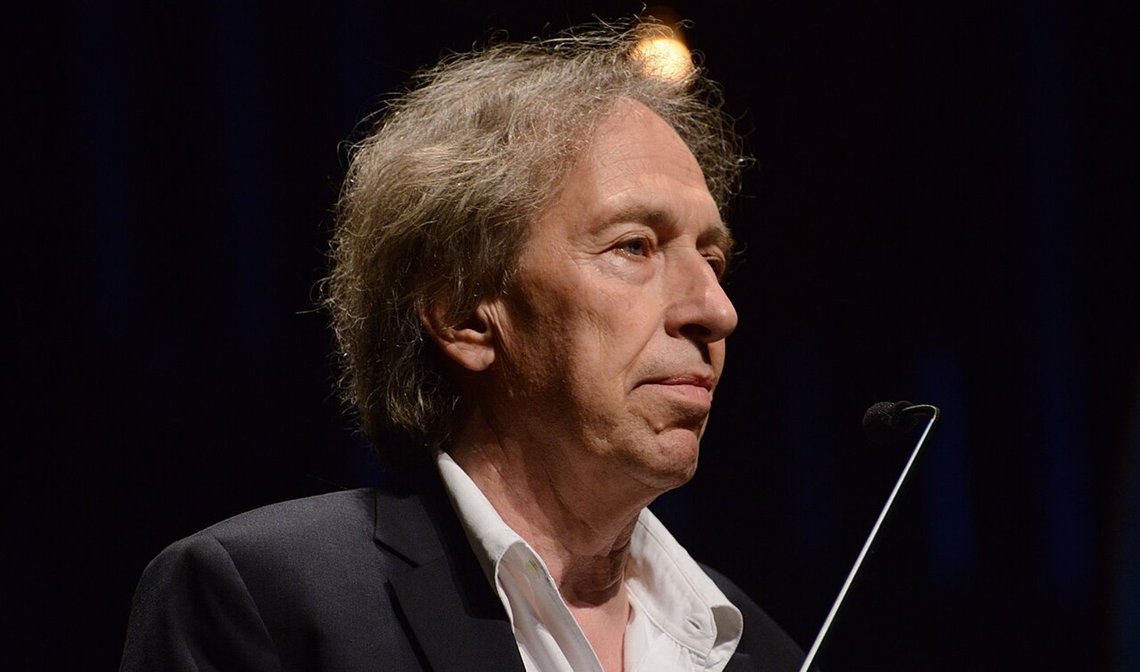


The philosopher Pascal Bruckner lives in the centre of Paris. Amidst the chaos on 17 October, he went out for a walk to make his observations, which he later recounted to Le Figaro.
Bruckner himself witnessed how the police were conspicuous by their absence for a long time whilst a group of masked men broke into a luxury shop right in the city centre. Neighbours called the police, who answered but did not turn up, allowing the break-in to continue undisturbed for over half an hour.
Earlier in the day, he had seen a procession of men dressed in black and wearing masks, carrying Palestinian flags, followed by a clash with the police during which the protesters chanted ‘We are all children of Gaza!’.
Brucker notes a few recurring slogans. One of them is wallah, by Allah:
In the middle of the afternoon, troublemakers start pouring in. The shops close, one after the other, as do the cafés. Le Progrès on the corner of Rue de Bretagne barricades itself, and the waiters, armed with batons, stay inside, ready to fight the demonstrators. By 6 pm, it’s already an apocalyptic sight: gangs of young people, laughing and having fun, telling each other about their exploits, miming the clashes with the police and looking for new targets. This is what strikes you: the high spirits among the participants, who are shouting ‘Wallah, wallah!’. They are happy; they have occupied the terrorised capital; they are the masters of the wealthy and indifferent capital that mocks them with its riches.
Another is bismillah, in the name of Allah.
On the Boulevard du Temple, bicycles are burning; a few people are making their way up to the upper floors of the buildings and knocking on the doors of terrified residents; the Kitsuné shop is being looted, as is the Salomon shop on Rue Vieille-du-Temple. Jewellery shops, shoe shops and luxury clothing shops are the main targets for the intruders. […] And everywhere, the same slogan is spray-painted on walls or shop fronts: ‘Bismillah, it is darkness’, and here we shall particularly remember the end: the promise of a dark period of looting, destruction and violence.
The school protests were hijacked by the ‘big brothers’ who are declaring war on society and the state, Bruckner observes.
One part of France wants the other part to foot the bill, and there are political groups close to the far left who support this in the name of social justice.
This is the full stop at the end of a long sentence, he believes:
What happened on 17 October is not an isolated incident; it is the consequence of a long series of failing conditions that some of us have been criticising for at least twenty years: tolerance of internal decay, towards violent outbreaks in the suburbs that are explained away as ‘racism’, post-colonial guilt, and an acceptance of rudeness that is excused on the grounds of capitalism and ‘police brutality’. What happened last Saturday will inevitably happen again, as a foretaste of the chaos to come.
Bruckner belonged to an intellectually respectable left-wing movement of which only a few old remnants remain, and which is thus politically homeless. As a supporter of a form of secularism that tolerates religions provided they keep a low profile, one might expect him to say something about Islam following all the instances of ‘wallah’ and ‘bismillah’, but even he is reluctant to go down that path.
Instead, he appeals to the state. It really must pull itself together:
Otherwise, the good-natured hooligans of 17 October will seem like friendly extras compared to those who come after them: criminal gangs led by the far left to bring our country to its knees. A silent coup d’état.
Bruckner is, then, not afraid of bold predictions, but perhaps of the potential impact of the words he does not utter.


