

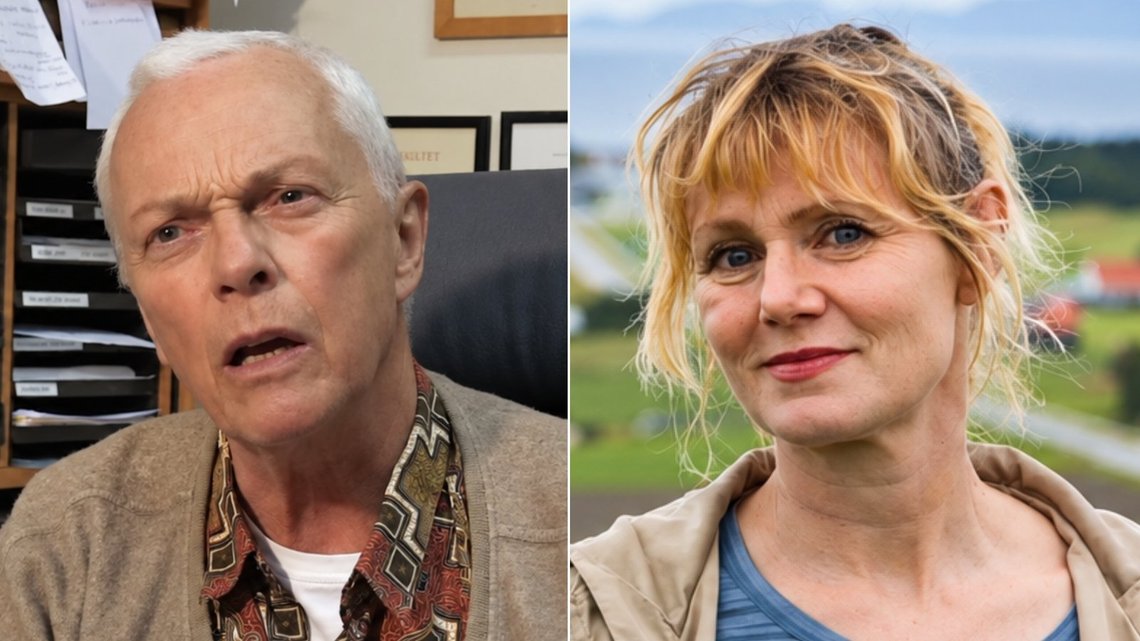
Anne Kalvig calls the Press Complaints Commission’s ruling against RA Stavanger censorship. ‘This is completely dystopian,’ the former professor tells Document.
The Norwegian Press Complaints Commission (Pressens Faglige Utvalg, PFU) on Wednesday found Rogalands Avis in breach of the Code of Ethics for having published an opinion piece by Kalvig about sex and transgender people. The commission found that the text breached point 4.3 of the Code of Ethics of the Norwegian Press (Vær Varsom-plakaten), which requires the press to show respect for people’s individuality and identity.
Kalvig herself was not a party to the case. Nor was she surprised.
– It is very dispiriting. It went as I expected. But I had a small hope that some of the commission members would mention how the legislation conflicts with the rights of girls and women, with those of gay men and lesbians, and with those of vulnerable children and young people. Apparently, that was entirely uninteresting, she says.
– It is censorship
In the opinion piece, Kalvig wrote, among other things, that ‘delusions, mental ill-health, experiences of trauma, autism, men’s fetishes, pornography-inspired contempt for women and cultural abuses’ had been ‘muddled together’ under the term ‘trans’.
It was precisely the wording about pornography that prompted a reaction from the commission. Kalvig stands by it.
– It is not something I am making up. There are men who themselves say that they became trans because they watched a certain type of pornography, she says.
She believes that the PFU is in reality requiring media outlets to refrain from reporting actual circumstances.
– We have to go along with their perception of reality. It is censorship, and it is a violation of everyone’s freedom of expression and of the Constitution, Kalvig says.
Compared with Jews
She reacts most strongly to what Hege Cathrine Finholt said during the proceedings. The public representative on the PFU was initially opposed to finding a breach, but changed her mind after reading the opinion piece several times. According to Dagen, she drew a parallel with how Jews were referred to in Norwegian newspapers before the war.
Kalvig rejects the comparison.
– There is a difference with an actual group. The only thing they have in common is that they say they are something they are not, she says.
She believes the commission members are expressing opinions about a field they do not know.
– It seems that the reaction is to you speaking in a very ‘harsh way’?
– What is so harsh about it? I have studied this field for years, and I have written about it. Then these press people come along and use their feelings to navigate. They are not doing their job, she says.
Divided commission
Not everyone on the commission was equally ready to find a breach. According to Dagen, PFU chair Anne Weider Aasen also expressed doubts, while alternate representative and BI professor Øyvind Kvalnes leaned towards the view that there should be room for the opinion piece. He pointed out that much of what Kalvig wrote follows logically from the view that there are only two sexes – a view he called entirely legitimate.
The majority nevertheless concluded that there had been a breach.
The complaint came from the Centre for Gender Equality (Senter for likestilling) at the University of Agder, with the consent of Karoline Skarstein and Esben Esther Pirelli Benestad, both of whom were mentioned in the opinion piece. The centre argued that the text was generalising and dehumanising.
The newspaper had already backed down. RA Stavanger published the opinion piece on 30 April and removed it just over two hours later. Editor-in-chief Geir Søndeland apologised and has acknowledged that the text should not have been published. Thus, both the complainant and the newspaper believed that the opinion piece did not belong in its pages, and neither party defended it.
The PFU praised the newspaper for removing it so quickly, but found that this did not outweigh the publication itself.
– A nail in the coffin
Kalvig believes the ruling affects far more than one newspaper.
– The press is supposed to expose abuses of power and describe actual circumstances, and the PFU is supposed to strengthen trust in the Norwegian media. If they wonder why young people are turning away from legacy media, this ruling is a brilliant example, she says.
– The PFU has established that the media must not permit reality to be described. It is a betrayal of the entire population and a nail in the coffin of trust between the public and the press.
Document has contacted the public representative on the PFU, Hege Cathrine Finholt, and has received no response. Chair Anne Weider Aasen does not wish to comment further on the case and refers to the PFU’s statement.
“`


