



Det often strikes me how little knowledge so-called ordinary citizens have of the extremely serious problems in the United Kingdom. They do not understand why the British might consider voting for Farage and Reform. Perhaps because they follow only mainstream media such as TV2.
In connection with the British local elections, one could hear the dispatched senior journalist Jesper Steinmetz report the following:
“People are so desperate that they are willing to give Nigel Farage responsibility for restoring the nation he himself helped to destroy.”
Blaming Farage and Brexit for the United Kingdom’s colossal problems makes no sense. Other EU countries also have deep economic problems. The economy is, in fact, only a small part of the overall problems.
Let us look a little at the bigger picture.
Mass immigration and loss of control
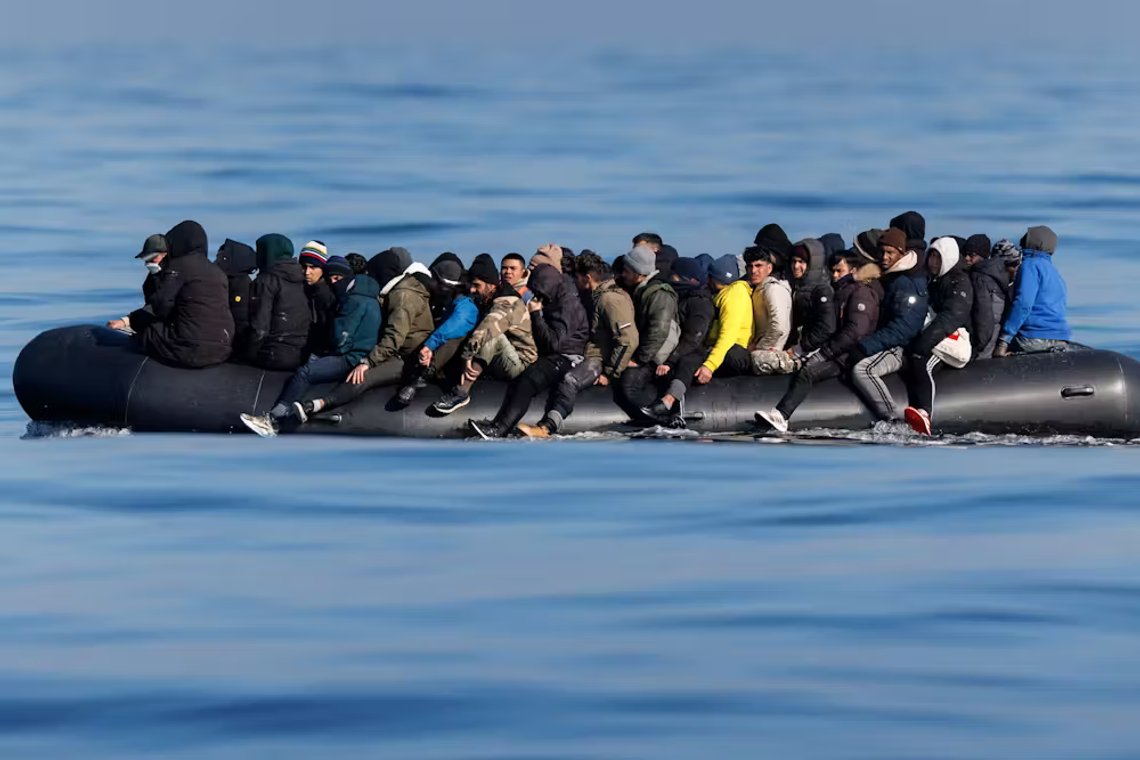
Around 187,000 illegal migrants have crossed to the United Kingdom in small boats since 2018, spread across around 5,000 boats. The figure could approach 400,000 by the next parliamentary election if the current trend continues.
Pew Research estimated several years ago already that more than one million people are living in the United Kingdom without lawful residence, while the daily expenditure on accommodation alone is estimated at around £5.7 million.
The United Kingdom no longer controls its own border, and this undermines both sovereignty and trust in the state.
Population change and ethnic minorities
The 2021 census shows that white Britons already constitute less than 50 per cent in a number of larger urban areas and local authorities, including parts of London, Leicester, Luton, Slough, Brent, Redbridge and Birmingham.
Demographic projections show that white Britons will become a minority in their own country around the middle of this century.
Islamisation and parallel societies
The Islamisation is extremely intense. Reports document that there are at least 85 sharia courts, probably far more, since this figure dates from 2009.
Sharia councils and Muslim parallel societies are troubling signs that one common law and national culture are in the process of disintegration.
Crime, unrest and the risk of civil war
Foreign nationals are markedly overrepresented in serious crime. Mass immigration therefore also carries a concrete security cost. In addition come riots, grooming scandals and growing social unrest in both the United Kingdom and Ireland, which are precisely not isolated incidents, but signs of a broken social contract.
Professor David Betz goes even further and warns that Western Europe – including the United Kingdom – fulfils the classic preconditions for civil war: deep polarisation, ethnic conflicts, native Britons who feel that they have the official system – including the judicial system – against them, and, more generally, institutions with declining legitimacy.
The state against the citizens
The British government under the leadership of Keir Starmer finds itself in what must be described as a functional collapse characterised by defeatism, particularly in the area of immigration. Muslims are, after all, the face of modern Britain, as Starmer says.
Some of the most astonishing figures here are that the police annually carry out around 12,000 arrests for online speech under the Communications Act and the Malicious Communications Act – around 30 per day. In other words, a system that criminalises offensive or threatening speech online – read: criticism of immigration.
Why the Right is advancing
In Matt Goodwin’s analysis, Reform UK’s advance is the next phase in the transformation following Brexit, in which a culturally conservative and nationally oriented electorate is turning its back on both Labour and the Conservatives.
He points out that Reform stands especially strong in working-class areas, where the party in some cases is polling around 40 per cent, and that precisely immigration, borders, crime and the perception of national decline have now become the new unifying political axis.
Seen in that light, the advance of the Right is not the cause of the crisis, as citizens informed by mainstream media believe, but the result of a growing section of the population believing that no one else is any longer willing to take the crisis seriously.


