

Norway’s 4–1 win over Iraq gave Ståle Solbakken the result he needed.
It did not give him a complete performance. That distinction matters.
The table will record a strong opening victory: three points, four goals, a plus-three goal difference, and the kind of start Norway needed after 28 years away from the men’s World Cup. Reuters reported that Erling Haaland scored twice on his World Cup debut as Norway beat Iraq 4–1 in Foxborough, while Iraq were playing their first World Cup match in 40 years.
That is the clean version. The football was messier.
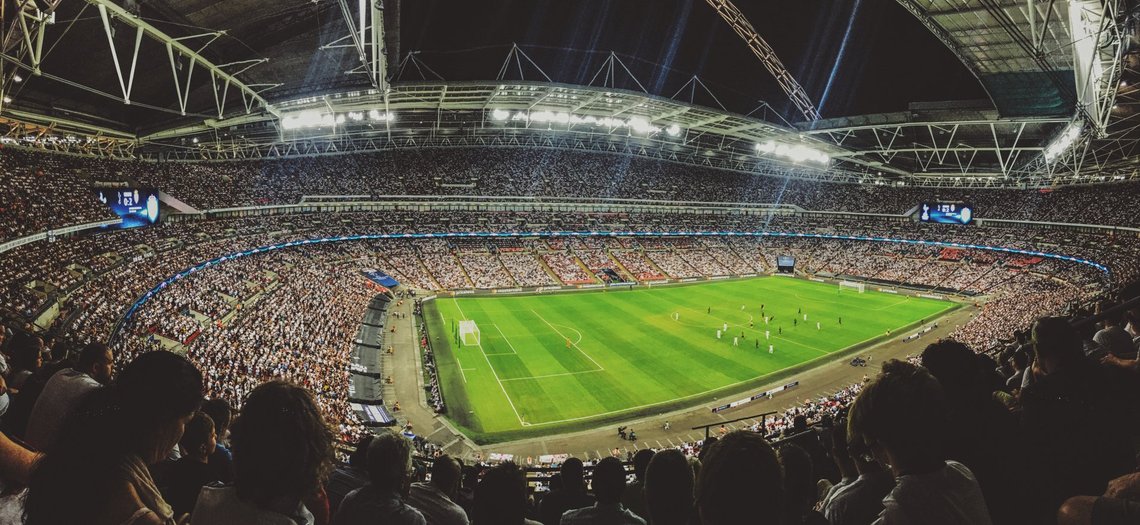
Document Sports observed a red wave in Foxborough before kickoff. Norwegian supporters were visible across the stadium, many with flags painted on their cheeks. The chants carried. At one point, the Viking clap rolled through the stands. NFF president Lise Klaveness was present. Haaland, standing in the middle of the pitch before the opening whistle, looked full of the moment. Not tense. Excited.
That matters because this was not an ordinary group opener for Norway. It was the return of a football nation that had waited nearly three decades. The supporters knew it. The players knew it. Every time Haaland touched the ball, the noise rose a few notches.
Then Iraq forced Norway to play a real match.
The first lesson from the night is simple: Iraq did not allow Norway to settle into a comfortable opening script. Reuters reported that Iraq briefly pulled level through Aymen Hussein after Haaland’s opener, before Norway regained control before halftime.That was not a minor detail. It changed the feel of the match.
Norway had scored first. The stadium had lifted. The story was writing itself a little too easily.
Then Iraq punched back.
That is where Solbakken will look closely. Norway had the better players and the better finishers, but the match still produced uncomfortable spells. Reuters also described Norway’s overall play as shaky in one of its reports, noting defensive lapses and miscues despite the final margin.
That is exactly how this match should be read.
Norway were dangerous. They were not always controlled.
Haaland gave Norway the lead in the first half, finishing at the far post after a low cross from David Møller Wolfe, according to Reuters. Hussein then equalized for Iraq, before Haaland scored again just before halftime after capitalizing on a defensive error.
That second Haaland goal changed the match.
At 1–1, this was becoming awkward. Iraq had belief. Norway had pressure. The atmosphere had shifted from celebration to concern, at least for a while. At 2–1, Norway had the result back in their hands.
That is what elite strikers do. They do not only score. They change the temperature.
Haaland did not need Norway to be perfect. He needed moments. A run. A mistake. A loose ball. A defender half a step late. Iraq could compete, run, disrupt and make Norway uncomfortable. They could not afford mistakes near Haaland.
Few teams can.
This is Norway’s greatest strength in the tournament. It is also a possible trap. A team with Haaland can survive uneven spells because he turns half-chances into goals. But surviving uneven spells against Iraq is not the same as surviving them against Senegal or France.
Solbakken knows this. Haaland knows it too. Reuters quoted Haaland saying it was “not easy to be a debutant,” that winning 4–1 on an average day was “absolutely huge,” and that the next games would be tougher.
That was the right answer.
Happy, but not drunk on the scoreline.
There was plenty to enjoy. Leo Østigård’s second-half header gave Norway control of the result and showed the value of set pieces. The late own goal made the final score look more comfortable. Norway deserved the win. No argument there.
But the result should not erase the warning.
Reuters reported that Norway had defensive lapses and miscues. That matters because Iraq were not supposed to be the hardest test in Group I. They made Norway work anyway. They made them defend while facing their own goal. They made the match feel alive after the equalizer.
Against Iraq, Norway had enough quality to absorb it.
Against Senegal, those moments may become more dangerous. Against France, they may become fatal.
That is the analysis Solbakken must carry into the next few days. The task is not to make Norway less attacking. That would be foolish. Norway’s front line is the reason opponents fear them. The task is to make Norway harder to play through when the first pressure fails and the game starts stretching.
The supporter story should not be ignored either. It gave the night its emotional force.
Document News observed Norwegian flags on cheeks, supporters going wild whenever Haaland touched the ball, and chants echoing across the stadium. The victory was not just useful. It was savored. After 28 years away from this stage, Norway had earned that release.
Still, analysis cannot stop at release.
Norway did what serious teams must do in a first group match. They punished errors. They found goals from their star striker. They added weight from a set piece. They turned a nervous spell into a comfortable scoreline.
But they also showed why this group will not be simple.
Reuters reported that Norway now top Group I on goal difference ahead of France after both teams won their opening matches. That gives Norway a strong position. It also raises the standard immediately. Senegal will need points. France will expect to control the group. Iraq, wounded by the result, still showed enough fight to make the rest of the group pay attention.
The headline is Haaland. Of course it is.
Two goals on his World Cup debut. Norway’s first men’s World Cup match since 1998. A 4–1 win. Supporters in red. Chants in the sun. A nation back on the stage. Heia Norge!


