



An experienced caseworker at the British Home Office says that the asylum system is riddled with fraud, and that only one in a hundred asylum claims he encounters is genuine. He describes standardised stories accompanied by false documents.
The whistleblower, who is referred to as ‘J’, has worked for several years deciding asylum claims for the British Home Office and, according to The Times, has assessed several thousand cases. The position largely corresponds to the work carried out by caseworkers at the Norwegian Directorate of Immigration (Utlendingsdirektoratet, UDI) in Norway.
– At best, one per cent of asylum seekers are genuine. There is almost no part of the asylum system that is not either subject to massive fraud or simply functioning very poorly, he tells The Times.
The claim of one per cent stands in stark contrast to the official British statistics. In 2026 up to June, 42,394 people were granted refugee protection following 115,394 initial decisions, equivalent to 38 per cent. In 2022, the grant rate was 77 per cent.
‘Package claims’
The whistleblower says that caseworkers repeatedly encounter what they call ‘package claims’ – asylum stories that follow virtually identical scripts. The Times writes:
He said that he had encountered a large number of Iraqi Kurds claiming asylum who said that they had been in a relationship with the daughter of the prime minister of the Kurdistan Region. The official said that it had become a ‘running joke’ among colleagues that the number of Iraqi Kurds who said they were involved with the prime minister’s daughter was in the ‘hundreds’.
Pakistani asylum seekers, for their part, are said to have submitted a different variant. Several hundred men are said to have claimed that they were homosexual and that their lives would be at risk if they were returned to Pakistan. A large number of them named the same man as their homosexual boyfriend. He is said to have written hundreds of letters of support that were used as documentation in the asylum cases.
The whistleblower also describes groups of Pakistani men who photographed themselves with their arms around one another at the same gay nightclub in East London in order to document their sexual orientation. Here, public-sector employees helped with the photography, according to the BBC, which investigated the scandal.
Political refugees who know nothing about politics
Another pattern concerns applicants from Bangladesh. Many have claimed that they risk political persecution because they have held senior positions in the Awami League or the party’s student organisation. But when caseworkers ask them about the party’s policies or what their positions actually entailed, many are said to be unable to answer even basic questions.
Several are also said to have submitted what the whistleblower describes as false police documents, in which the names of the same judges, magistrates and places appear again and again.

Still from Sky News – YouTube
The British have grown tired of French police allowing all the illegal migrants to continue on to the United Kingdom:
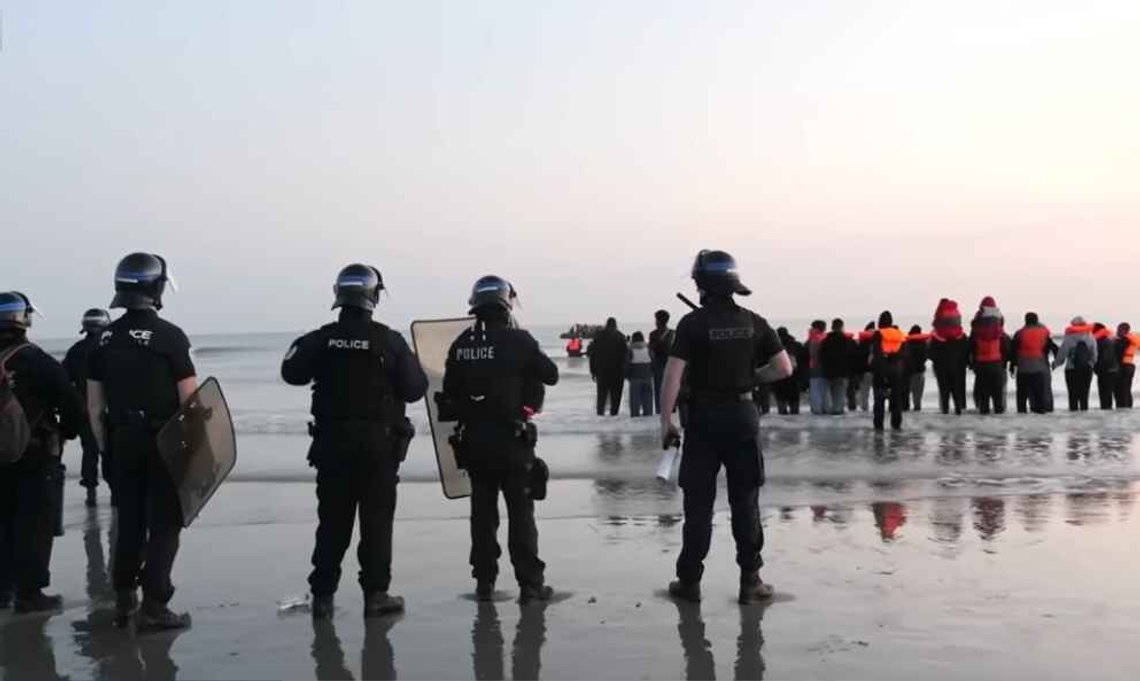
Still from Sky News – YouTube
Even the BBC showed the smuggling gangs that are importing bogus asylum seekers into the United Kingdom. The British know that those arriving are not genuine asylum seekers, but the government shows no sign of taking action. This is leading the population to take matters into their own hands, as they did in Portsmouth on Sunday evening.
Believes the system gives applicants time to construct their story
The whistleblower interviewed by The Times also strongly criticises the way asylum claims themselves are processed. Upon arrival, a brief initial interview is conducted first. The more extensive interview may take place months later. According to the whistleblower, this gives applicants time to obtain advice, documentation and a more thoroughly prepared story before their account is scrutinised in depth.
His proposal is simple: The asylum seeker should have to explain the entire basis for the claim immediately.
– They should not need time to prepare, because this is supposed to have already happened to them, he says.
Half an hour to say yes – many hours to say no
Even more striking is the description of the incentives within the Home Office. According to the whistleblower, it can take around half an hour to grant a claim. A refusal, by contrast, can require many hours of work because the caseworker has to rebut the claims in the applicant’s account point by point. He believes this creates an inherent bias in the system in favour of granting claims.
He also objects to employees allegedly having been instructed to refer to asylum seekers as ‘customers’.
For the whistleblower, the terminology illustrates a fundamental problem: He believes employees are trained to regard their task as providing a service to the applicant, rather than administering the immigration system on behalf of the country.
Home Office rejects the picture
The British Home Office rejects the claim that the whistleblower’s description presents an accurate picture of the system. The Home Office says that each asylum claim is assessed individually by qualified caseworkers, and that the applicant’s account, documentation and information about conditions in the country of origin are all taken into consideration.
The department says that it has established procedures for checking credibility and detecting fraud. If fraud or false information is discovered, protection can be withdrawn.
At the same time, the Home Office points out that the grant rate has fallen sharply – from 77 per cent in 2022 to 38 per cent this year.
According to British media, it now costs around EUR 2,000 to cross the English Channel with the help of people smugglers.


