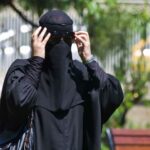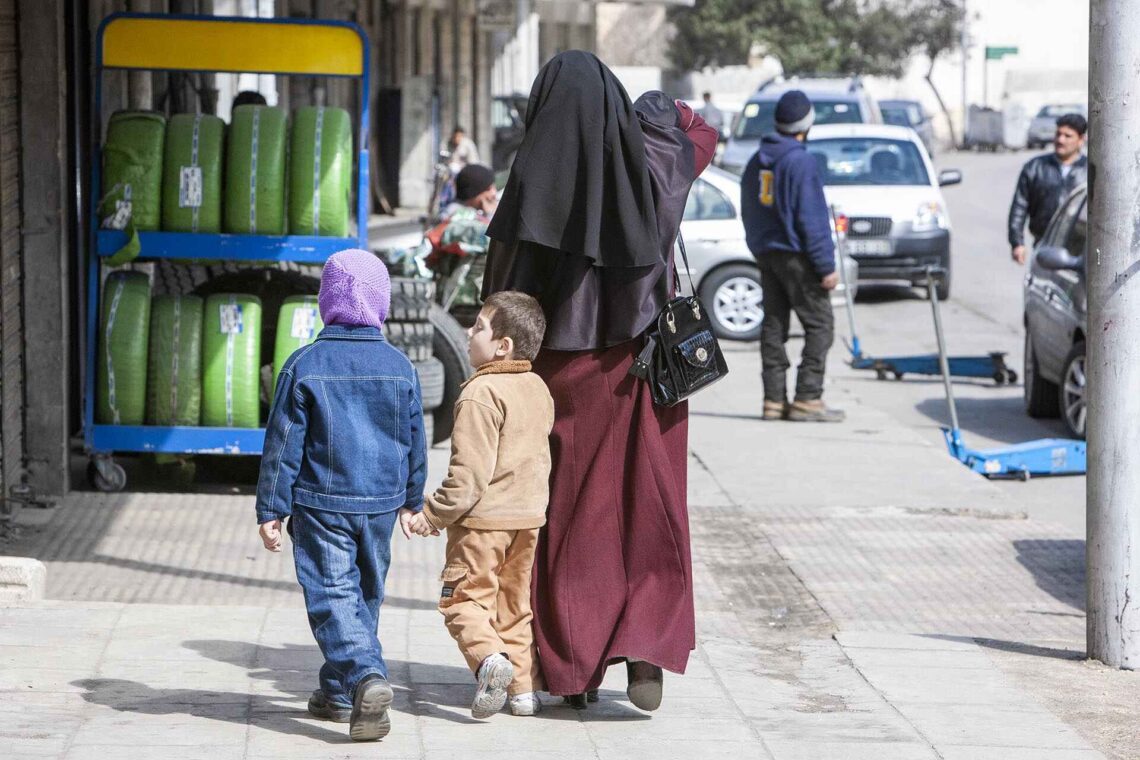
The Portuguese Parliament has passed a law banning the wearing of face-covering garments such as the niqab and burqa in public places. Only formalities remain before it can enter into force.
The law, proposed by the right-wing party Chega, must be published in Portugal’s official gazette, Diário da República, and undergo a vacatio legis (vacansperiode) during which it is prepared administratively; this normally takes 30–60 days. It is expected to enter into force on 1 January 2027 following a transitional period during which the authorities will inform the affected communities and prepare for enforcement of the law.
Problematic MENA Influx
The ban applies to the wearing of all garments that wholly or partially cover the face in public places such as streets, squares, public buildings, schools, hospitals, public transport, shops, etc. Exemptions are granted only for medical reasons, religious ceremonies (during the ceremony itself), and certain security-related or occupational situations. Violations may result in fines of €100 to €500 for a first offence. For repeated offences, the fine may increase to as much as €2,500 per violation. Mosques or associations that encourage the use of such garments risk fines of up to €10,000. In cases of repeated violations and serious offences, fines may be combined with other sanctions, such as the expulsion of non-citizens.
Portugal has long maintained a liberal immigration policy, particularly with regard to immigration from former colonies. The country has a relatively small Muslim population, currently accounting for between 0.4 and 0.5 per cent of the population. Between 60 and 70 per cent of these originate from former colonies. Over the past decade or so, the country has experienced a new and more problematic influx of immigrants from North Africa and the Middle East.
Portugal just made it official: full face coverings banned in public spaces.
No burkas, no niqabs security and identity over exceptions. Fines up to €4k, prison for forcing women to wear them.
Joins France, Austria, Belgium & more. Countries still defending their values. 🇵🇹… pic.twitter.com/DvSo88tckV— LIFE 🎶🎼🎵IS BEAUTIFUL (@DEVIKA12327912) July 19, 2026
Over the past 10–15 years, several European countries have introduced restrictions on face coverings: France in 2010, Belgium in 2011, as well as the Netherlands, Austria, Denmark and others.
Portugal has held back, but growing concern over parallel societies, integration problems and security has altered attitudes. It is assumed that the latest wave of Muslims from MENA countries has prompted a desire to establish certain limits on forms of public visibility perceived as symbolic expressions of political Islam and the oppression of women.
Interestingly, in the niqab-burqa debate, the Portuguese left has engaged in the defence of religious freedom. Muslim organisations have joined them in this cause.
Portugal strammer kraftig inn reglene for statsborgerskap og innvandring