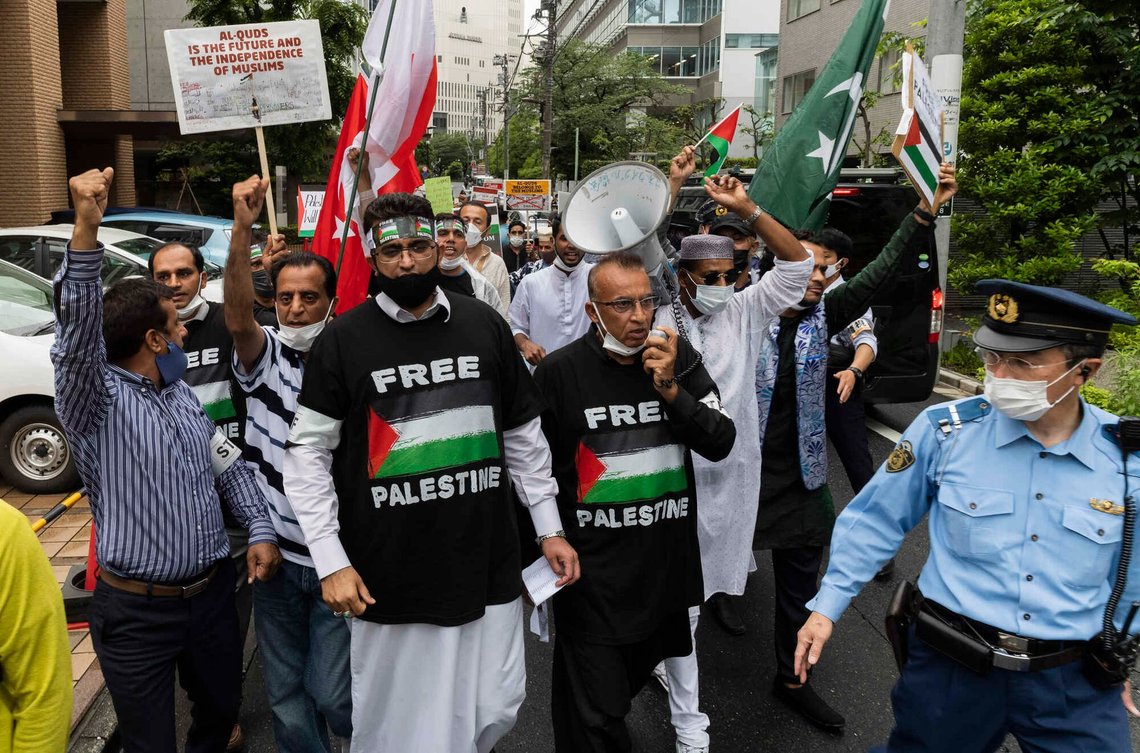
Muslims are becoming increasingly unpopular in Japan. This is reported by the Hong Kong-based South China Morning Post (SCMP).
The growing discrimination against Muslims is causing concern among residents, the newspaper writes, fearing that hostility could escalate into violence.
Misinformation and hate speech are spreading on Japanese social media, and mosques are receiving a stream of abusive phone calls and emails.
According to Hirofumi Tanada, professor emeritus at Waseda University who researches religion in Japan, there were around 420,000 Muslims in Japan at the end of 2024, up from 230,000 in 2019. There are now more than 160 mosques across the country.
Last year, a rumour spread in Osaka that the Muslim call to prayer was being broadcast at high volume from a mosque early in the morning.
In February this year, a series of suspicious fires broke out at a mosque and a used-car showroom operated by Pakistani nationals in Ebetsu, Hokkaido, in northern Japan.
In Fujisawa, in Kanagawa Prefecture near Tokyo, protests have arisen in connection with the construction of a mosque.
“The harassment started completely suddenly, as if it had just exploded out of nowhere,” says Ali, a pseudonym, the leader of a mosque in a city in the northern Kantō region.
Since last year, he has received five to ten phone calls and emails daily containing messages such as “Go back to your country” and “Japan does not need mosques”.
Ali’s mosque was established around 30 years ago. Although its members were once in conflict with the local community over issues such as street parking, tensions have eased through cooperation with local authorities and the police.
It has also served as a place to teach new immigrants about Japanese customs, such as waste collection and Japan’s pension system.
“We have always tried to ensure that the mosque functions as a bridge to the local community,” Ali said.
But intolerance towards Muslims has suddenly increased over the past year.
“People who do not know each other are stirring things up on social media,” said a male university student from Pakistan who had come to pray at the mosque. “Why is this happening when my friends are so understanding of my faith?”
A man in his thirties of Pakistani background said he is concerned that the hostility could escalate into violence.
Japan utpeker fire japanske byer som «hjemsteder» for afrikanske migranter
Japans konservative advarer: – Det Europa vi kjente vil aldri komme tilbake
There is growing demand among Muslims across Japan for Islamic cemeteries and halal school meals.
In Japan, cremation and the burial of ashes in Buddhist temple cemeteries are the norm.
Michito Ohashi is a visiting researcher at the Institute for Multicultural Coexistence at Aichi Prefectural University and specialises in the Muslim community in Japan.
“There is a tendency for local issues to be shared extensively on social media, making it easier for anxiety to spread,” says Ohashi.
He emphasised that although laws and regulations governing hate speech have had some effect, they have not been sufficiently effective as a deterrent.
“It is important for the local community to relate to Muslims based on their identity as individuals, not their identity as Muslims,” he told the South China Morning Post.