

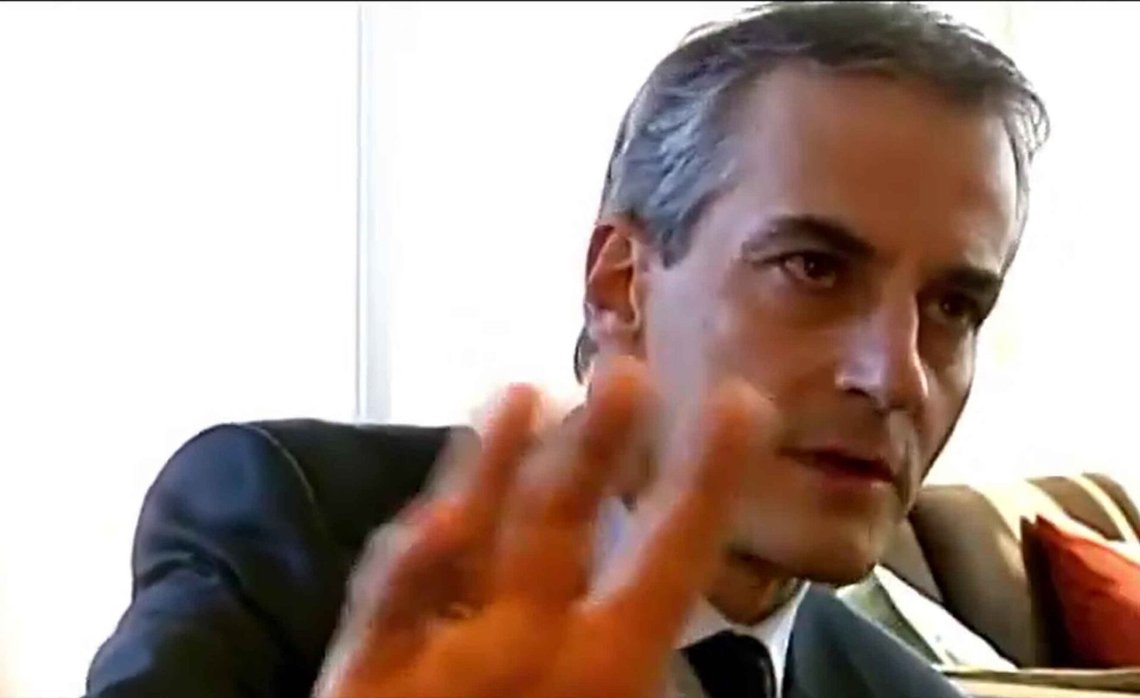


The question is uncomfortable, but after reviewing several cases in which Jonas Gahr Støre has made directly contradictory statements, offered obvious excuses or presented selective accounts, it is difficult to dismiss it. The most recent case concerns the missing archives from the Oslo Process. But that is not the only case where questions can be raised about the Prime Minister’s handling of the truth.
Between 2004 and 2006, historian Hilde Henriksen Waage documented that the Ministry of Foreign Affairs’ archives were missing documents from the most intensive phase of the Oslo Process in 1993. The National Archives (now the National Archives of Norway) and the Ministry of Foreign Affairs began work to trace the material, and discovered that Terje Rød-Larsen was in possession of a private archive.
As Foreign Minister in 2006, Støre denied that any documents were missing from the MFA’s archives, and Støre allowed the MFA to declare the matter closed. A press spokesperson stated on his behalf: “Our conclusion is that there are no documents relating to the Oslo Process held by him (Rød-Larsen) that are missing from the Ministry of Foreign Affairs’ archives. We consider the matter closed.’ Støre repeated the same message in 2012. In 2025, Støre replied that he had no comment on the fact that documents were still missing.
In 2026, however, in the wake of the Epstein revelations, Økokrim discovered boxes of documents – some marked ‘secret’ and ‘strictly confidential’ – in the basement storage room of Rød-Larsen and Mona Juul. The storage of these classified documents is not only in breach of the Security Act. The National Archives has pointed out that it is also in breach of the Archives Act and has opened a supervisory case against the Ministry of Foreign Affairs.
The most striking aspect in this context, however, is that Støre has since claimed that he always believed the material should be placed in the National Archives, a statement that stands in stark contrast to his statements from 2006 and 2012, in which he denied that the Ministry of Foreign Affairs was missing any documents from its archives.
Waage and others have pointed out that Støre’s statement effectively halted the investigation and protected Rød-Larsen. Støre has given several shifting explanations, which are difficult to interpret as anything other than excuses: that Rød-Larsen was not a Ministry of Foreign Affairs employee (documents nevertheless show links to an office, remuneration and a diplomatic passport), that the Ministry of Foreign Affairs had no means of exerting influence over Terje Rød-Larsen, and that the Ministry’s understanding of archival matters was inadequate.
These appear to be nothing more than excuses and a possible abuse of power, intended to shield either Terje Rød-Larsen, the Ministry of Foreign Affairs or Jonas Gahr Støre himself from public scrutiny. However, this is not the only instance in which Støre has demonstrated a rather dubious approach to the truth.
As Foreign Minister in 2006, Støre strongly criticised *Magazinet* and Vebjørn Selbekk for publishing the Muhammad cartoons. He used phrases such as ‘extremists on both sides’ and claimed to foreign audiences that only the small magazine had published them, despite the fact that several major media outlets had done the same, including Aftenposten, Dagbladet, Bergens Tidende, Stavanger Aftenblad and TV 2.
Critics believe that this helped to isolate Selbekk and put his family in danger. They were subjected to death threats and had to be placed under police protection and move to a secret address. Selbekk has repeatedly pointed out that the government sacrificed freedom of expression in order to defuse the conflict. Støre has since provided partial explanations and clarifications, but he has not admitted that the claim that only *Magazinet* published the cartoons was incorrect, and he has never offered any apology.
In 2011, Støre was asked by TV 2 whether he had spoken to Hamas leader Meshaal. He initially replied in the negative. However, when confronted with the fact that Meshaal himself had confirmed telephone conversations with Støre, he asked to re-record the interview and subsequently admitted to the conversations from 2007 at Abbas’s urging, according to Støre.
The opposition, including Siv Jensen, believed that the Storting had been misled. Støre had previously given the impression that there was no political contact at this level. He claimed that he had misunderstood the question and that the Storting had, in broad terms, been kept informed. Anyone who has seen the recording, will realise that Støre was trying to lie his way out of the contact with Hamas.
In 2021, Støre criticised the Conservative government for having severed ties with Russia following the annexation of the Crimean Peninsula in 2014. He wanted a more active approach towards Russia. Foreign Minister Ine Eriksen Søreide strongly rejected this, saying that he was “saying something he knows is not true”.
Støre’s criticism was clearly greatly exaggerated. Norway had held several meetings with Russia, including at foreign minister level, and had maintained far closer contact with Russia than many other Western countries.
Days before the 2025 election, on board a ferry in Rogaland, Støre told the local newspaper Øyposten that “Ferries must remain free” – at least if he were allowed to remain in power. At that point, it had already been decided in the budget conference that the scheme was to be scrapped. Similarly, the impression was given that he was in favour of continuing or extending student loan debt relief in outlying municipalities. This, too, was cut.
When confronted about this afterwards, both Støre and Jan Christian Vestre apologised that the statements “were incorrect”. They blamed internal communication, or the fact that they had not linked it to the budget during the conversation. The government partially reversed its position following the pressure. Critics called it one of the clearest election lies in a long time. Støre insisted that no one had lied.
Later in 2025, during a debate on maternity care, Støre cited a personal experience within his immediate family where it ‘had not been safe’, and described Norwegian maternity care as unsafe. Critics pointed out that his son was under investigation in connection with a home birth attended by a doula (a non-authorised healthcare professional) during which a child died – a crucial piece of context that Støre failed to mention. He blamed the Norwegian health service.
The case concerning Terje Rød-Larsen’s archive from the Oslo trial is the most systematically documented. For years, it was dismissed by Støre’s leadership, followed by shifting explanations when the material finally came to light. The other examples – the cartoon controversy, the Hamas contact, the Russia statement, the ferry and debt relief promises, and the selective family reference – however, reveal a consistent pattern of statements that later had to be corrected, explained away or apologised for as ‘mistakes’.
Støre has often cited misunderstandings, poor communication or the fact that he ‘does not remember’. This may explain individual instances. But when the pattern repeats itself over two decades, in matters of both foreign and domestic political significance, it becomes difficult to draw any conclusion other than that Støre’s handling of the truth appears highly dubious.
Trust and credibility in politics are based on what one says being true, or at the very least not being in direct contradiction to what one knows. The Eighth Commandment is part of the Christian ethics to which Støre professes his adherence. We cannot have a Prime Minister who constantly misleads the electorate.


