



There were surely few music lovers who were not moved when the news of Freddie Mercury’s death spread around the world on 24 November 1991.
Tuesday marked 35 years since the Queen frontman died, aged just 45.
Two generations have been born since then, and people all over the world are still singing along to his songs. Many of his fans hadn’t even been conceived when Mercury left this world.
That says a great deal about the man and the music he left behind.
From Zanzibar to the world’s biggest stages
Freddie Mercury was born Farrokh Bulsara on 5 September 1946 in Zanzibar, to parents of Indian-Parsi descent.
He spent much of his childhood at a boarding school in India, where, amongst other things, he learnt to play the piano. In 1964, the family moved to England.
Six years later, he formed Queen together with guitarist Brian May and drummer Roger Taylor. Bassist John Deacon joined the following year, and the line-up was complete.
The four of them would go on to make music history.

The author of the article on her way into the studio Queen had in Montreux. Photo: Cheryl S. Johansen.
Queen were difficult to pigeonhole into a single musical genre. Hard rock, pop, opera, gospel and rockabilly were among the musical styles the band mastered, and Mercury had a voice that allowed him to move between them.
When Queen released the nearly six-minute-long ‘Bohemian Rhapsody’ in 1975, the band defied most of what was then considered the recipe for commercial success.
A rock song featuring an operatic section, with no traditional chorus and a length that made it unsuitable for radio, should, in theory, not have had the best prospects of becoming a hit.
It topped the UK singles chart for nine weeks.
Now, more than half a century later, it remains one of the world’s most famous rock songs.
20 minutes that went down in music history
On 13 July 1985, Freddie Mercury took to the stage at Wembley Stadium in London alongside his three bandmates during the Live Aid charity concert.
Some of the world’s greatest artists were gathered on this day. But it is, in particular, Queen’s just over 20 minutes on stage that have gone down in the history books.
Wearing a white vest and a pair of shorts, and with a microphone stand as his only prop of note, Mercury had the audience eating out of the palm of his hand.
There was no need for a spectacular light show, fireworks or dancers.
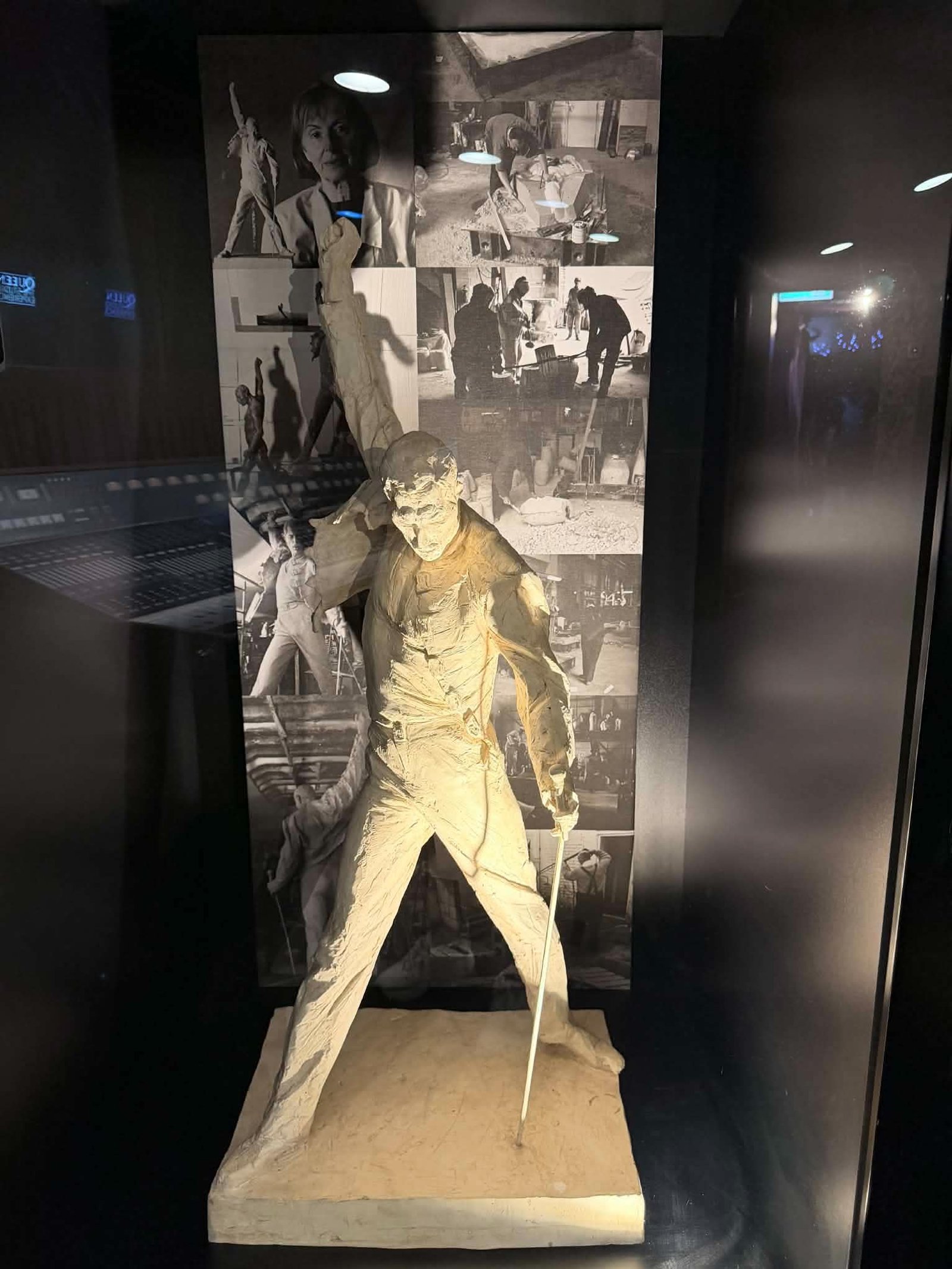
Inside the studio. Photo: Cheryl S. Johansen
All it took was four outstanding musicians and a vocalist with an almost incomprehensible ability to connect with her audience.
At a time when large parts of the entertainment industry seem to be more concerned with the packaging than the content, it’s worth spending 20 minutes watching this recording again. And again.
Sang until the very end
Mercury’s final concert with Queen took place at Knebworth Park on 9 August 1986.
But even as his illness gradually made it impossible for him to perform on stage, he continued to work in the recording studio.
In February 1991, the album ‘Innuendo’ was released, featuring, amongst others, ‘These Are the Days of Our Lives’ and ‘The Show Must Go On’.
The latter, which was mainly written by Brian May, is difficult to listen to without thinking about the circumstances surrounding its recording.
Here, a seriously ill man sings with a power and intensity that very few healthy vocalists would have been capable of delivering.
On 23 November 1991, Mercury publicly confirmed that he was HIV-positive and had AIDS.
The following day, he died at his home in Kensington, London, from pneumonia resulting from his illness.
The world had lost one of its greatest musical talents.
In 1995, the remaining members of Queen released the album ‘Made in Heaven’, on which they used, amongst other things, vocal recordings Mercury had made during the final months of his life.
Back at Wembley
On Tuesday, the large artwork of Freddie Mercury at Wembley Stadium was illuminated by 350 electric candles to mark the 35th anniversary of his death.
Mercury’s sister, Kashmira Bulsara, and her son Samuel were present, along with the artist Frank Styles, who created the artwork.
The artwork was unveiled in September, to coincide with what would have been Mercury’s 80th birthday.
The generation of his nieces and nephews, and the generations that have followed them, have long since taken his music to their hearts.
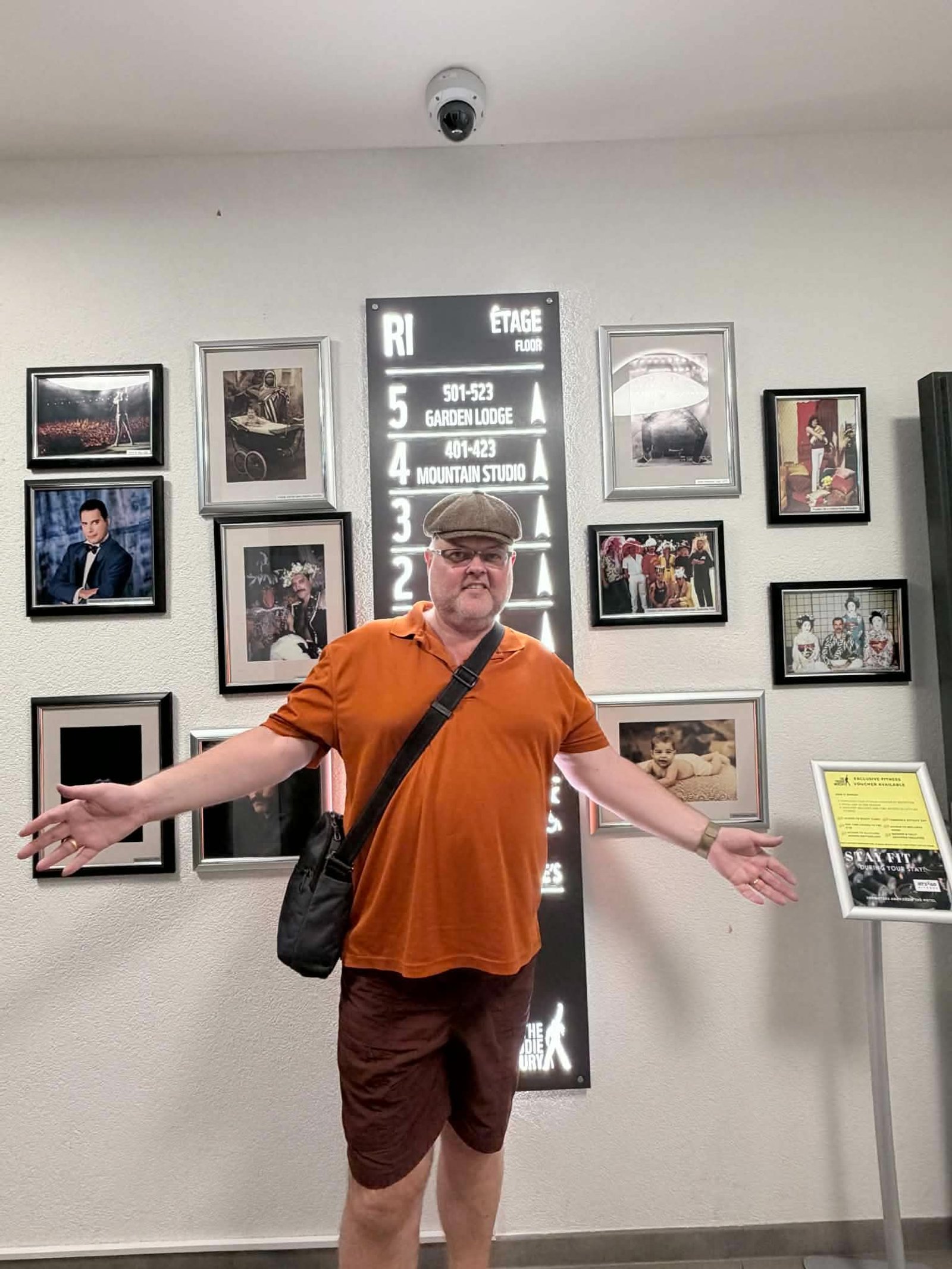
We stayed at the Freddie Mercury Hotel in Montreux. Photo: Cheryl S. Johansen
According to German broadcaster ARD, ‘Bohemian Rhapsody’ has now been streamed more than three billion times on Spotify alone.
That’s an impressive figure for a song released 34 years before Spotify became available in the UK.
A journey in Freddie Mercury’s footsteps
This summer, I first travelled to Montreux in Switzerland, where Queen recorded several albums. They enjoyed their time there, as Mercury was not bothered by journalists and photographers speculating about whether he was ill.
I had the chance to see the statue of Freddie Mercury, I stayed at the Freddie Mercury Hotel, and I got to see the studio Queen used for their recordings.
My journey then took me to London and Kensington. Standing outside Garden Lodge, the house Freddie Mercury loved and the place where he died, was a deeply moving experience.
It was all magical, and if you get the chance, I highly recommend it.
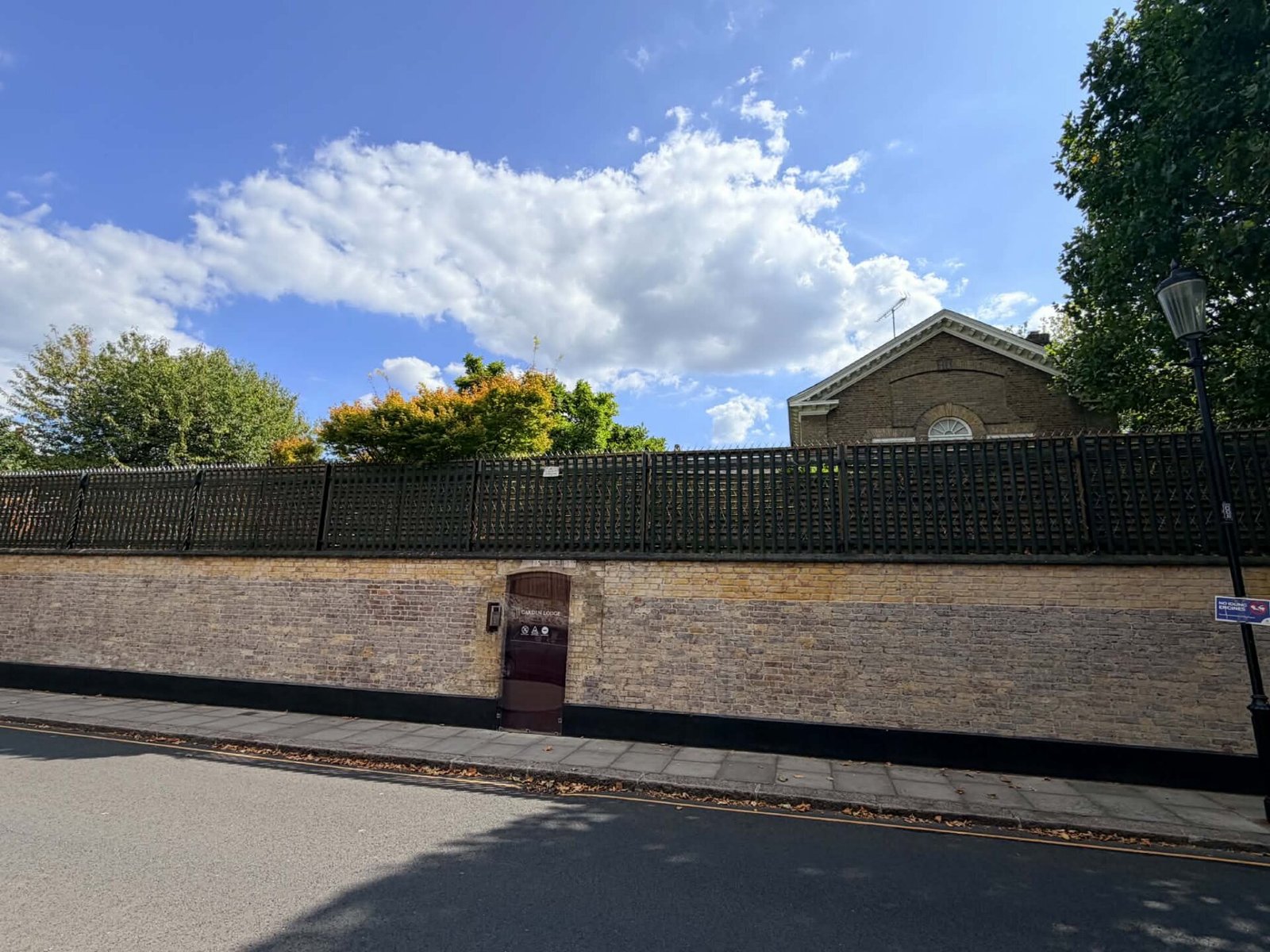
The main entrance to Garden Lodge, Freddie Mercury’s home in London. You can just about make out an arched window just above the fence. That is the bedroom where Mercury died. Photo: John M. Johansen
The music lives on
There are many talented vocalists, and there are many with impressive vocal range. But few possess the additional ability to write songs that become part of people’s lives.
Freddie Mercury had both.
He could get a packed football stadium to sing along to ‘We Are the Champions’, only to move people the very next moment with a song like ‘Love of My Life’.
He could sing rock ’n’ roll, and he could sing alongside the Spanish opera singer Montserrat Caballé.
And he did it in his own unique way.
It is sad to think of all the music we never got to hear because Freddie Mercury died far too young.
But that’s all the more reason to be grateful for what he managed to give us.
35 years have passed, and the world is still singing along.
The show must go on.


