

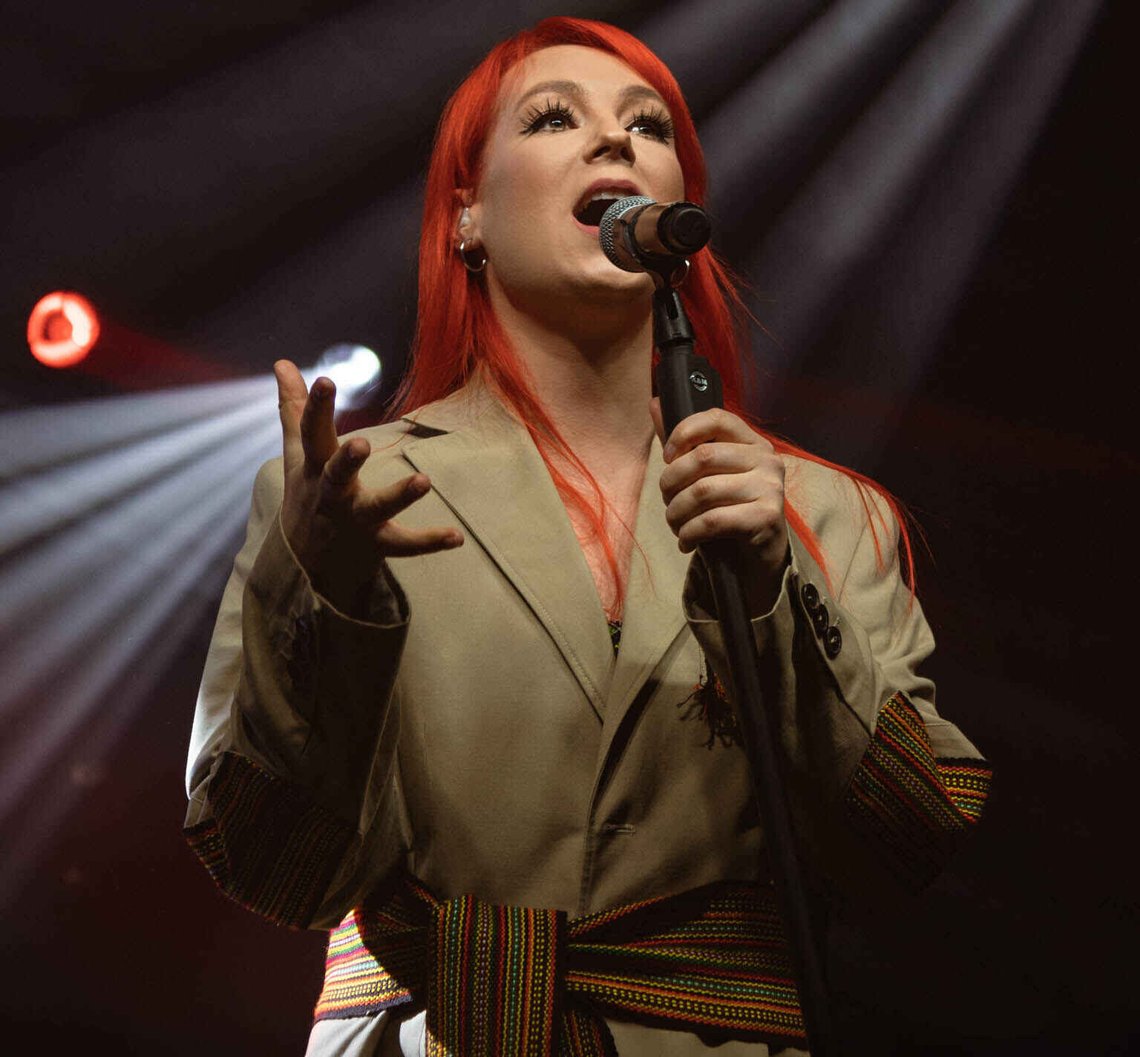


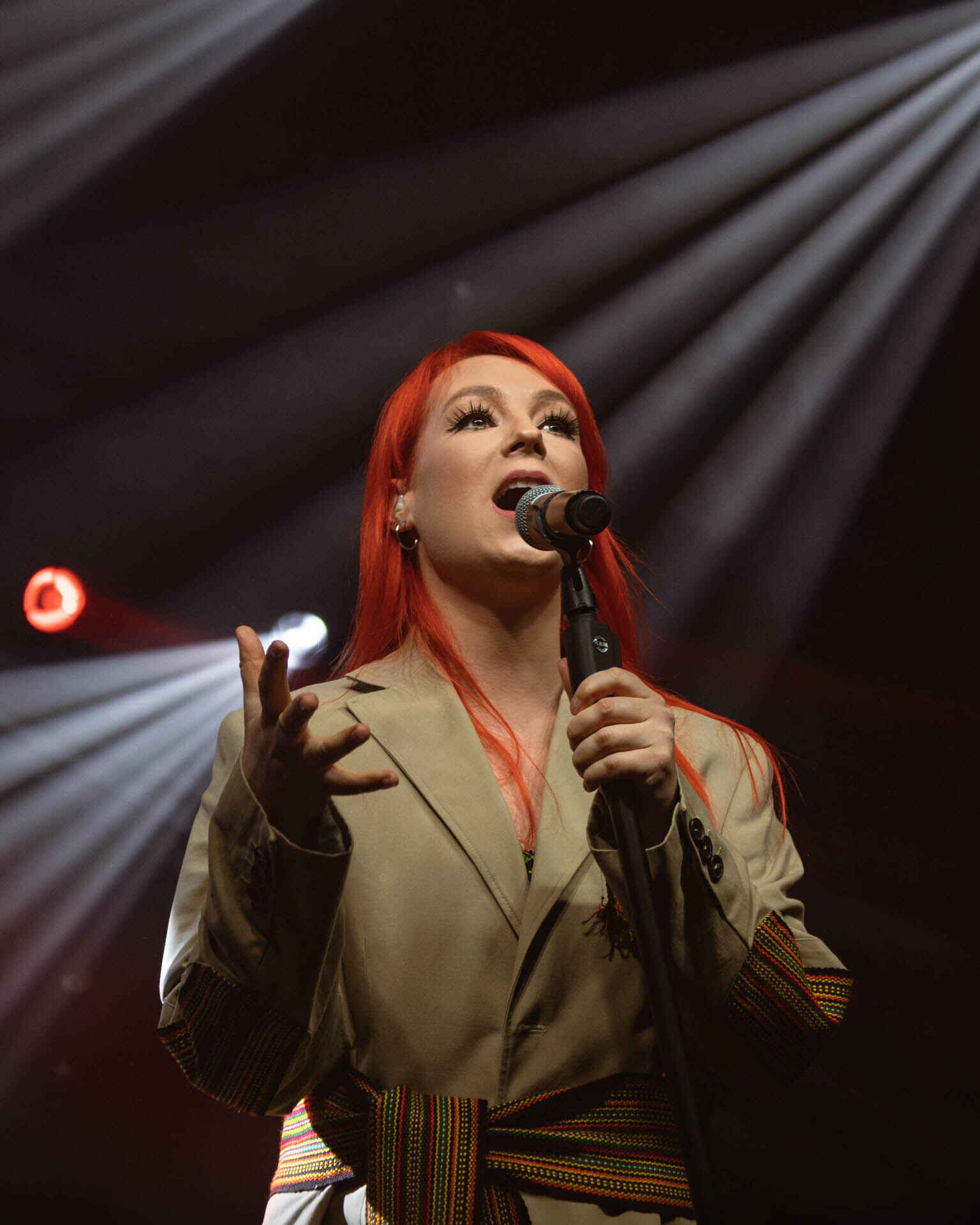
Svitlana Tarabarova (Wikimedia Commons)
In 1909, the revolutionary postmaster Adam Egede-Nissen stood in a church in Vardø with a christening bundle in his arms. He was a man who knew both Lenin and Leon Trotsky personally, and who was monitored by Norwegian counter-intelligence for decades. Trotsky had grown up on the steppes of the Kherson Governorate, in a multilingual borderland where Russian and Ukrainian blended together. Standing beside the postmaster was the local cinema manager with his own infant in his arms. In the parish register for 1909, two girls of the same age were entered side by side: the cinema manager’s daughter – a future grandmother – and Egede-Nissen’s daughter, Goggi Unn, commonly known as Lill, who would later leave her mark on the theatre stages of the Norwegian capital.
Almost 120 years later, the wheels of history are turning once again, but this time the revolution unfolds in the darkness behind a digital screen. From precisely the same soil in Kherson comes Svitlana Tarabarova – a pop artist who today deserves our full attention, and who, thanks to modern technology, can finally reach us with complete linguistic immediacy. There is profound historical symbolism in the very year of her birth. Tarabarova came into the world in 1990, at the close of an era, barely a year before the final collapse of the Soviet Union. She was born during the swansong of the old empire, as a child of the new, independent Ukraine that would rise from its ruins.
For a long time, Eastern European pop music remained locked behind an impenetrable wall of Cyrillic letters and unfamiliar grammatical cases. To Scandinavian ears, Ukrainian pop was either exotic glitter in the Eurovision Song Contest, or inaccessible songs broadcast by radio stations we were least likely to tune into. That is no longer the case. With real-time auto-translation and algorithms that erase national borders, language is no longer an obstacle. It is a tool. Today we can deconstruct a Ukrainian lyric phonetically, understand its etymological kinship with Russian or Polish, and grasp its deepest nuances within seconds.
And that is precisely why we should be listening to Tarabarova right now.
At first glance, Svitlana Tarabarova may appear to be a straightforward mainstream pop artist. But scratch beneath the surface and you discover a musical sensibility akin to that of the greatest melancholic artists in our own part of the world. Visually, she possesses the same intense, fragile presence as Portishead‘s iconic vocalist, Beth Gibbons. Yet whereas Gibbons channels a bleak trip-hop despair, Tarabarova reaches towards existential light.
It is here that the parallel with Ane Brun becomes striking. When Tarabarova strips away the production and sits down at the piano, she sings with an airy, vulnerable vibrato that makes the music deeply personal and cinematic. She takes the formula of commercial pop and elevates it into something far greater.
This distinctive visual and musical identity becomes especially apparent in her music videos, which stand in sharp contrast to the frantic aesthetic of the modern pop industry. Her videos are marked by remarkable simplicity. There are no hyperactive edits or stressful cuts competing for your dopamine. Instead, the camera lingers in long, tranquil sequences that give the viewer space to breathe. The settings are often the majestic, untouched landscapes surrounding the vast Kherson waterway – the mighty mouth of the Dnipro River as it flows into the Black Sea. The deep riverbanks, the open countryside and the monotonous yet beautiful horizons mirror the melancholy in her voice in a way that feels raw and unfiltered.
The visual and lyrical universe merges into a unified whole that strikes a nerve in a Europe scarred by war. In songs such as «Не чекай» (Don’t Wait), she sings lines that hit like a blow to the chest: «Не чекай, це ти! Світ змінюєш тільки ти!» – Don’t wait, it’s you! Only you can change the world! It echoes Tolstoy’s radical Christian humanism and the morality of the Sermon on the Mount: genuine change does not begin from the outside, but in the heart and actions of the individual. She sings about discovering the light within («Світло в тобі») in order to drive away the darkness without.
In earlier times, we depended upon visionary cultural figures to bring the world to us – just as the cinema manager in Vardø spent four decades cranking the projector into life to provide local people with a window onto the unknown. Today, we are our own cinema managers. Technology has democratised the global listening experience. When we listen to Tarabarova’s latest releases and linger over the long, meditative shots along the banks of the Kherson waterways, we are not merely listening to captivating rhythms; we are studying a living language in transformation and an artist who carries history’s fault lines in her birth certificate.
Svitlana Tarabarova reminds us that pop music can be intellectual, vulnerable and revolutionary all at once. With the technology in our pockets, we no longer have any excuse for turning our backs. It is time to lend her our ears.


