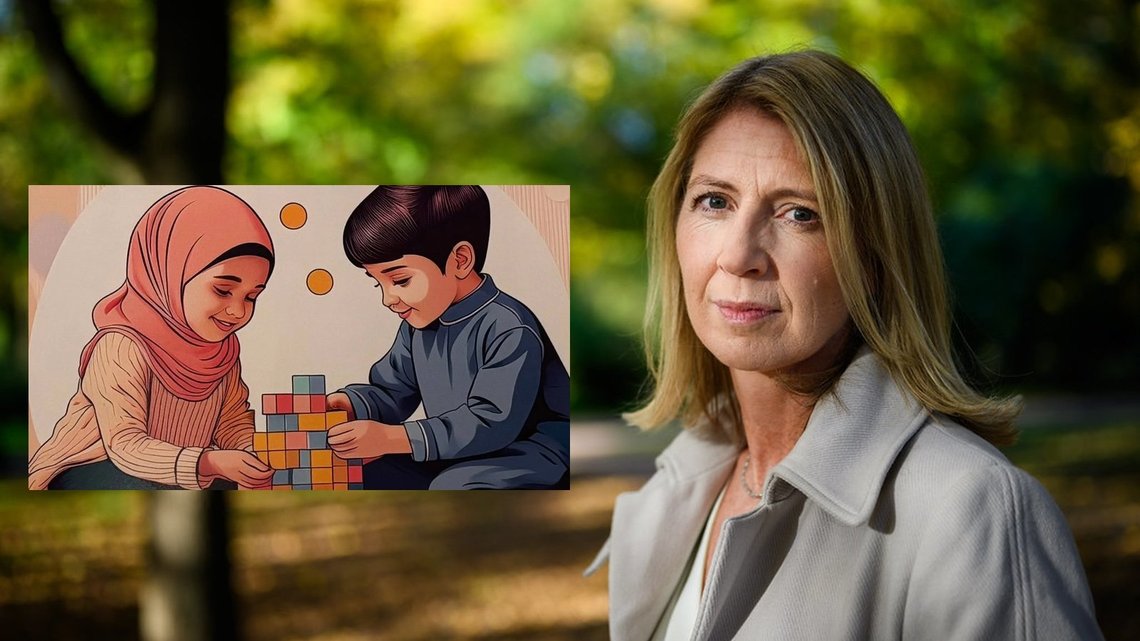


All the girls depicted as Muslims in the IRN’s textbook for six-year-olds are drawn wearing a hijab. Children’s Ombudsman Mina Gerhardsen calls for ‘diversity’, but refuses to take a stance on the issue of the hijab in nurseries.
A six-year-old has no religious obligation to wear a hijab, the Islamic Council of Norway has told NRK. According to Utrops’s review, however, all the girls depicted as Muslims in the Council’s textbook are drawn wearing a hijab.
Gerhardsen has warned NRK that the illustrations may create an expectation that young girls should cover their hair. She has called for greater diversity to be shown amongst the Muslim children.
Document asked whether more drawings of girls without a hijab would solve the problem. Gerhardsen was also asked to consider whether the wearing of a hijab by six-year-olds might in itself be problematic. Her response centred on diversity, religious coercion and opposition to a hijab ban.
When Document clarified that the question concerned the children’s hijab itself, regardless of the book and the legal ban, the following message was received from communications adviser Kari Stenquist:
– We believe the answers we have provided so far are comprehensive, and we have nothing further to add on this matter.
Covered up even whilst playing
‘Let’s Learn About Islam’ is published by the Islamic Council of Norway (IRN) and is intended for Year 1 pupils. In one of the illustrations, a little girl and a boy are building with blocks. The boy’s hair is visible. The girl’s hair and neck are covered.
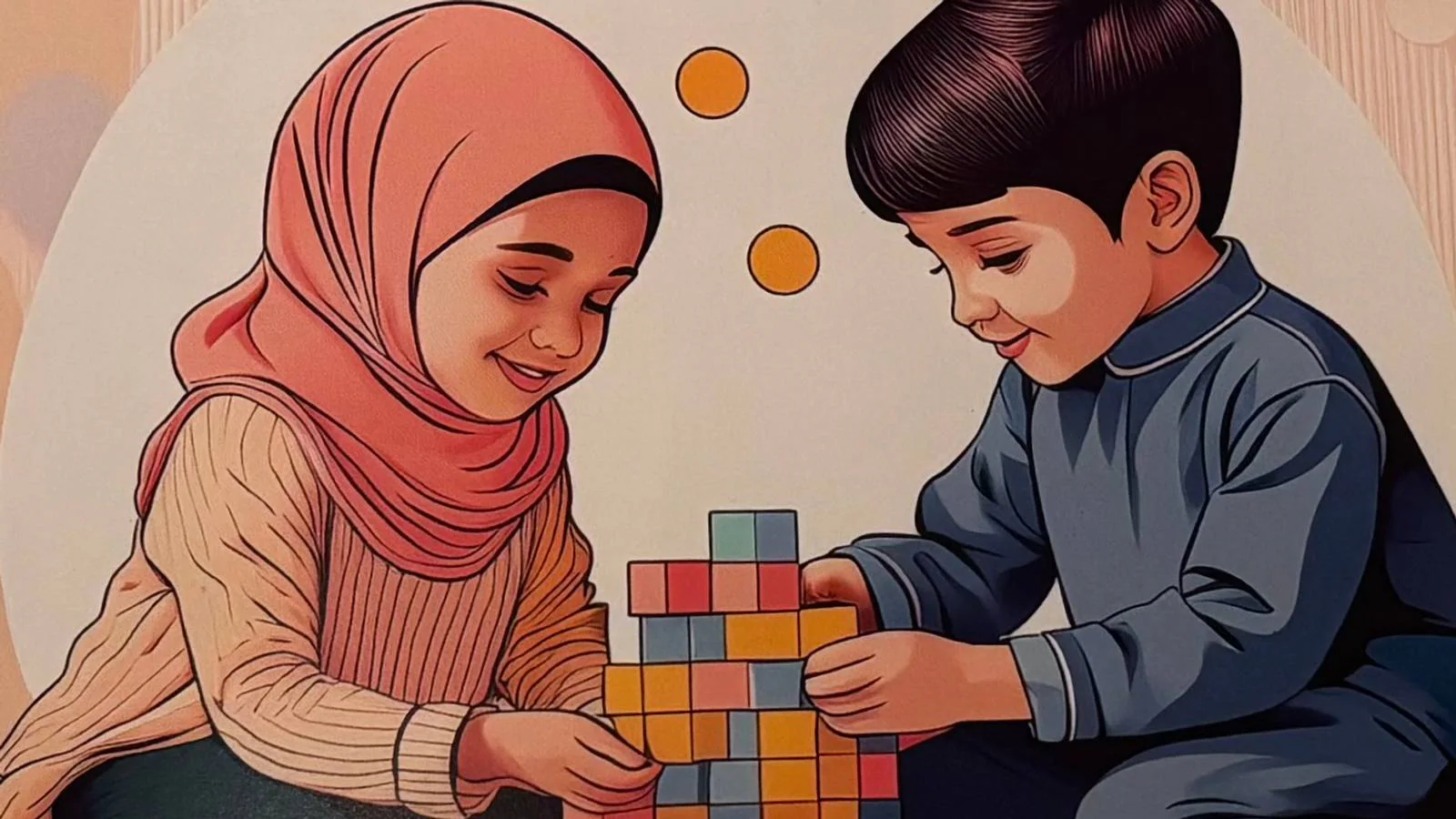
Even when the children are playing, the girl is depicted with her hair and neck covered, whilst the boy’s hair is visible. Illustration: From ‘Let’s Learn About Islam’ / IRN.
The hijab forms part of Islamic rules regarding women’s modesty and covering up in the presence of men outside the immediate family. Its use has traditionally been linked to puberty.
Speaking to Utrop, IRN has defended the illustrations by stating that the hijab is a recognisable religious symbol, even in everyday situations. At the same time, the organisation has emphasised that the images are not intended as a requirement for young children’s clothing or as a definition of who is a Muslim.
Calls for greater variety
Gerhardsen believes the illustrations should show more ways of being Muslim.
– As regards the Islamic Council of Norway’s new textbook, it would be a great advantage to show greater diversity in its illustrations. When all the girls are depicted wearing a hijab, this does not reflect the diversity among Muslim children,” says Gerhardsen in a statement to Document.
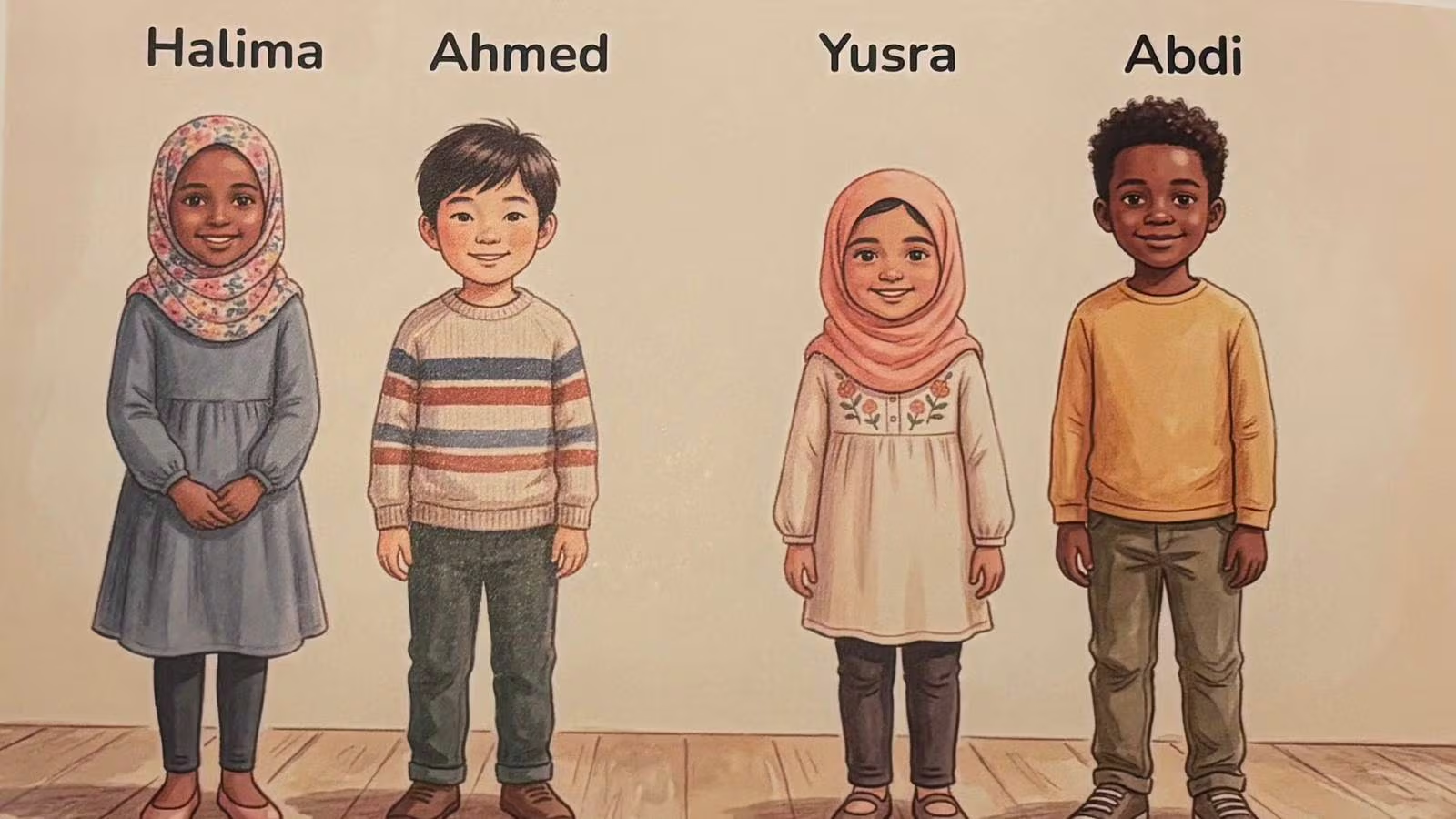
Halima, Ahmed, Yusra and Abdi in ‘Let’s Learn About Islam’. Both girls are depicted wearing a hijab, whilst the boys’ hair is visible. Illustration: IRN.
She also emphasises that the textbook should not contribute to social pressure on children to wear a hijab. The Ombudsman for Children states that the assessment is based on Utrop’s descriptions and images. The Ombudsman has not seen the book in its entirety.
Response regarding a legal ban
In her response, Gerhardsen highlights the Ombudsman for Children’s opposition to banning the hijab.
– The Ombudsman for Children is opposed to a legal ban on the hijab or other religious symbols in nurseries and schools. A general ban on the hijab could be counterproductive.
She points out that a ban could result in some children being excluded from nursery or state schools. At the same time, Gerhardsen emphasises that children should not be forced to practise a particular religion, and that parents’ religious upbringing must safeguard children’s needs and rights.
Document therefore requested a response to the following:
‘Does the Ombudsman for Children believe that it may be problematic in itself for a six-year-old girl to wear a hijab for religious reasons?’
The follow-up email also addressed expectations at home, without the child necessarily being explicitly instructed to cover her hair. Stenquist replied that the previous answers were sufficient, and that the Ombudsman for Children had nothing further to add.
IRN has still not replied
Document has asked IRN to explain why young Muslim girls are consistently depicted wearing a hijab when they have no religious obligation to do so.
The Council has also been asked whether this portrayal might contribute to the sexualisation of young girls by applying norms of female modesty and covering to children before puberty.
IRN initially replied that the organisation had not had time to respond by the deadline. Document informed them that the article had not yet been published and granted the Council more time.
IRN has not replied to this email.