

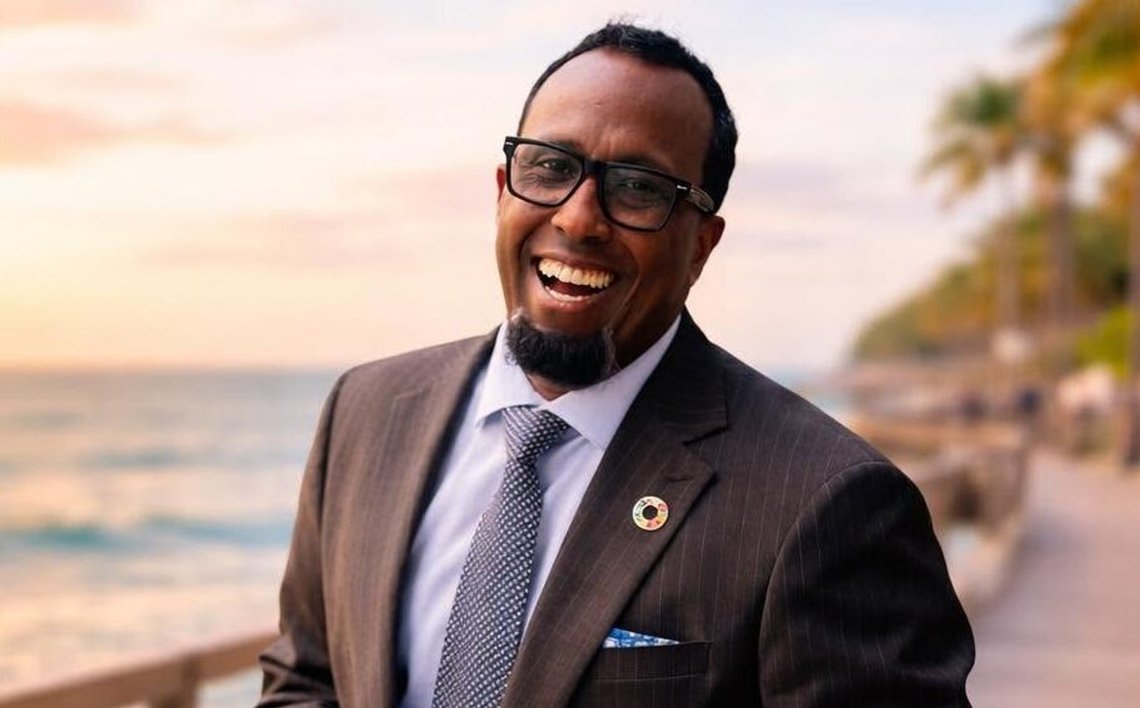


Abdullahi Mohamed Alason (Ap) believes that the debate over banning the hijab for Muslim girls in nursery and primary school is about far more than just an item of clothing.
“It is about freedom of religion, equality, children’s self-determination and the kind of society we want to be,” he writes in an article in the newspaper KRS on Sunday.
Alason, who sits on Kristiansand City Council, is clear that no girls should be subjected to religious pressure, coercion or negative social control. Children should be allowed to be children and make their own choices as they get older. However, in his view, a general ban on the hijab is not the answer.
He points to France, which in 2004 banned conspicuous religious symbols in state schools. There, the ban also applied to Jewish kippahs and large Christian crosses. Alason asks where the line will be drawn next, if one first opens the door to banning the symbols of one faith. Should we then also discuss banning crosses and Jewish symbols?
Alason also highlights the Convention on the Rights of the Child, which stipulates that children have the right to freedom of religion, and that the best interests of the child must be a primary consideration. Furthermore, he fears that a ban could result in some girls being kept at home from nursery and school.
“Have we then strengthened their freedom, or deprived them of education and a sense of community?”, he asks.
In the view of the Somali Alason, the fight against negative social control must be waged through knowledge, dialogue and the protection of the individual child, not through measures that affect everyone.
“We must be able to stand up for girls’ freedom without turning Muslim girls into a political symbol,” writes Alason, who came to Norway as a refugee in 1987. He was 17 years old at the time.
Alason also points out that the Storting voted down the Progress Party’s proposal to ban the hijab in nurseries in May, by 70 votes to 29.
However, when KRS shared the post on Facebook, the comments section was overwhelmingly critical of Alason. Of the 17 comments Document has read, only one was positive.
“To claim that wearing a hijab in Norway is a way of supporting feminism, freedom or children’s rights is to spit in the faces of all the women, children and men who have died for the freedom to do away with it,” writes one man. He believes that in many countries the hijab is linked to child marriage, and asks Alason instead to explain what he is doing for women and children there.
One woman calls it shameful that a grown man talks about freedom and the veiling of young girls in the same breath. She calls it political Islam and control, and believes that parents who keep their daughters out of school because they are not allowed to wear the hijab should be prosecuted and punished.
The argument that girls can be kept at home prompts several people to react. One woman writes that such parents should find another country to live in. Another believes they should lose their parental rights. She challenges Alason to wear a cap indoors and outdoors, in all weathers, and then try to explain that a ten-year-old child has chosen to wear the hijab of their own accord.
One man points out that the Islamic Council recently published a book for use in nurseries, in which all the Muslim children were depicted wearing the hijab, and that the book was criticised by the Ombudsman for Children. This shows, he believes, that the children have no choice. One woman writes that she has never seen anything like this in Norway before, and that she now sees babies in prams wearing hijabs.
Others are more succinct. “Adapt or leave,” writes one. “Of course children shouldn’t wear hijabs,” writes another. One man would rather protect those who break away, and calls for an end to state funding for reactionary mosque communities and for Koranic schools to be closed. Another asks whether female genital mutilation will be next, defended with the same argument about religious freedom.
Only one comment supports Alason unreservedly. “Well written,” writes a woman who wears a hijab herself.


