

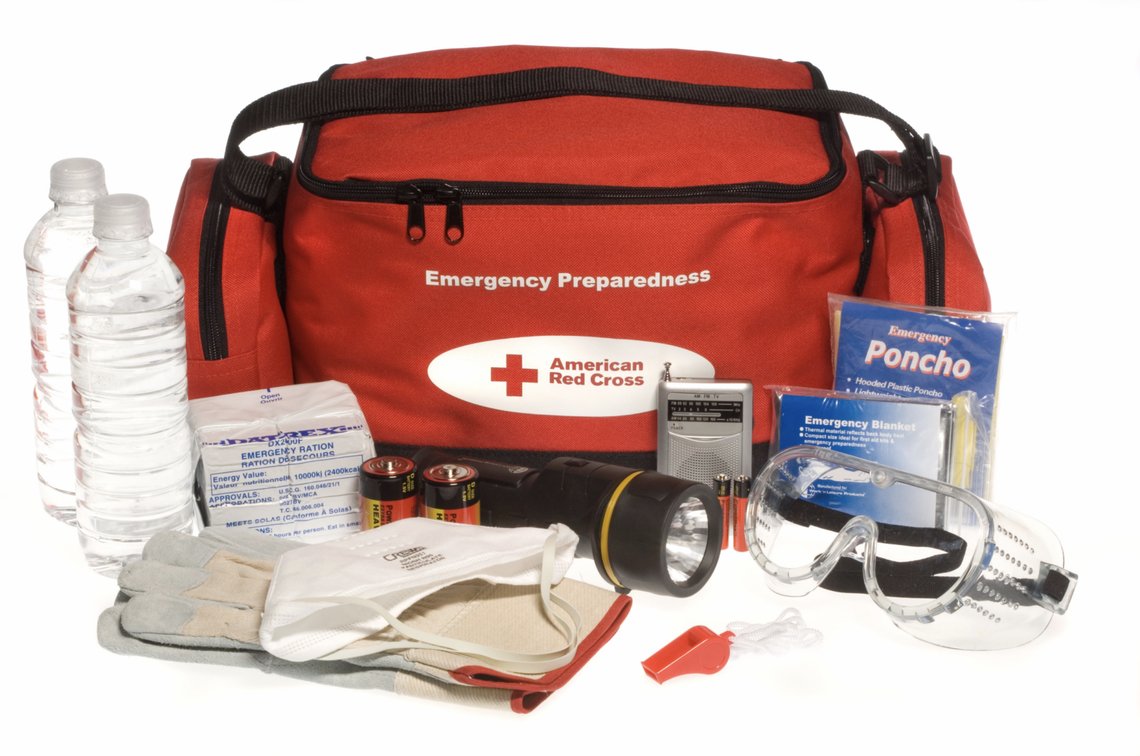


Thank you for all your comments and feedback on the first article in the series, which can be read here. It is clear that many people are interested in this topic. This time, I would like to explore some fundamental considerations regarding personal preparedness, before embarking on a more systematic review of the individual topics within this area. I will return to civil preparedness later; for now, the focus is on each and every one of us.
The aim of this series of articles is to be practically oriented. For preparedness to work as effectively as possible, it is important to try to imagine and visualise crises that might occur, their consequences, and what one can and should do to get through the crisis. Once a crisis is upon us, the situation often deteriorates rapidly, and our scope for action can quickly become limited. The better prepared you are, the better you can utilise this scope for action to ensure a degree of normality, comfort, safety and, ultimately, survival.
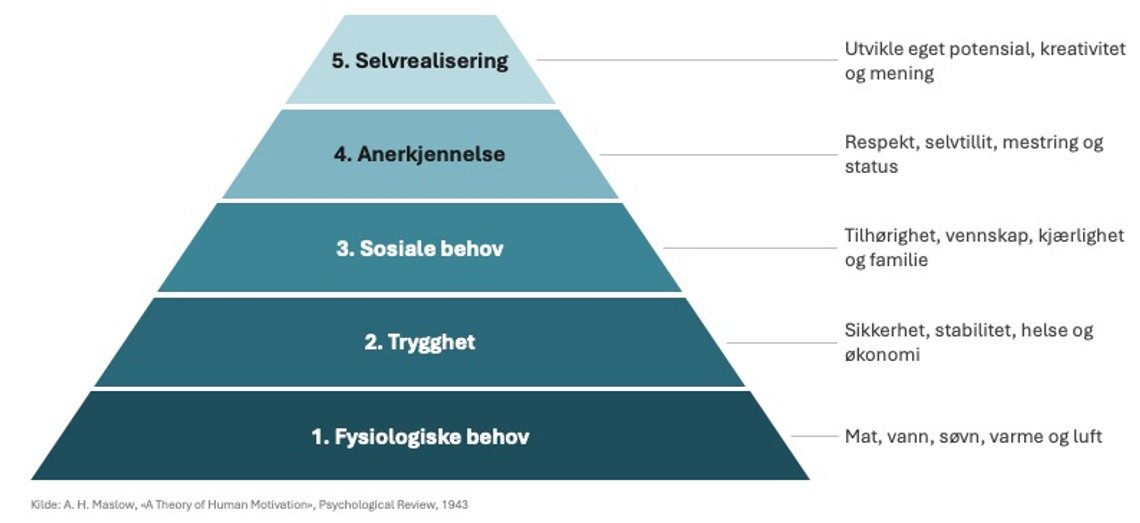
Maslow’s hierarchy of needs is useful for personal preparedness, as it helps us to assess how important a given need is in relation to others. We must all recognise that we are not able to be equally prepared for everything that might happen, and the hierarchy can be used to prioritise correctly. In this series, the main focus will be on level 1: Physiological needs, and level 2: Safety.
These needs are common to all people, whilst the specific needs of each individual can vary greatly. For example, everyone needs to maintain good health, but older and sick people naturally have very different specific needs that must be met to preserve their health compared to young and healthy people.
At the same time, it is important to recognise that a given means of support can be relevant to several needs. For example, mobile communication may be crucial for communicating with family members located elsewhere, in order to help them with physiological needs they are unable to meet themselves. Functioning mobile communication can therefore be important for our ability to meet these basic needs, even though one might instinctively place such communication at level 3 or higher in the pyramid. This also illustrates well how needs – or perhaps rather expectations regarding available resources – change over time. Fifty years ago, such communication would not have been available at all, and the expectation would have been that people would have to manage without it. I shall return to the topic of mobile communications in an emergency context in more detail, along with a number of other topics.
If a crisis arises, one can expect everyday life to change radically, which is easier to cope with if everyone is prepared both practically and mentally. Remember to think through how you can prepare your children. Also bear in mind that your preparedness will be better if not all the tasks that need doing depend on you doing them yourself. How about taking the family and a camping stove on a pancake trip in the woods and letting the children learn the basics? It provides both family fun and knowledge that can be useful to have, regardless of whether the emergency preparedness skills are needed or not.
Do you have – or should you take on – responsibility for others? Parents, children, other family members you do not live with? Do you have someone you trust with whom you can share the responsibility? Does anyone in the family have a large home that everyone can share whilst the crisis is ongoing? How far away is it, and what resources can you expect to find there? How can you get there, and how can you transport what you need with you? Who will look after the property and belongings you may have to leave behind? Such considerations will shape many of the issues we’ll be addressing in the coming articles. Being able to prepare more people, in ways that foster unity and preparedness without unnecessary fear, will improve our ability to cope with whatever may come.
It is much easier to predict that crises will occur than to predict what form they will take. Crises occur from time to time, some more or less real and serious than others. The aim of this series is to help you be better prepared for the next crisis, whatever form it takes, however long it lasts, and however serious it may become.
To put this into perspective, I’ll use the crisis in Spain on 28 April 2025, when the power went out across most of the country for around ten hours. During this relatively short period, a number of people lost their lives, and many learnt just how difficult it is to predict all the consequences (and multi-level knock-on effects) of a crisis in a modern, high-tech society:
- The deaths were due only to a small extent to the power cut itself, but rather to the emergency measures taken. Carbon monoxide from generators claimed several lives, and one woman died in a fire caused by candles.
- Trains, the metro, airports and traffic lights came to a standstill. Imagine the traffic in Oslo if the street lighting and all the traffic lights went dark, and if the metro and trains were left stationary for many hours in tunnels. After 11 hours – that is, after the power had, in principle, been restored – passengers on 11 Spanish trains were still waiting to be evacuated.
- The mobile network went down after a few hours, and even when it was working, many people couldn’t get a connection because the network was overloaded. When businesses’ and private individuals’ Wi-Fi networks stopped working due to the power cut, everyone switched to the mobile network, which consequently became even more overloaded.
- Battery-powered radios became the main source of information.
- Hundreds of thousands poured into the streets and walked home, in some cases over long distances, whilst the police struggled to direct traffic. The large number of abandoned cars hardly made the task any easier.
- Even more than 16 hours after the blackout, many were still struggling to contact their families due to a lack of mobile coverage and network congestion.
- Hospitals faced problems sourcing fuel for their emergency generators, and it transpired that there were no contingency plans in place for fuelling ambulances when the petrol pumps lost power and consequently failed to operate.
- Emergency services lacked backup communication systems, and emergency numbers failed in several places.
- In Madrid alone, people had to be rescued from at least 174 lifts that were stuck between floors, a process we can assume took many hours.
- Electronic payment systems stopped working.
- Hoarding and empty shelves.
- Refrigeration systems lost power, and the meat industry alone lost at least 2 billion kroner.
- Some areas lost their water supply as the pumps stopped working.
Obviously, not everything can be resolved through increased personal preparedness, but each and every one of us can do a great deal to reduce the impact of crises on ourselves and our loved ones. More on this in forthcoming articles.


