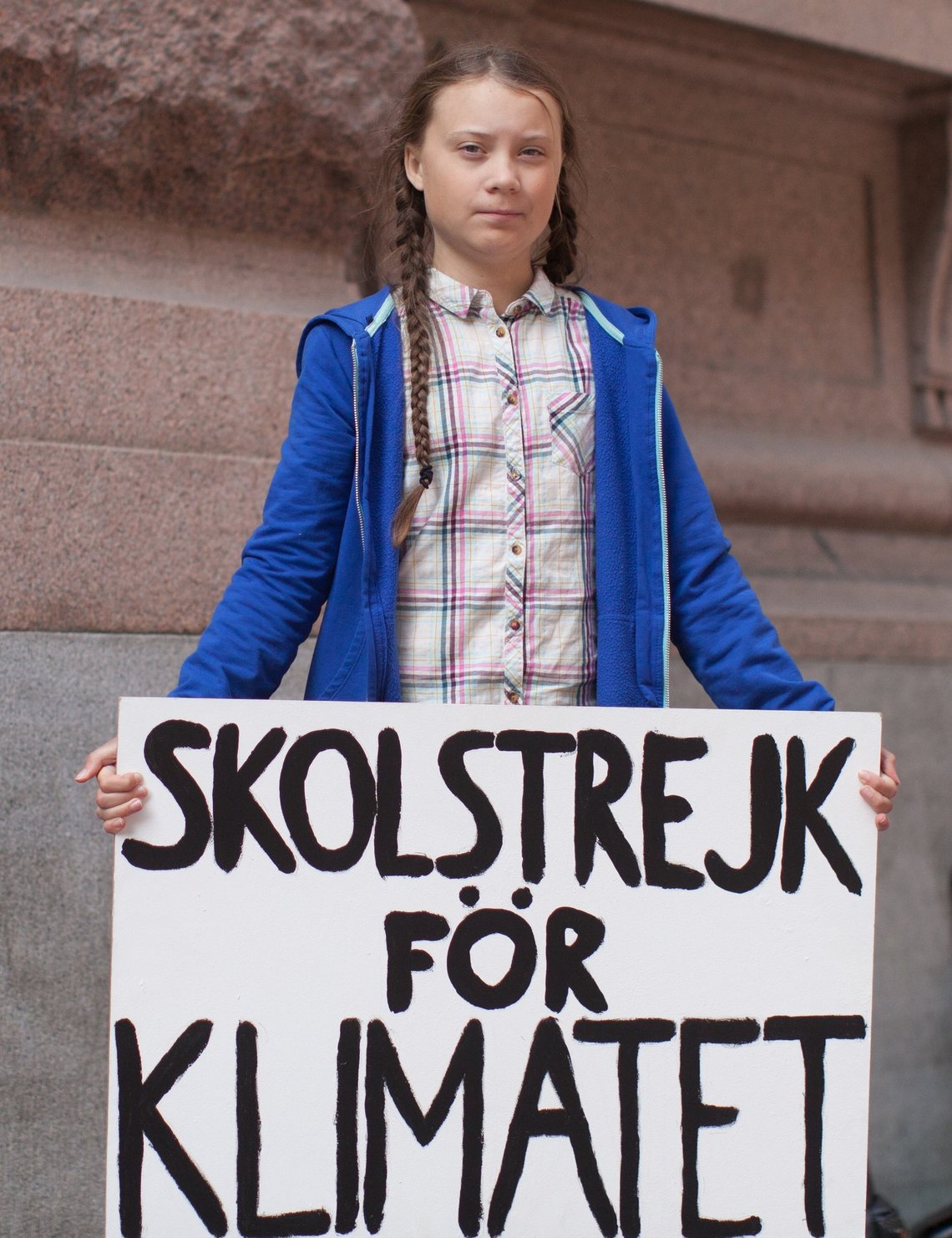


It’s been a few years now since the mass hysteria surrounding Greta Thunberg and the climate movement she came to lead began. Now she herself laughs at those who go on strike for the climate, for she has moved on and is now primarily concerned with anti-capitalism and Palestine.
Those of us who criticised her back then have been proven right on many counts. And now it turns out that the climate wasn’t all that important to her after all, as she admits in an interview that what she has been fighting against from the very beginning is not CO2 emissions, but economic growth. Whilst climate fanatics of all political persuasions are left high and dry, Thunberg continues her career as a professional activist.
In 2019, I wrote an article in the magazine Quillette which was translated into Norwegian by Minerva. In it, I criticised the rhetoric, the demagoguery and society’s glorification of the then 16-year-old Greta Thunberg. When children protest, adults must tell them the truth, I wrote.
Thunberg’s rhetoric was clearly shaped by professional adults and served as agitation, not as information. She inspired children to skip school every Friday, and everyone from teachers to politicians gave them their blessing. When she gave a speech at the World Economic Forum (WEF) in Davos, she received huge applause, but the hysteria and adulation eventually became so all-encompassing that something felt off, and critical voices began to emerge.
I remember a mother in my daughter’s class saying that her child couldn’t sleep at night because of climate anxiety, and Thunberg’s impassioned speeches and tears were perhaps the main reason for this. Both children and adults took the 16-year-old seriously, when what should have happened, in a rational world, would have been a small article in a local newspaper, not worldwide fame.
Thunberg is now an adult, and it is perfectly fine to criticise her and her messages without beating about the bush. She herself admits that she is an anti-capitalist – that is, a radical socialist – and for several years she has worn a Palestinian scarf. She has even travelled to the Palestinian territories and been arrested and sent home because of her activism.
Greta Thunberg has gone from being a precocious, naïve pawn in the adults’ game to becoming an unsavoury part of the machinery that drives professional activism. The way she laughs at the poor children whom she has scared out of their wits and who are still playing truant from school because of what she set in motion is quite revealing.
The clip above is taken from a new documentary about Thunberg, and she may have forgotten in the heat of the moment that the session was being filmed.
When she speaks in a more official capacity, there is still a hint of the climate struggle in her message, but it is mostly about us in the ‘privileged North’, who are expected to sacrifice ourselves for the rest of the world, so that everyone becomes equally poor. She is clearly also unaware that we in Europe are struggling enormously economically, culturally and, not least, demographically, and will soon become a minority on our own continent.
Honorary Doctor Thunberg
Greta represents young ‘champagne socialists’, the sort you might come across at universities, who live in a bubble of privilege and have never worked a day in their lives. She herself has no university degree, apart from three honorary degrees, including one from the University of British Columbia.
The hype surrounding climate action has died down, and a number of countries are gradually abandoning – or at least postponing – climate measures that would damage the economy – even though they have already caused significant damage to the economies of countries such as the UK and Germany, which are struggling with high energy prices partly due to so-called green taxes.
So it is no surprise that Greta is broadening her scope in her attempt to remain relevant. She broke with FFF (Fridays for Future) in Germany because Luisa Neubauer, who heads the organisation’s German branch, did not support Thunberg’s pro-Hamas stance on the 7 October attacks. It is therefore perhaps not so surprising that she scoffed at Berliners who went on strike for the climate. In a comment on the outburst of laughter she says:
“For context: This happened on the very same days that we were blocking an arms manufacturer there, and I’ve just found out that, at the same time, a climate demonstration with police permission was taking place in a well-known white middle-class neighbourhood, organised by the very same German climate movement that cancelled and ‘distanced itself’ from me for saying that Palestinians are people too, and that when we call for justice, Palestinians must also be included in those calls. ‘Make no mistake: the world DOES mock Germany for being out of touch with reality and stuck in extremely racist mindsets and tactics, whilst at the same time being shamelessly complicit in genocide, ecocide and the climate crisis – a conversation that many people of colour in Germany have been highlighting for a long time.»
A fatalistic worldview
If the world mocks Germany for being “extremely racist” and committing “genocide” (in the present tense), that’s on her. Her choice of words shows that the little girl who practically shouted at world leaders and the global media that they were stealing the future from the younger generation is still a child. The rhetoric is the same, and her worldview is just as fatalistic and oversimplified as it was in 2019.
I dare to quote myself, from the article in Quillette in 2019:
‘Why should I study for a future that will soon no longer exist, when nobody is doing anything to save that future?’ asks Thunberg. This is a bleak and desperate view of the world, expressed by a girl who is fortunate enough to live a comfortable life (her mother is a famous opera singer) in one of the world’s safest and richest countries. It is not only melodramatic, but almost certainly counterproductive. Demands that people should panic and warnings that the metaphorical house is on fire may be effective rhetoric, but her advice to despair is a strange way to inspire young people.
Many people are becoming radicalised at university these days, but many also gain a solid education and the time to mature and engage with other people and ideas different from their own. Thunberg might have benefited from further education – she is already radicalised, but perhaps a little more fact-based learning would have done her good?
Buy ‘The Green God’ by Giulio Meotti here!