

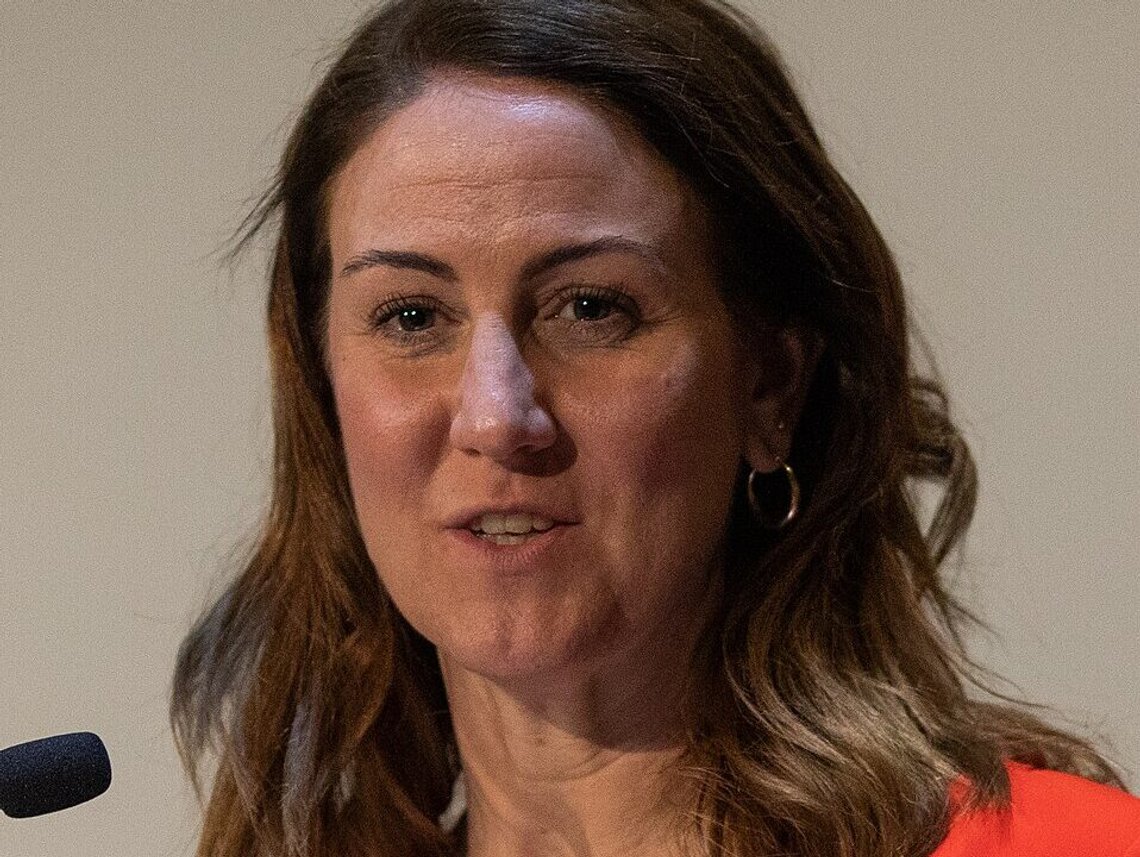


Ine Eriksen Søreide has presented the Conservative Party’s plan for tax cuts on income and wealth totalling 25 billion kroner. That is half of the Progress Party’s proposal, but still enough to send Tonje Brenna into a rage. The Conservative Party intends to make these cuts without increasing spending from oil revenues. In other words, they must cut taxes and duties. The Labour Party, meanwhile, is using the vulnerable as a shield.
Opponents are always on the lookout for symbolic issues on which to pin their criticism. Among other things, the Conservative Party wants to introduce VAT on books. This would weaken the book sector in an already fragile market and is a symbolic issue that can be used to attack the Conservative Party: they do not want ordinary people to be able to afford to read books.
But Tonje Brenna did not focus on books. She wanted to show that the Labour government is just as generous as the Conservative Party. Brenne went so far as to say on the programme ‘Politisk kvarter’ that consumers are saving half of the Conservative Party’s cuts through the ‘Norgespris’ scheme: 12,000 kroner.
The ‘Norgespris’ scheme is the result of the parties in the Storting having turned electricity into a commodity on the free market in Europe. That is why prices are low. It pays to export electricity. For the state. But it does not pay for consumers who import expensive electricity.
Electricity is most expensive in the regions from which the international cables run. This is such an outrageous practice that the government was forced to introduce the ‘Norway Price’, which capped the price of electricity at 40 øre, plus VAT. However, businesses and holiday homes are exempt, as are council flats – 22,000 of which are in a very precarious financial situation.
The government has hinted that it considers the ‘Norway Price’ to have been too expensive – 19 billion – and has therefore increased the price from 1 January. But there is never any question of what the state earns from high electricity prices. That calculation is kept separate. Otherwise, people might realise that the state is sitting on both sides of the table and raking it in.
In the past, this would have been called usury – exploiting a monopoly to fleece someone who has no choice but to make do with what they’re offered. Usury was prohibited by law in Norway. It was abolished by the Storting in the new Penal Code of 2005 and implemented by Finance Minister Siv Jensen in 2015. However, in 2020, a new Financial Agreements Act was introduced, reintroducing a ban on usury.
One could say that the state has succumbed to the temptation to exploit its position of power over consumers. It has the best of both worlds.
The Norwegian Competition Authority believed that the large retail chains did this through the use of ‘price watchers’ who ensured that competitors did not offer lower prices. Cartel activity is prohibited, but the price monitors came dangerously close to such coordination. The chains themselves claim that the scheme ensured competition.
The prosecution does not agree, and a claim for a fine of 4.9 billion has been filed in Bergen. Even for the big players, this is a lot of money.
But what isn’t being made clear is who will receive the money: not the consumers who have paid over the odds, but the State.
Why can’t the State distribute the money to consumers? Almost everyone uses cards that offer rewards. Technically, a refund would be possible. But do we hear anyone speaking up for consumers?
Another point: Brenna said the proposal to cut 500 civil service posts would mean these roles could no longer provide jobs for people. The Conservative Party believes the state is too big – around 900,000 jobs in the public sector. But the Labour Party counters that if the state is slimmed down, it will be at the expense of public services.
The system is locked in and cannot be changed.
Socialism has been introduced in practice.
Tonje Brenna also had a below-the-belt argument for Søreide: you have to be a member of the Conservative Party to put forward such proposals, i.e. cuts that hit the most vulnerable.


