



Total global CO2 emissions are expected to reach 43.3 billion tonnes this year, an increase of 0.5 billion tonnes from 42.8 billion tonnes in 2025.
This is according to forecasts from the research network Global Carbon Budget, published on Tuesday.
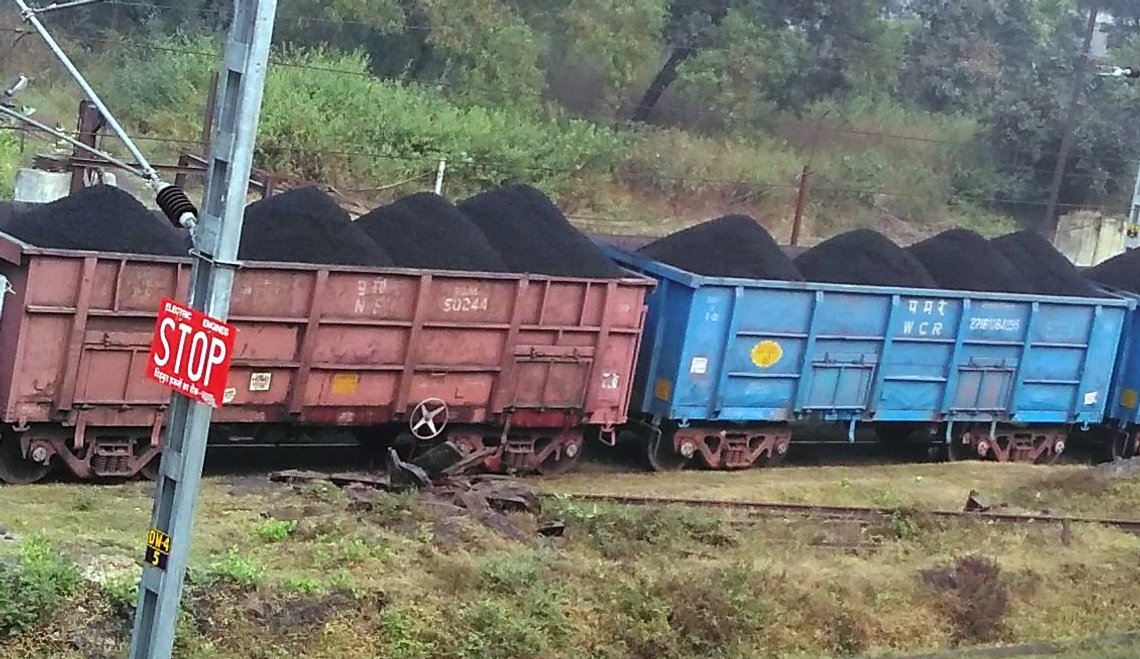
Total emissions are set to rise despite emissions from oil and gas falling by 1.9 per cent and 0.3 per cent respectively this year as a result of the war in Iran. However, coal emissions are rising by 0.6 per cent, meaning that total fossil fuel emissions are falling by 0.4 per cent from 38.4 to 38.2 billion tonnes.
The researchers do not believe this means that fossil emissions have yet peaked, but that the peak may not be too far off, given that the rate of increase has slowed in recent years.
The rise in total emissions is attributed to emissions resulting from changes in land use, which, according to the forecast, will increase from 4.4 to 5.1 billion tonnes – a rise of 0.7 billion tonnes.
This increase is driven by deforestation, the drainage of wetlands and the conversion of natural areas into agricultural land.
CO2 emissions are rising most sharply in India (+4.4 per cent), whilst they are falling in the EU (-1.5 per cent), the US (-1.3 per cent), Japan (-1.0 per cent) and China (-0.9 per cent).
The global trend has long been for emissions to fall in OECD countries but to rise in the rest of the world. However, the announcement from the Global Carbon Budget does not go into detail about countries outside the OECD other than China and India.
Detailed data can be found here.
Among the approximately one hundred institutions that have contributed to the projections are the University of Exeter, the University of East Anglia (UEA), CICERO – Centre for International Climate Research, Ludwig Maximilian University of Munich (LMU), and the Alfred Wegener Institute.
The results are currently available as a preprint, but will later be published in *Nature Climate Change* under the title: ‘A further acceleration of clean energy is needed for global CO₂ emissions to peak and decline.’


