



Germany’s federal states, which are the legislative authorities in the media sector, are planning new rules for the distribution of media content, under which public broadcasters and newspapers that are members of the Press Council will be given preferential treatment on social media and in other ways.
This is evident from a draft of a new agreement between the German federal states regulating the distribution of newspapers, broadcast media and online media, as Die Welt has gained access to.
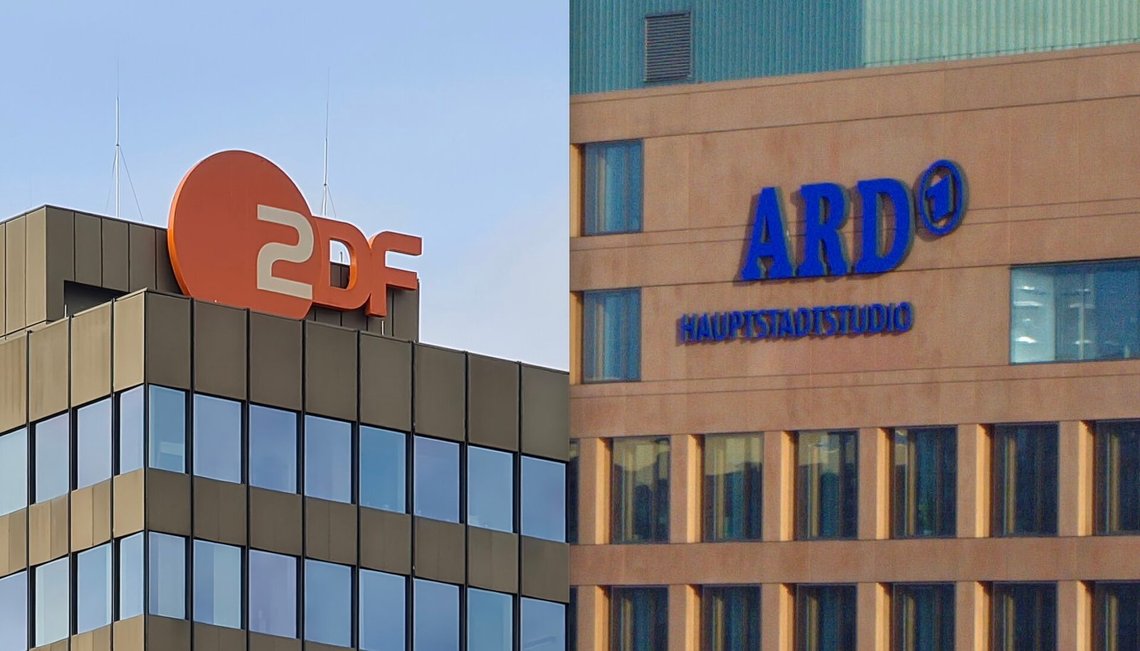
The draft, which is under political discussion until 13 November, is particularly favourable to the two major public broadcasters, ARD and ZDF, writes the German newspaper.
Spanning more than 180 pages, it contains a collection of sometimes detailed regulations with comprehensive definitions of what constitutes journalism, advertising, ‘public information’ or – in the chapter on artificial intelligence – what truth is. The federal states also wish to prescribe how media content is to be presented and displayed on social media: with a clear priority given to the public service broadcasters and under the supervision of the corresponding public media authorities in the federal states.
The proposed rules also cover software and hardware:
One of these concerns the composition of programme recommendations, for example on new television sets or in the language menus of Amazon Alexa, Apple or Google. At least 20 per cent of these recommendations must be ‘offers that require extra effort to promote diversity’. In their explanatory notes, the authors acknowledge that this constitutes a ‘significant intervention in the market’, but that it is justified in order to ‘counteract the levelling and homogenisation of the media landscape’.
To be eligible, a media outlet must be a member of the Deutscher Presserat, i.e. the German Press Council, an industry body that formulates media standards and operates a complaints board, not dissimilar to the PFU in Norway.
The relevant section refers only to ‘services with journalistic and editorial responsibility’. This is made clearer, amongst other things, in the regulations governing social media. These are already legally required to give priority to public service broadcasters. In future, this privilege will also apply to print media, such as *Die Welt* – but only on condition that they comply with the Press Code and the Press Council’s complaints procedure. Voluntary membership of the Press Council thus indirectly becomes a mild form of coercion.
Lawmakers also wish to cover their tracks:
When it comes to the presentation of media recommendations, the federal states are planning regulations down to the smallest detail. Where, for example, platforms are forced to provide recommendations prescribed by the state, the law will explicitly prohibit them from disclosing this.
The media are otherwise to be ranked according to ‘public value’
The basis for media recommendations in user interfaces and on social media is the classification of the so-called ‘Public Value’ – the public benefit – of the individual media outlets. This classification, too, lies in the hands of the media authorities. In the forthcoming media policy agreement, the criteria for this will be expanded to include a new category, namely ‘information, education and documentation’.
Rules are also being drawn up on how the media should present government information.
‘Government information work is not advertising’, the comments state. Rather, it is a matter of ‘informing the public about government measures or matters of public importance’.
Such information is usually found in editorial content, based on press releases from the authorities or journalists’ investigations. In the new state agreement, however, ‘government information work’ is defined as paid government advertising and is permitted, just like paid ‘commercial advertising’ – this, too, is an entirely new legal concept.
If the draft is adopted, it will subsequently be tabled as a bill in all state parliaments, reports Die Welt.


