

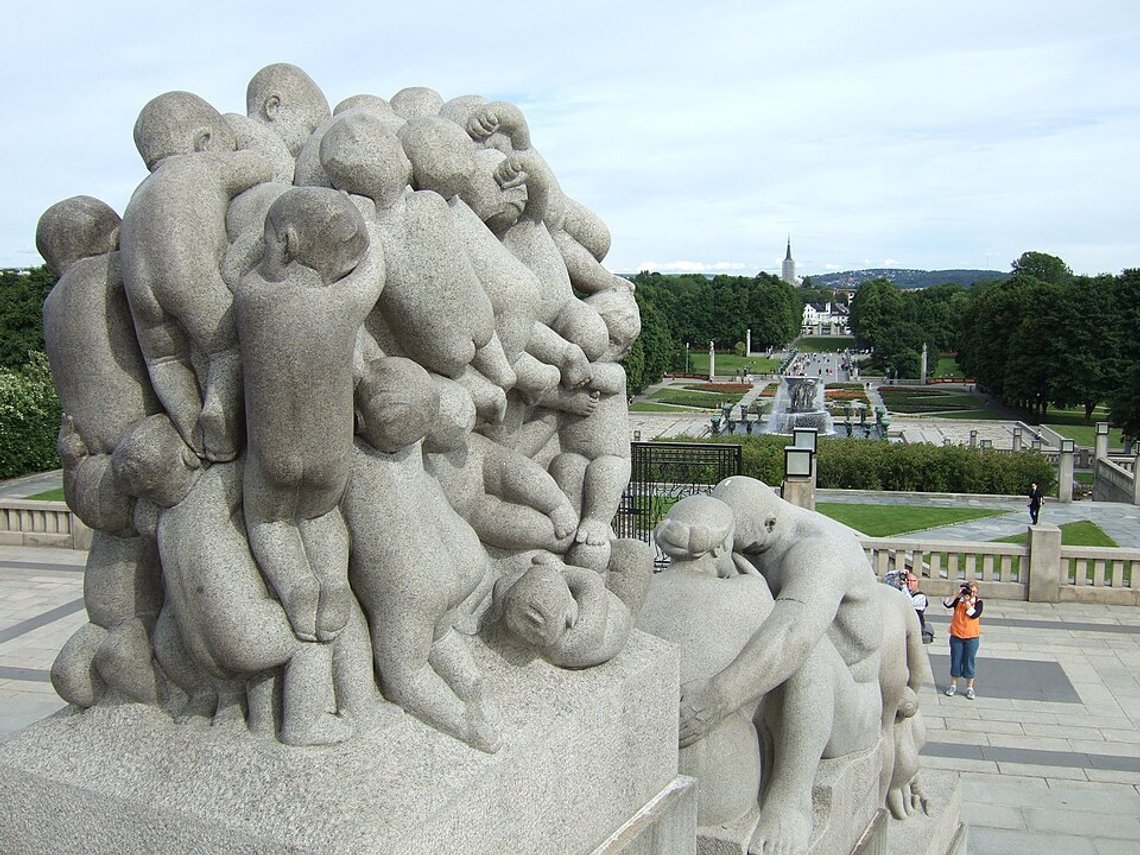
Over the years, there have been several inquiries into ‘vulnerable children’ in Norway. What ought to strike us is that there apparently has not been a sufficiently clear understanding of who the vulnerable children are, and why they are vulnerable?
In the language of the authorities, ‘vulnerable children’ are often children of parents with challenges related to substance abuse, or who have experienced psychological and physical violence or abuse at home. At least, that is what is claimed. We see that the term is used fairly generally about children who have parents from foreign cultures, or who have physical challenges. All children whom the public authorities want to take into care are called ‘vulnerable’. In this usage, the opposite is ‘robust’ children. This means that the child welfare service does not want to take these children into care, even though they may have parents who are convicted criminals, paedophiles or extremely violent!
But the genuinely vulnerable children are by no means found primarily at home! ‘Vulnerable children’ are children who lack a safety net, who cannot find protection and security when they need it, and are therefore easy to exploit for those who wish to exploit and abuse children. Parents and networks are normally the best protection children can have! If the parents and the network are removed, these children become ‘vulnerable’.
Abusers are normally extremely adept at finding and manipulating vulnerable children. Children who have been in public care often appear subdued; they are not accustomed to being seen, and they seek recognition. All of this places them in a position where they can particularly easily become victims of abuse. We know this from a number of studies, both in Norway and in other countries.
Revelations
The Drægebø Committee in Bergen was ground-breaking. The County Governor appointed the committee in 2001, after the media had given victims from Bergen’s children’s homes from 1954–1980 an opportunity to speak. The stories they told were shocking. Abuse, violence, deprivation, a total lack of love. The first reaction of Bergen’s politicians was to try to silence the media. When that failed, Bergen’s City Government threatened these victims with legal action and claims for damages if they did not keep quiet!
‘City Commissioner leader Anne-Grethe Strøm-Erichsen invited Bergens Tidende to a meeting. She believed that they ought to understand that these cases were time-barred and that the articles were a burden on former employees who were unable to defend themselves.
In January 2002, Bergen City Court upheld the municipality’s position that the question of human-rights violations should not be brought into the compensation case.
The City Government demanded that the women cover the municipality’s legal costs. The amount was not large, but prompted irritation among the opposition and an uproar in the media. The day after this became known, a unanimous City Council committee demanded that the City Government drop the financial claim. The City Government yielded to the demand.
During the City Council meeting on Monday, 22 April 2002, the City Commissioner leader gave the impression that she had changed her position in the Morgensol case. She hoped for a settlement with the two women, and she was willing to assume political and moral responsibility for the abuse to which the women had been subjected at the children’s home. The City Commissioner leader also promised to begin work on a municipal compensation scheme, so that it would be ready when the inquiry report was published.’
https://www.ba.no/krim/staten-nekter-randveig-61-erstatning/s/1-41-2834754
(https://www.abcnyheter.no/nyheter/2008/10/25/75873/det-jeg-husker-fra-morgensol-er-kulde)
Some of these children had originally come from homes with sick or alcoholic parents. But that was not what made them particularly vulnerable! It was their time under public ‘care’ that had harmed and exposed them, and deprived them of every possibility of protection.
The pressure from the media and the public eventually became too great, and Bergen’s politicians chose to change course. They opened the way for an inquiry. By then, the demand for an inquiry had existed ever since 1945, but had been systematically opposed for 56 years. Two generations of children from children’s homes had passed away before the inquiry finally became a reality.
The report of the Drægebø Committee was presented in June 2003:
‘Children at several children’s homes in Bergen have been subjected to serious and degrading physical and sexual abuse. A commission of inquiry appointed by the County Governor of Hordaland has investigated conditions at children’s homes in Bergen during the period 1954–1980. The report is shocking.’
The report was followed up at national level through NOU 2004: 23 Children’s Homes and Special Schools under Scrutiny (Barnehjem og spesialskoler under lupen) — National Survey of Neglect and Abuse in Child Welfare Institutions 1945–1980. Through this Norwegian Official Report (NOU), the findings in Bergen were confirmed and established as applying nationwide. A compensation scheme was introduced under which those who had been subjected to serious psychological and physical abuse, as well as sexual abuse, received NOK 720,000. Those who had ‘only’ been subjected to serious neglect received NOK 300,000. Total payments have exceeded two billion, even though the majority of those who could have been entitled to payment were dead. And even though the amount received by each individual victim was, in reality, ridiculously low.
What had been documented was that children in public care had been subjected to physical, psychological and sexual abuse by employees, by other children and young people, and by outsiders who had been allowed into the institutions. The supervisory arrangements had failed, the police had failed, the child welfare service had failed, the health service had failed. No one had come to the defence of these children. Numerous complaints and reports to the police had been submitted over the years, but these had generally either not been registered or had simply been shelved without investigation or other follow-up. Naturally, such complaints could also lead to reprisals against the children.
The only sensible conclusion the children could draw was that it was pointless or even dangerous for them to complain or report matters to the police. This realisation has led to a very particular form of reaction among many of these children: They have run amok. This has led to several fires at institutions, and it has led to institutions being completely wrecked. The children have said many times that they did it to attract attention and to get someone to listen to them. Several of these children have been imprisoned and convicted. We have received statements that, for them, their time in prison was better than what they had lived through in the institutions.
Every time there have been revelations, those responsible have apologised, ‘prostrated themselves’, declared that they have ‘room for improvement’, but that they have now learnt a great deal, and they have promised improvement. Incredibly, they have largely been allowed to remain in their positions, or they have been moved to more lucrative positions. Nothing indicates that the problems have diminished over the years. But child welfare employees and responsible politicians have tried to pretend that these problems belong only to the past! And they have continued to pretend that it was the children living at home who were the ‘vulnerable’ ones!
When NOU 2009: 22 What You Do, Do Completely – Better Coordination of Services for Vulnerable Children and Young People (Det du gjør, gjør det helt – Bedre samordning av tjenester for utsatte barn og unge) was presented, the focus was on ‘vulnerable children in the family’, not on vulnerable children in society!
‘In light of this, the committee has defined vulnerable children and young people as children and young people with complex difficulties and problems, and who over time require services and provision from at least two of the agencies mentioned in the mandate. This means that vulnerable children and young people may have very different backgrounds and also highly diverse needs. Vulnerable children and young people may thus be persons with learning difficulties, behavioural problems, psychological difficulties, physical or mental disabilities, substance-abuse problems, and children and young people who have been subjected to neglect or violence, etc.’
Interestingly enough, we find County Governor Svein Ludvigsen among the members of this committee. He presented himself as someone who was particularly concerned about the ‘vulnerable’ children. As is well known, in 2020 he was sentenced to five years’ imprisonment for serious offences against children and young people.
The case revealed gross abuse of power and cynical exploitation of a position in order to render vulnerable children totally vulnerable, so that, without the slightest hope of help, they could be exploited and sexually abused. The case showed a man in a position of power who flatly denied what he was accused of, and who would normally have prevailed in the justice system through that tactic. He had ensured that several of the victims were removed from the country, thereby reducing the risk to himself. We know that the odds of vulnerable people succeeding with the Norwegian police and in the Norwegian justice system are approximately zero.
The judgment against Svein Ludvigsen is nevertheless not unique. In recent years, quite a number of judgments have been handed down against people whom society has appointed as carers for children whom the public authorities have forcibly taken into care. In that sense, it forms part of the historical line extending from the revelations of abuse and mistreatment in earlier periods. The vulnerable are there, now as before, and the abusers are there too, just as before.
A number of shocking reports have been presented. Three examples:
The Glass Girl report (Glassjenta-rapporten) They did not understand me (Dei forsto meg ikkje).
The Samnanger report (Samnanger-rapporten)
The Fjeld report in Bergen, presented in March 2020. It showed serious errors in 9 out of 10 cases. When asked directly, committee chair Fjeld confirmed that there had clearly been human-rights violations in those 9 – 90% – of the cases.
The Samnanger report told of children who had been ‘placed in care’ in institutions, without there appearing to be any sensible reason why they had been removed from their home. They had not been subjected to violence or abuse, and the father, with whom they lived, was by no means an alcoholic. In the institutions, they had been abused and destroyed, and ‘completely deprived of their childhood’. Society’s response was to give those who had been destroyed the label ‘retarded’, without the report’s authors being able to see any basis for such an assessment.
- One child has been completely deprived of their childhood through ill-advised public assumption of care: The child today appears clearly damaged by the placement.
- Extensive use of coercion and medication: Several of the children have been subjected to coercion, medication and improper use of force.
- Failure to hear the children’s views: It has not been demonstrated as probable that the children were allowed to participate or that their views were considered.
- Failure to provide reasons for separating siblings: None of the children in the three cases has been allowed to grow up with one or more siblings.
- Inadequate documentation: The assessments of the child welfare service are, as a general rule, poorly documented.
- Inadequate assistance measures: The child welfare service did not to a sufficient extent implement adequate assistance measures instead of choosing more intrusive measures.
- Inadequate supervision of foster homes: The duty to follow up children in foster homes has not been fulfilled in accordance with the requirements of the Child Welfare Act (barnevernloven).
- Lack of culturally sensitive competence: No account has been taken of the children’s right to know their ethnic, cultural and linguistic background.
And an example of a judgment:
This last case sheds light on several frightening circumstances. The girl who had been subjected to serious abuse by her foster father had repeatedly reported the circumstances to the police. The police systematically neglected the reports until a newly appointed lawyer was unfamiliar with this time-honoured practice. The child welfare service allowed the foster father, accused of serious abuse, to continue as a foster father for months! And it was the child welfare service’s lawyer Reidar Anderssen who appeared as defence counsel for a foster father who had most seriously violated the agreements he had entered into as a foster father.
Children whom the public authorities have taken into care are in a far weaker position than children who live within their natural network. Through the assumption of care, the network is removed, while the safeguards that society is supposed to put in place do not function. The Befring Committee had already established that the supervisory doctors’ inability to see was frightening.
It is therefore not a particularly bold assertion to say that children in public care are made more vulnerable than they were beforehand.
There are several major scientific studies of the lives and health of children in the child welfare system.
Child Welfare Clients in Norway 1990–2005: A Longitudinal Study (Barnevernsklienter i Norge 1990–2005: en longitudinell studie).
Backe-Hansen, Elisabeth; Madsen, Christian; Kristofersen, Lars B; Hvinden, Bjørn (2014). Child Welfare in Norway 1990–2010. A Longitudinal Study (Barnevern i Norge 1990–2010. En longitudinell studie). ISBN: 978-82-7894-512-4. 208 pp.
The weakness of these studies is that they do not examine causal relationships. We are told how badly things have gone, but we are not told why. Therefore, all parties can cite such reports in support of their own case. And they do!
The findings, and this is after these children have been taken into public care:
The ‘child welfare population’ has a 27 times higher risk of being killed than the corresponding group in Norway. That is a 2700% higher risk!
They have a 21.3 times higher risk of dying from mental illness or substance abuse.
They have a 7.3 times higher risk of dying from poisoning.
They have a 4.8 times higher risk of committing suicide.
Even in deaths from cancer, this group fares far worse: a 93% higher risk of death. And there is a 536% higher risk of death caused by diseases of the circulatory system.
75% of children in the child welfare system who have been in institutions have serious psychological damage; the same applies to 51% of those who have been in foster homes.
Only 8% of these children in Norway obtain higher education! Compared with 45% in the rest of the population.
This is bad! But problems associated with the abuse of vulnerable children are unfortunately not a specifically Norwegian phenomenon.
Some international examples
In recent years, the Catholic Church has been subjected to dramatic revelations in a number of countries (Ireland, Scotland, Canada, Australia). ‘Secret’ burial sites and massive abuse have been uncovered. The latest and so far most thorough report concerns France. That report was presented in the autumn of 2021 and concluded that there had been between 2,900 and 3,200 abusers in the French Catholic Church during the period 1950–2020, and that around 330,000 children had been subjected to abuse.
‘The head of the independent commission, Jean-Marc Sauvé, says that the number of victims is an estimate based on scientific methods. Around 80 per cent of the victims are boys.
The document is 2,500 pages long, and for two and a half years the independent commission has carried out a thorough investigation of archives in the Church, the police and the justice system, as well as interviewing hundreds of witnesses.’
‘– The consequences are extremely serious. Around 60 per cent of the men and women who were abused have developed major problems in their emotional lives and with their sexuality, Sauvé says.’
‘The report covers the period from 1950 to 2020, and establishes that around 3,000 abusers were active in the Church during the period 1950–2020.
Two-thirds of them were priests, and they are accused of having been responsible for 216,000 of the cases of abuse. When employees and associates such as teachers are included, the number of victims rises to 330,000.’
This report has partly given us new knowledge, and partly given us the opportunity to quantify concrete dimensions of phenomena that we have so far observed, but for which we have not had reliable figures.
80% of the children who were subjected to abuse were boys, and 60% of the children who had been subjected to abuse developed ‘major problems’ as a result of the abuse. The report assumes that each abuser abused an average of 100 children. ON AVERAGE! Some abusers have of course been far above that. It must be assumed that access to children has been the limiting factor, rather than the abuser’s appetite for committing new abuse. The Catholic Church has tried to hush this up, protect the abusers, and has even attacked the victims if they refused to keep quiet! Just like the City Government in Bergen.
It is important to remember that the figure arrived at by the report, around 330,000 children subjected to abuse, relates only to abuse committed under the auspices of the Catholic Church. There have undoubtedly been many others outside the Catholic Church who have also abused French children. The total number of children subjected to sexual abuse in France must therefore unfortunately be assumed to be far higher than that which emerges from the report.
Let us take this knowledge with us!
Back to Norway
In recent years, the police have devoted substantial resources to investigating abuse connected with the international ‘Dark Room’ operation. Several judgments have been handed down, some involving very lengthy sentences by Norwegian standards, 16 and 19 years of preventive detention:
What this shows us is that there are active paedophiles in Norway who unscrupulously exploit and harm children. What we know from France is that each individual abuser’s appetite for victims is extremely high. We can imagine that many abusers will use both the internet and physical meetings. We know that many abusers are extremely adept at finding vulnerable children, and that they place themselves in positions where they have easy access to children, preferably ‘vulnerable children’, children without protection. Through both ‘Dark Room’ and other revelations, we have come to understand that paedophiles are well organised, and that they devote considerable resources to covering their tracks.
We can point to VG’s revelations in the autumn of 2021:
And not least the series about The Foster Father and Foster Son Amir.
Amir was a Norwegian-Pakistani boy who chose to take his own life at the end of January 2021. He had been taken into care by the child welfare service when he was 10 years old and had been placed in a number of different institutions, with catastrophically poor results, before, at the age of 15, becoming the foster son of a Norwegian child welfare employee. The foster father appeared on television a number of times (from 2011 onwards) and warned, among other things, about abuse of children in care!
https://tv.nrk.no/serie/dagsrevyen/201112/NNFA19120811/avspiller
Amir was a ‘vulnerable boy’. He was from a foreign cultural background and a child of divorce, and he lived with a mother who had challenges related to alcohol. But he was made infinitely more vulnerable by the system that claimed it was supposed to protect him! Many different institutions, then a foster home where he eventually revealed that he had been systematically sexually abused. But being abused weekly was nevertheless better than being in an institution! For a long time, he put up with the abuse. But it caused him despair, shame and depression. The family were saddened, but not surprised, when Amir chose to end his life. The suicide rate among these children is far higher than among their peers in Norway. It has been so for a very long time. Boys who have been subjected to sexual abuse appear to have a particularly high risk of suicide.
Amir endured the abuse in silence. ‘Who would believe a Paki,’ he said. One day in 2016, Amir was invited to a meeting by one of the child welfare services in Oslo. They knew a great deal about him, that he had been a foster son and whose foster son he had been. The child welfare service had heard stories about this foster father, who had been employed by the child welfare service but had been dismissed, after which the foster father had brought proceedings over ‘unfair dismissal’. The child welfare service wanted to know more about what had happened. Amir told them and gave his account, and afterwards he was asked to report the foster father to the police for sexual abuse.
Amir believed that reporting it was a waste of resources, because who in the police would listen to him? Amir was an intelligent boy, and his analyses were naturally quite accurate. The police cared little. Admittedly, after some time they decided to indict the foster father, but the investigation was poor and has subsequently been heavily criticised. In the course of its investigative work for its report, VG found a number of circumstances that the police did not find. What might the police have found if they had cared? A foster father, employed by the child welfare service, later an entrepreneur with two large private companies that had been given responsibility for allocating children in the child welfare system to foster parents! Had the fox been let into the henhouse yet again? The companies had extensive operations and made a great deal of money. Should the police not have investigated his very ‘business idea’? To whom did he deliver vulnerable children?
Amir and his brother had said that the foster father had offered them NOK 100,000 each if they would withdraw the allegations. They told the police, and it was included in the indictment.
The case against the foster father was repeatedly postponed because the police had to investigate further, because the foster father’s defence counsel could not attend, because of coronavirus, etc. For Amir, it was confirmation of everything underlying his scepticism towards the police and the justice system, and after yet another postponement, he could take no more in January 2021.
When the case against the foster father came before Oslo City Court in April this year, it had first been substantially reduced. Since the complainant was no longer among us and could not be questioned, the police dropped the allegations of sexual abuse. As for the part that was brought before the court – allegations of offers of bribes in return for withdrawing allegations – he was acquitted. Amir’s family felt betrayed and have worked for an appeal and a new hearing. They have carried out more sophisticated investigative work than the police and have found other victims of the foster father’s sexual abuse. Curiously enough, the police have not managed to do so!
The case against the foster father will come up again. His lawyers will almost certainly try once again to postpone the case, so that they can invoke this as grounds for a lower sentence if he is convicted. The reports in VG have made it necessary for the police to become involved again. They have obtained new witnesses. Media interest in the case increases the likelihood of a conviction this time.
It is not a good reflection on the Norwegian justice system that media coverage appears to determine whether defendants are acquitted or convicted!
Norway and the ECtHR
Norway has now been found in violation by the European Court of Human Rights (ECtHR) in 14 child welfare cases. The figure is remarkably high. Only around 2% of complaints to the ECtHR are admitted for consideration, and a small proportion of these result in a judgment finding a violation. This is striking, not least because of the Court’s principle of ‘subsidiarity’: The Court is not to decide every complaint in order to ensure that a particular person’s human rights are respected. Through its judgments, the Court is to correct authorities and courts throughout Europe – so that a single judgment by the ECtHR should be sufficient to correct practices that violate rights, not only in the country found in violation, but throughout the ECtHR’s jurisdiction.
As a court, the ECtHR is conservative and cautious. It relies on written material; it will therefore be procedure far more than evidence that is assessed. It is therefore striking that Norway has been found in violation so many times within one area of law. It indicates that the Court has very little confidence that Norway itself is capable of correcting its practice in this field. The Committee of Ministers is to ensure that Norway complies with the judgments of the ECtHR. They have expressed that they are not satisfied with Norway!
Summary
Norway has been exposed by the ECtHR, the EU’s Council of Ministers and the UN. Norway has been exposed by Dagbladet, VG and BBC. Norway does not provide protection to ‘vulnerable children’, but most often protects the abusers. It is as in the Catholic Church.
Norway is trying to divert attention away from the real problems, and is trying to shift responsibility onto children and parents.
It is our duty to prevent attention from being diverted away from the real problems. It is our duty to try to secure protection for these children.
Yngve Nedrebø.
Historian. Retired State Archivist in Bergen.
Note, 9 December 2021 YN.
Ed. note: As of today, Norway has been found in violation 36 times by the European Court of Human Rights, but this does not appear to make an impression on either the authorities or the media.


