



– Far below the threshold for transferring the case to another district, says a police inspector. There are now at least two former employees of the South-Western Police District who have private connections to the Shada case.
The house at Nordvikveien 43 on Hundvåg in Stavanger, where the child welfare girl Shada Al-Barghouti (16) was found dead in 2019, was owned by then police investigator Knut Helge Helvig of the South-Western Police District.
This is the same police district that investigated the death and, after a short time, closed the case without involving Kripos, despite central questions about the circumstances remaining unanswered.
Now Foreningen Rettssikkerhet for alle is coming forward with new information and asking the public for tips to help solve the case. They state that they are conducting their own investigation, led by former police investigator Vigdis Bollerud, who has 35 years of experience in the police.
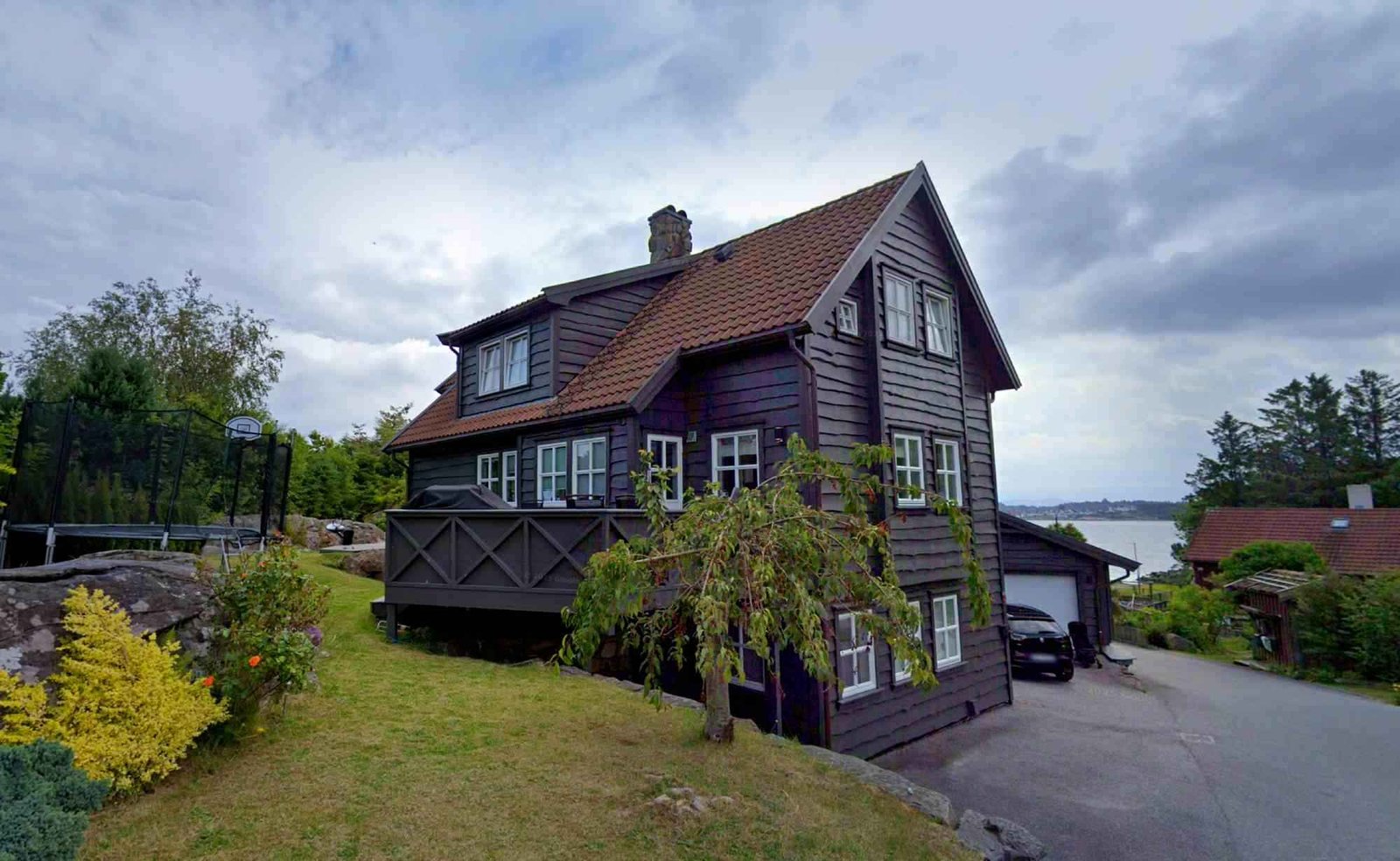 Nordvikveien 43 on Hundvåg. Shada Al-Barghouti was found dead in a room on the first floor in August 2019, under unclear circumstances. (Photo: Google Street View)
The association has received confirmation that retired police officer Bjørn Steinar Sjøthun (69) of the South-Western Police District is the father of anaesthetist Jarle Hapnes Sjøthun (43), who was on duty at Stavanger emergency clinic when Shada was found dead.
It was Jarle Sjøthun who issued Shada’s death certificate. Two ambulances and a doctor’s car are said to have been dispatched on this call from the emergency medical communication centre (AMK).
Sjøthun himself confirms by telephone to Document that his father worked as a police officer, but that he has been retired “for many years”.
 Former police officer Bjørn Steinar Sjøthun pictured in 2020. (Photo: Private)
Police Inspector Sigve Espeland of the South-Western Police District confirms that Bjørn Steinar Sjøthun retired on an old-age pension in 2014, five years before Shada’s death.
– I was unaware of this connection. Before 2014, Bjørn Steinar Sjøthun worked in traffic policing in Sandnes, if I remember correctly. Such a connection is far below the threshold for transferring the case to another police station within the district or out of the district as a specially assigned case (settesak), Espeland writes in an email to Document.
He also confirms that Kripos was not contacted in connection with the case.
– Suicide must be determined by Kripos
In the notification of death issued by Jarle Sjøthun, he wrote that the cause of death was suicidal strangulation, suicide by hanging or strangulation.
Rettssikkerhet for alle objects to this:
– An AMK doctor can confirm a hanging, but whether it was suicide, he has no way of knowing. This must be determined by Kripos, the association writes on its website.
Sjøthun says that Stavanger municipality is his secondary employer at the emergency clinic and that he must therefore refer requests for comment to them. Previously, both Stavanger emergency clinic and Stavanger municipality have declined to make an exception to the duty of confidentiality in order to comment on the death certificate drawn up by Sjøthun.
The municipality’s chief medical officer confirmed in November 2025 that Sjøthun is employed by the municipality as a doctor in a part-time position.
Entered information from third parties
Rettssikkerhet for alle also objects to the fact that, on the death certificate, Sjøthun relayed information that he must have received from employees at the child welfare institution, or other third parties, about the presumed motive behind the alleged suicide.
The reason was recorded in the medical certificate as anxiety, depression and post-traumatic stress.
The document does not state who provided this information to the doctor.
– An AMK doctor called in at random […] cannot simply write down something the employees of Stendi AS [the company that operates the institution] may tell him. He must conduct his own investigations in this area, or leave that field [on the death certificate] blank, Rettssikkerhet for alle maintains.
“Broken” surveillance cameras
At the same time, the police documents show that all the surveillance cameras at the child welfare institution “were broken” on the day Shada died.
Shada is also said to have been at the Children’s House (Barnehuset) in Stavanger for a meeting with a guardian named “Evy” on the same day that she was found dead. According to the police documents, she was then driven by an employee of Stendi AS at Nordvikveien 43 to take the basic traffic course.
On the way home, she called the woman who had driven her and asked for the telephone number of another woman in the Child Welfare Services whom she wanted to call. This is said to have happened a few hours before she was found dead. Who she wanted to speak to and what the subject was are not publicly known. The association is now seeking answers as to who this woman is.
– The police have not asked who this person is. That is simply not how we work in the police. You have to be curious and find out who she is and what Shada wanted to talk to her about, says Vigdis Bollerud of Rettssikkerhet for alle.
The police’s three interviews with the employees at Nordvikveien 43 were conducted in less than an hour, according to the police’s own information. One of them lasted 16 minutes.
– You first have to make the witness aware of the formalities. The police officer writes in the interview report that he summarises several times along the way to make sure that he has understood everything correctly. That takes time. You cannot get very much done in 16 minutes, says Bollerud.
At least one other young person lived on the ground floor of the institution, but according to Bollerud, it does not appear that he was interviewed.
– The scene is not Shada’s own room
After Shada’s death, her parents had to wait for four hours at the police station before anyone found time to speak to them, according to the association. The parents were also not allowed to see Shada’s room and the house in which she had lived.
Based on photographs Shada herself took in her room and the crime-scene photographs, they appear to be two different rooms. Shada’s room had pink curtains. The room in which she was found dead had blue-grey curtains.
The bed at the scene looks like a mattress lying directly on the floor. Shada’s own room is said to have had a normal bed with legs.
A few weeks after her death, the 16-year-old was due to appear in court and give evidence with a view to being allowed to move back home to her parents.
– We are now asking everyone who knows anything to send us tips, the investigation team at Rettssikkerhet for alle writes.
The police documents show that Shada was looking forward to the autumn and that she wanted to start school again when she could begin practising driving. Much suggests that she had not attended school for a considerable period.
Bjørn Steinar Sjøthun has been contacted and offered the opportunity to comment on this case.
We have also asked the South-Western Police District whether, during the first few days after the death, it considered transferring the case to another police district, and whether disqualification due to conflict of interest was discussed.
– What was the reason for the district continuing to handle the case despite possible disqualification?
– Can you confirm or deny whether Kripos was contacted about the case? What, if anything, was concluded as a result of this contact?
Section 6 of the Public Administration Act (Forvaltningsloven) defines “special circumstances” capable of weakening confidence in public officials as a possible ground for disqualification:
Likewise, he is disqualified when other special circumstances exist that are capable of weakening confidence in his impartiality; among other things, weight shall be given to whether the decision in the case may entail a particular advantage, loss or inconvenience for himself or someone with whom he has a close personal connection. Weight shall also be given to whether an objection to disqualification has been raised by a party.
If the superior official is disqualified, a decision in the case may likewise not be made by an official directly subordinate to him within the same administrative body.


