

The Labour Party constantly complains that people have lost trust in it.
That is hardly surprising. For years, the party has behaved as though criticism is something to be removed, not something to be answered.
The latest example is Gaute Skjervø. When the outgoing AUF leader was confronted with critical coverage he did not like, his response was not to rebut it. His response was to call it ‘a scandal for the Norwegian media’ that Document is a member of the Norwegian Editors’ Association, and he urged NRK, Aftenposten, Dagbladet and VG to throw us out. Not a word about what was actually written in our articles. Just an attempt to remove the voice asking the questions by classifying it as hate.
This is not an isolated incident. It is AUF and Labour’s reflex when reality becomes uncomfortable.
Then we have the upper echelons: Thorbjørn Jagland, former Labour prime minister and the party’s great international figurehead for decade after decade, has been charged with aggravated corruption in connection with Jeffrey Epstein. Terje Rød-Larsen, another prominent Labour figure, has been charged with complicity in the same offence. The case has in practice disappeared from the news this summer, while Jagland himself has been unavailable to the public for several months. No one is demanding that he answer for anything whatsoever in the public arena, as an ordinary citizen would have had to do if charged with the same offence.
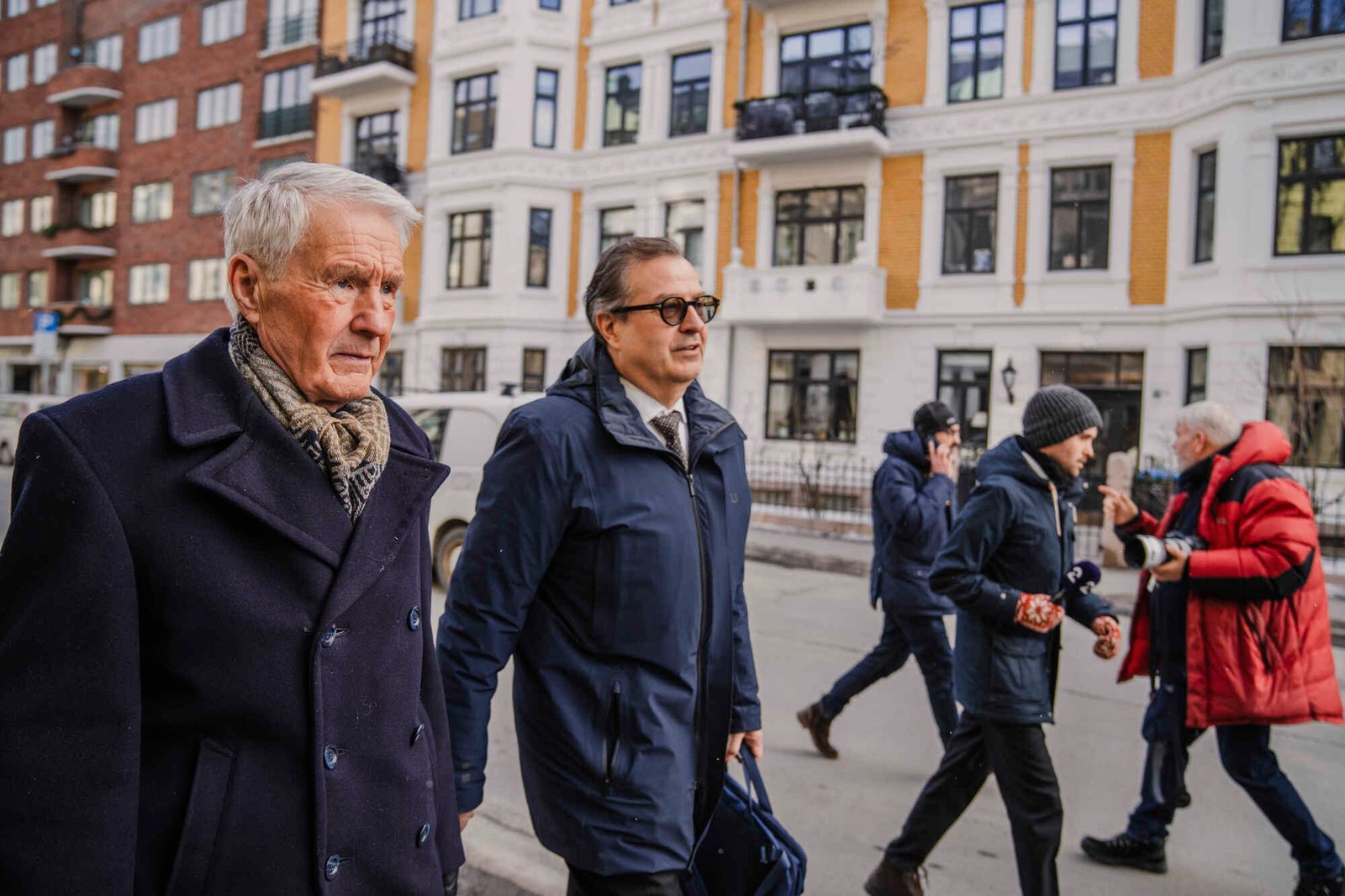 Oslo, 12 February 2026
Thorbjørn Jagland, accompanied by his lawyer Anders Brosveet, leaves his home in Frogner while Økokrim searches the property.
Photo: Stian Lysberg Solum / NTB
There you have the explanation in a nutshell. When the party’s top figures themselves are caught up in something serious, there is silence. When someone from outside criticises the party, there is uproar, and the uproar is never about the substance of the criticism, only about who dared to voice it.
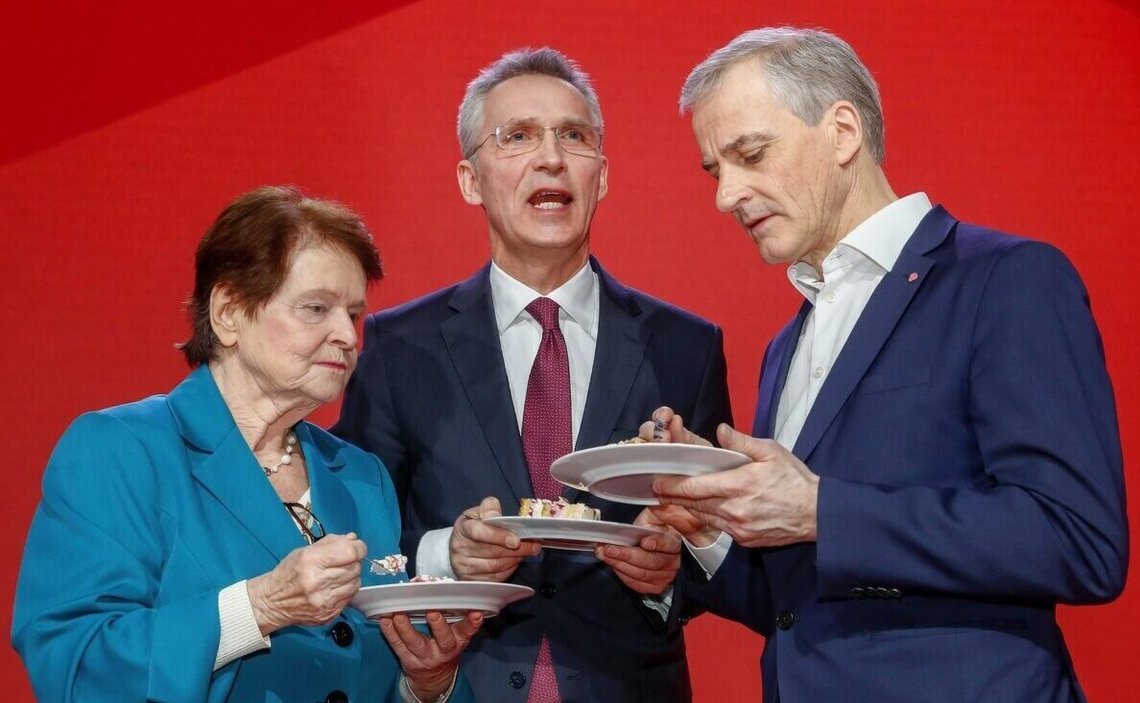
Ordinary people experience this double standard first-hand. They see how immigration policies that Labour itself has helped shape manifest themselves in gang crime and unsafe neighbourhoods. They see how foreign offenders receive sentences that bear scarcely any relation to the harm they have caused. They see how 115,000 Norwegians stand in food queues while politicians eat canapés. They see how the sick and elderly are not prioritised, and they see how, as a Norwegian, one is increasingly becoming a second-class citizen in one’s own country.
Higher food prices, higher fuel prices, higher … everything. For the Labour Party, the answer is always more taxes and charges.
It is therefore no coincidence that the anger is directed at the Labour Party. It is deserved. A party that responds to uncomfortable questions with silence, and to a critical press with exclusion, cannot at the same time complain that people are ceasing to trust it.
The Labour Party’s greatest problem is that, in its own arrogance and self-satisfaction, it refuses to acknowledge criticism from serious media outlets such as Document. We have an ever-growing readership, and dismissing all the voters who read us as hateful is hardly a masterstroke.
That creates division among the people, and that is unworthy of a governing party.


