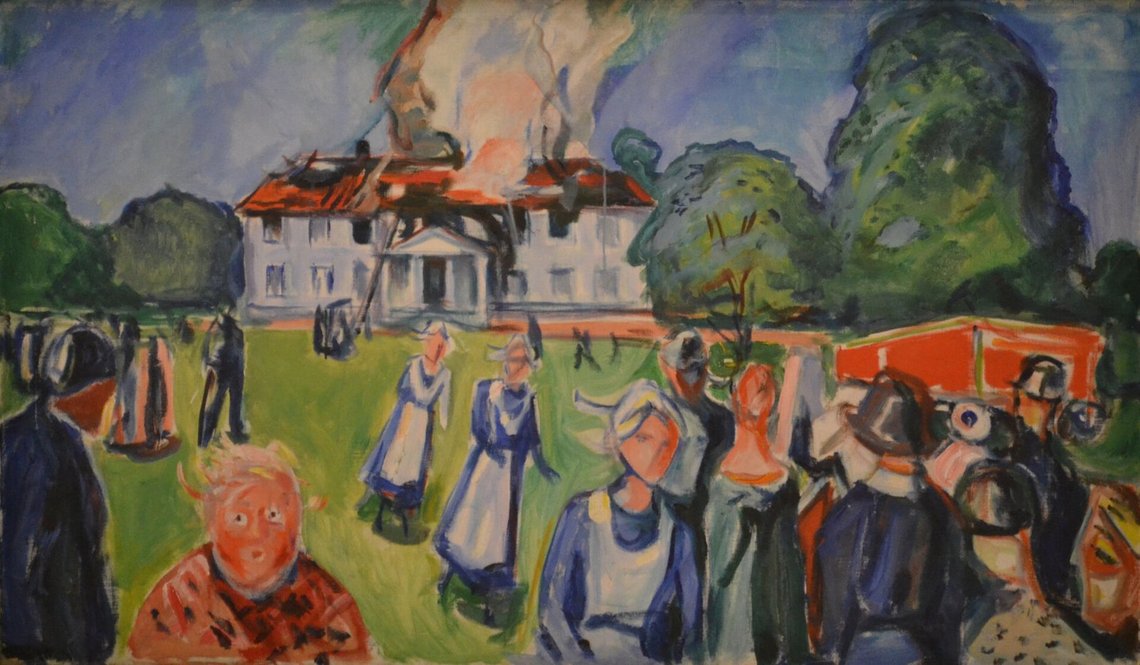


Think of our society as a big house. For a house to be safe to live in, two things must be in order: the foundations must be solid, and the people who live there must trust one another.
Right now, we are seeing the house’s foundations shaking. Although the debate in the traditional newspapers and on TV gives us the impression that the problem in our community house is merely about what colour the awnings should be, the truth is that we are faced with two distinct groups of residents who have locked themselves away on separate floors.
On the top floor sits the established elite. These are the politicians, the experts and the large, subsidised media organisations. They are well-off, have secure careers, live in urban areas and believe that whatever they decide is the only neutral truth. When they formulate policy and set the direction of society, they draw a line under the answer. If ordinary people on the floors below protest, they are not met with objective arguments, but with moralising finger-wagging, labelling or sanctions. The elite have entrenched themselves in an echo chamber of arrogance, where they have forgotten that their role is to listen to the people, not to lecture them.
On the floors below, the middle class is at work – the very backbone that holds the building up. It consists mainly of two parts: firstly, there is the private sector. These are the entrepreneurs, the self-employed and the farmers. These people take personal financial risks and create the wealth that finances the community. Secondly, we have the professions that underpin society – the capable people in the lower middle class, such as nurses, teachers and skilled workers. They are the ones who care for the sick, educate our children and keep the wheels turning in the communal spaces of our homes.
Now that these two groups within the middle class have found each other in a shared echo chamber, it is an echo chamber of fear. And this fear is not unfounded. It is the middle class that is, in reality, on the front line of what the Labour Party and the Støre government like to call ‘hard times’ – a term the authorities use as if it were an inevitable storm from the global economy, rather than the result of their own political choices.
Whilst the private sector is being stifled by unpredictable electricity and petrol prices driven by political energy transitions, nurses and teachers are finding their wages eaten up by interest rate rises and soaring food prices and taxes.
This is where we must understand the ironclad, logical law to which the elite are completely blind: when the middle class erodes, democracy is lost.
A vibrant and healthy democracy is entirely dependent on a secure, self-assured and economically independent middle class. It is the middle class that ensures moderation and stability in society. When those who create value and those who sustain the welfare state feel that the social contract is being broken, and that the promise that hard work will bring security is no longer valid, loyalty to the system crumbles. Trust is lost at every level when ordinary people realise that those at the top no longer protect them, but instead spend billions on grandiose prestige projects and leave the residents on the floors below to foot the bill. When the middle class is pushed up against the wall, moderation disappears. That is why you see the Progress Party surging towards a historic 35 per cent in the polls. It is the middle class that is rising up in pure, democratic self-defence.
To see how deep the rot in the building’s load-bearing structures runs, we need look no further than this autumn’s dramatic power struggle within the press’s own closed circles. What is unfolding around the Norwegian Editors’ Association, the Press Complaints Commission (PFU) and the contentious Shada case reveals a deep and uncomfortable paradox that both sides must dare to face head-on.
At the heart of this case lies the press’s most sensitive social responsibility: a young, defenceless person who dies in state custody, under public care and surrounded by unexplained circumstances. But this case lays bare the real blind spots of the upper echelons. For where were the major, established media houses when Shada actually needed a watchdog that worked? The closed system’s own complacency in the face of public neglect actually created the vacuum that alternative media later filled. When the elite today launch a fierce witch-hunt against the challenger Document, it is, at its core, a projection of their own guilt. They are attempting to clear their own professional conscience by silencing critical voices, rather than admitting that they themselves failed the house’s most vulnerable resident.
At the same time, the rebels on the floors below must come to terms with the mirror-image truth: In their legitimate quest to expose state secrets, they too risk making a misstep if a tragic human life is reduced to mere ammunition in a political culture war.
The fact that the press’s regulatory bodies, in this tense situation, are implementing secret exemptions from their own regulations and granting special treatment to their own board members only makes matters worse. When Vårt Land editor Bjørn Kristoffer Bore acts as an active accuser against a competitor, whilst simultaneously sitting on the board assessing that same editor’s membership, and being married to PFU chair Anne Weider Aasen, this breaches all basic principles of press ethics and legal certainty – implicitly the principles of a fair trial. The gatekeepers rewrite the rules as they go along, depending on who is challenging the state. When Secretary-General Elin Floberghagen also takes to the media and brands *Document*’s parallel publications as a ‘deliberate provocation’ against the system, the judge has, in effect, spoken before the case has even reached the courtroom.
This manoeuvre is not a case of independent self-regulation; it is a coordinated media cartel obeying political marching orders from government offices, as I interpret it. The timeline, after all, does not lie. It all began in August, when AUF leader Gaute Børstad Skjervø stepped forward and demanded that the editors take a stand and strip *Document* of its legitimacy. When the section editors at *Morgenbladet* – anonymous to most people – subsequently resigned in protest to force the board to its knees, we see how this closed, urban bubble operates. They use harsh labels and purges to lock the door and protect their own power to define.
It is in the light of this powerlessness that we must understand the patronising attitude of the established media and Aftenposten’s latest ‘in-your-face’ advert. When a toothless, VAT-subsidised major newspaper spends large sums of money ridiculing those who ask questions critical of the system, it has broken the most fundamental rule of all communication. Their advert amounts to a digital middle finger thrust right in the face of a growing grassroots movement – a desperate attempt to preach to their own hoarse and dwindling choir because they realise they have lost their monopoly on the truth.
But there is a but here. At the heart of this dramatic uprising lies a fundamental, systemic warning to which the independent media, for their part, must not be blind: the victor’s curse.
Shattering trust in an arrogant elite is a logical victory. But it leaves a huge institutional void in its wake. After all, the established institutions have kept society stable for a very, very long time. If we smash everything in a fit of rage, without having anything better to put in its place, we will end up in unliveable chaos where the roof could come crashing down. Moreover, history shows us the inexorable truth – that those who lead a rebellion today will move into the top floor as the new bosses tomorrow. And when the new leaders have to make difficult choices to keep the house stable, they will quickly discover that the nature of power demands precisely the same strict rules and secrets that they once fought against.
The solution, therefore, is not to burn the house down, but to carry out a controlled upgrade. The supporting beams must remain, but the monopoly on who gets to live on the top floor and run things must be broken. We must replace the people on the boards and committees with individuals who bring a completely different reality to the table: people who know what it costs to run a business in the private sector, people who have experienced the day-to-day reality of being a nurse or a teacher first-hand, and new, independent voices.
This transition must take place in broad daylight and with complete transparency. The new system cannot hide behind closed doors and secret exemptions; it must be forced to keep its doors open, so that everyone at every level can see why decisions are made. And most importantly: the new leaders must have enough humility to understand that their mission is not to seek revenge, but to restore balance by testing new ideas on a small scale first, before the whole of society has to pay for the experiments.
We cannot continue to live in a house where the top floor scorns the floors below, and the floors below are trying to blow up the foundations. As Klassekampen has so insightfully warned: Times are changing, and the secret exceptions you use to shut others out today will be used to throw you out yourself tomorrow.
For if the foundations give way, the roof will come crashing down on all of us, no matter how high up in the system we have positioned ourselves.