

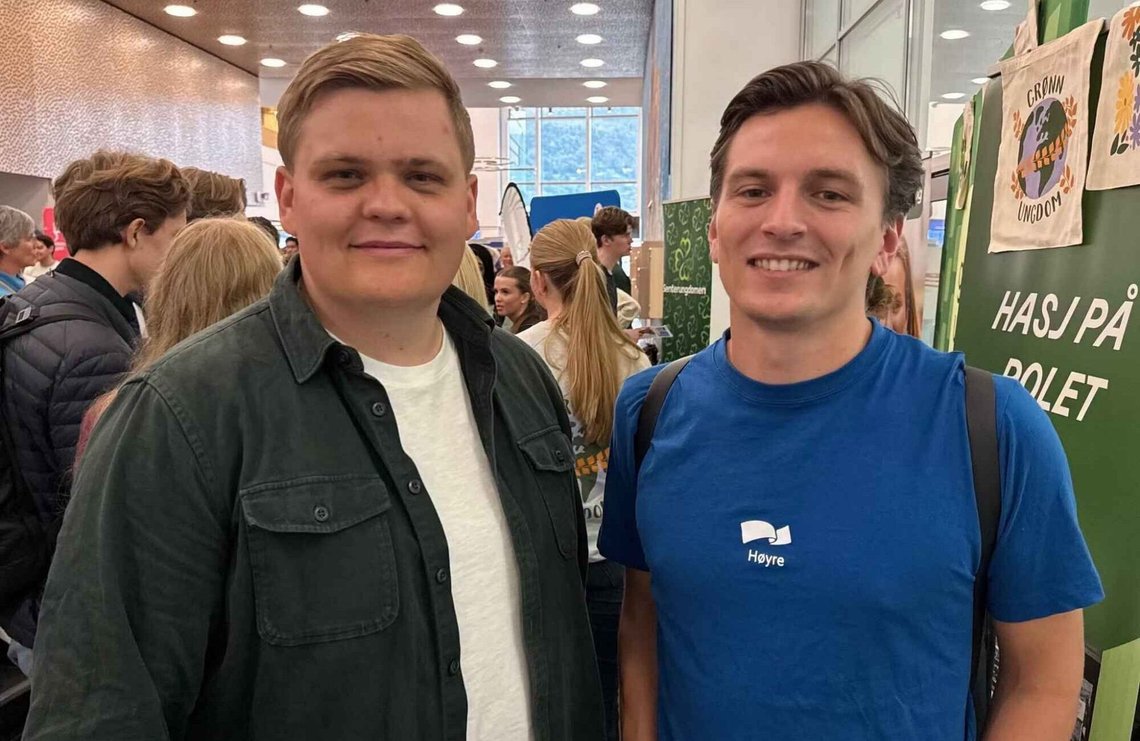
Ola Svenneby has taken to Facebook to defend Gaute Skjervø, the Labour Youth (AUF) chief. Svenneby is the second deputy leader of Høyre, Norway’s liberal party which still calls itself the Conservative Party, and he devotes much of the text to describing the threats Skjervø has received, before concluding that the treatment of the outgoing AUF leader is ‘simply unacceptable’.
I do not think anyone disagrees with that. No one – whether politicians, public commentators, journalists or private individuals – should receive threats against themselves or their families. Those responsible should, of course, be punished. The criticism of Skjervø, however, concerns the fact that he used his position as AUF leader to attack Document from NRK’s studio.
With Svenneby, this almost completely disappears into the narrative of Skjervø as victim. Before he gets to what Skjervø actually did, the reader has already heard about the threats, his family, his background as a Utøya survivor and the tradition of AUF leaders being subjected to abuse. All of this is serious, but none of it addresses the criticism.
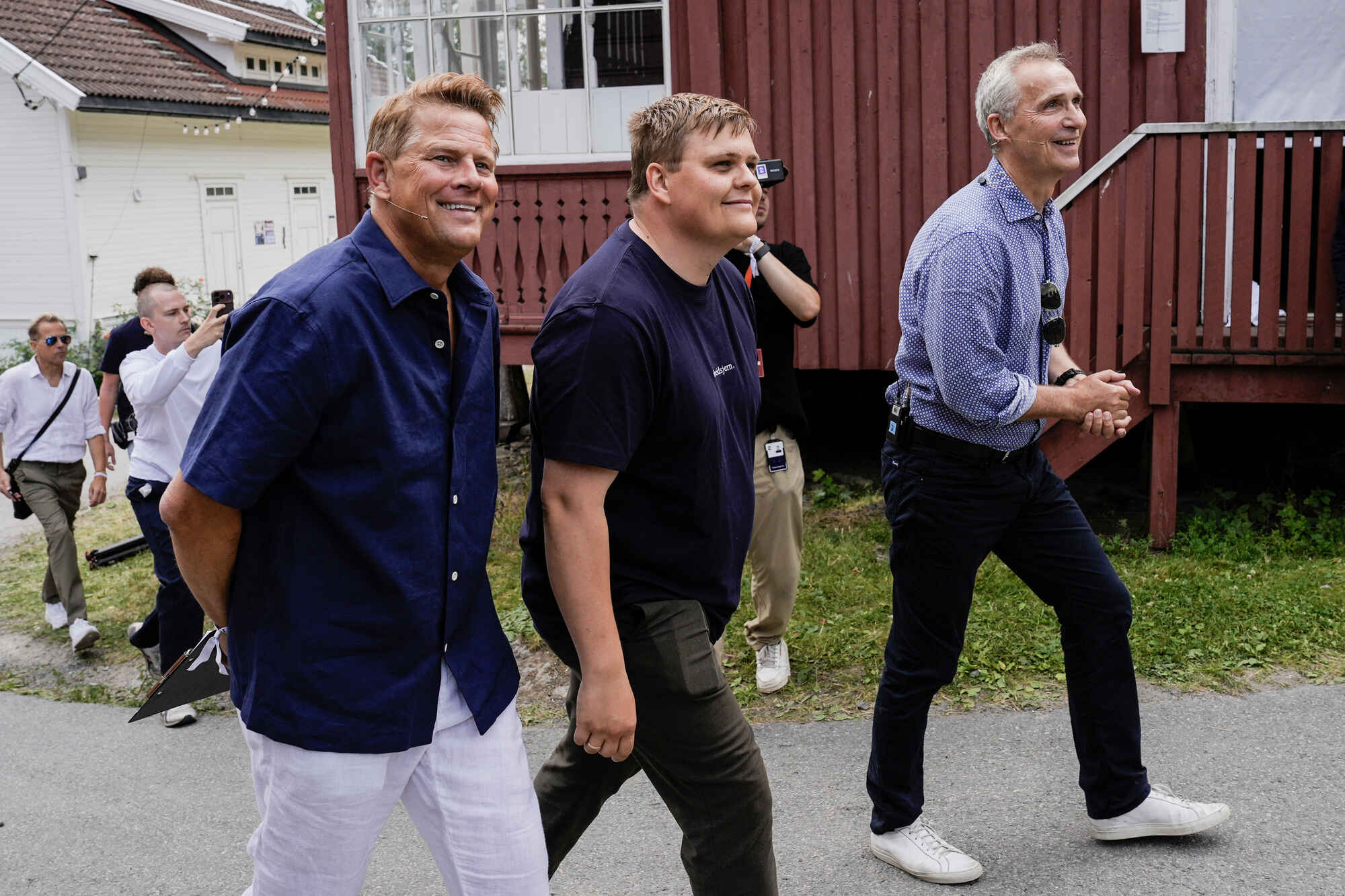 Utøya 30.07.2026
Panel discussion at Utøya with Finance Minister Jens Stoltenberg and Robert Stoltenberg during AUF’s summer camp.
Photo: Terje Bendiksby / NTB
Svenneby also uses himself as a yardstick. He writes that, with one exception, he has never been in contact with public authorities because the pressure on him has become too great. He does not believe the same applies to any of the leaders of Unge Høyre. Skjervø is thus once again portrayed as the greatest victim, while the reactions from the right are unreasonable.
The comparison conveniently stops at Unge Høyre. Svenneby need only have turned his head a little further to the right. Simen Velle and his family were quite recently threatened with death. The threats were so serious that PST opened an investigation. Sylvi Listhaug, too, has lived with serious threats for several years. Svenneby therefore does not have to look very far to find politicians on the non-socialist side who have also been subjected to serious threats. And since the matter concerns Document, rather than Unge Høyre or Høyre, he might perhaps also have investigated whether things have been quite as rosy and free of threats for us.
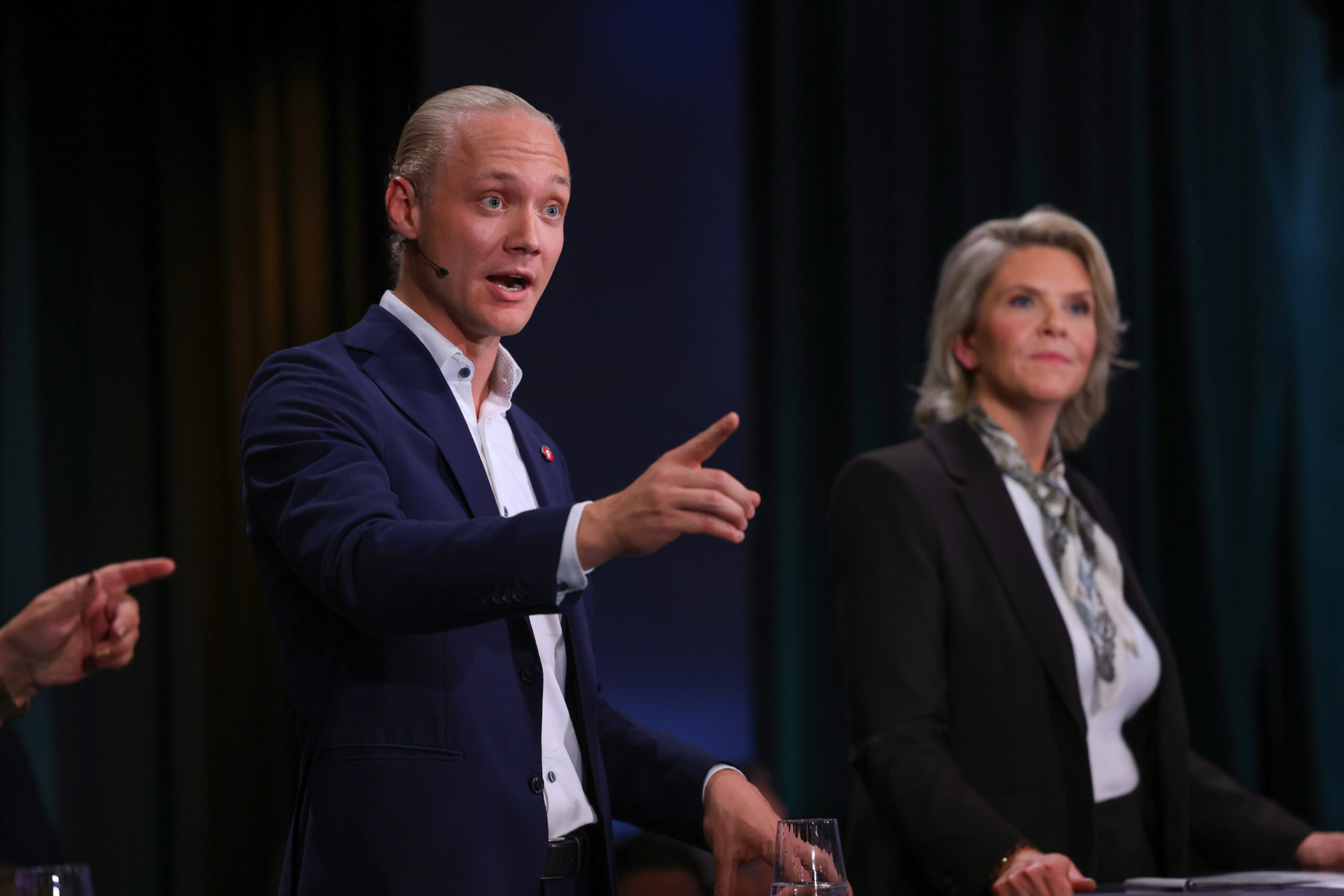 Oslo 05.09.2025
FpU leader Simen Velle and FrP leader Sylvi Listhaug during Debatten as NRK hosts the final party leaders’ debate of the election campaign at Carls in Oslo on Friday evening.
Photo: Amanda Pedersen Giske / NTB
The Labour Party constantly talks about the anger directed at it, as though it arises of its own accord in the comment sections, before the algorithms and the ‘far right’ do the rest. Støre himself has warned against what is referred to as ‘Labour hatred’, and large parts of the party seem convinced that the anger stems from the fact that they are the Labour Party. Very rarely do they ask the more uncomfortable question: Could it be their policies that people are furious about?
After all, it is the Labour Party that has held government power while ordinary people have felt the consequences of its policies first-hand. It was the Støre government that invited the Taliban to Norway and spent NOK 3.5 million of taxpayers’ money on a private aircraft for the delegation. The total cost was estimated at around NOK seven million. Since then, the Epstein revelations have implicated people with strong ties to the Labour Party, among them former prime minister and Labour leader Thorbjørn Jagland and Terje Rød-Larsen. Both are now under investigation, together with Mona Juul, for possible corruption. All three deny any criminal wrongdoing.
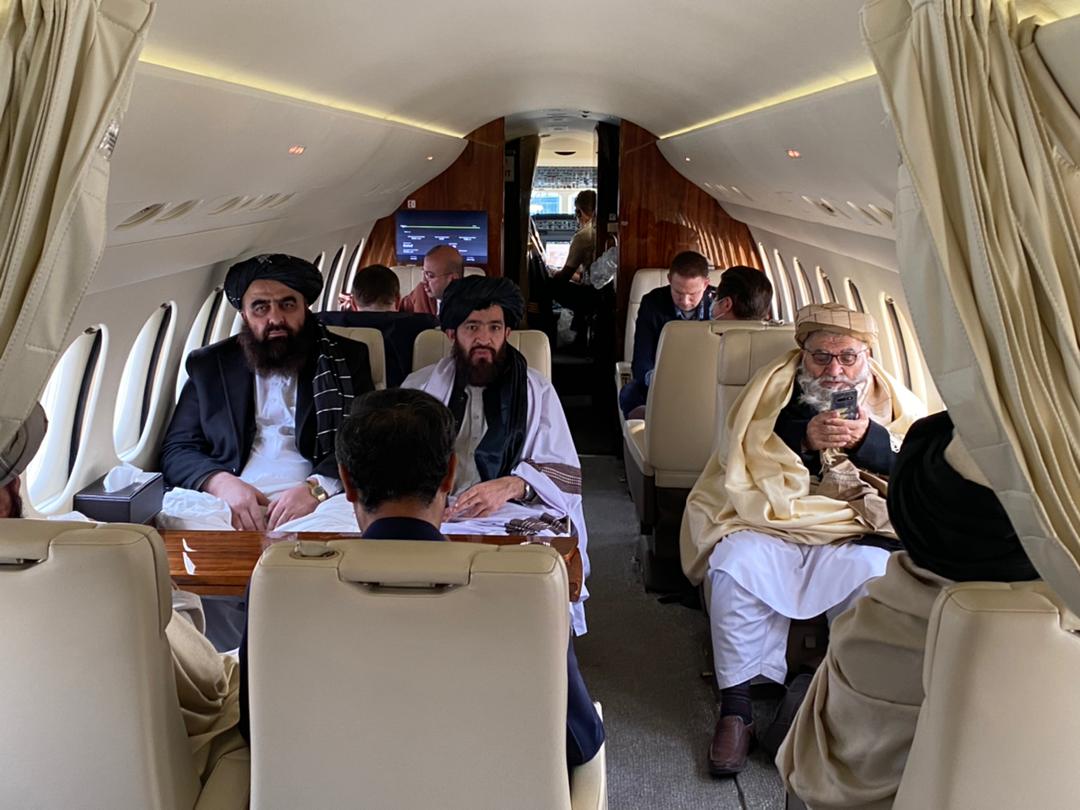 Oslo 22.01.2022
The Taliban on their way to Norway in a private aircraft for talks on humanitarian aid and political, educational and economic issues.
Photo: Taliban spokesperson / Twitter / NTB
And this is only the tip of the iceberg. For several years, the Labour Party has pursued policies that an increasing number of people regard as completely misguided, whether concerning the economy, taxes and duties, immigration, crime or the prioritisation of taxpayers’ money. It is ordinary people who must live with the consequences every single day, while the same politicians stand on television wondering where all the discontent comes from.
None of this justifies a single threat. But it shows why it is too simplistic to dismiss everything as ‘Labour hatred’. Ordinary political anger cannot be lumped together with abuse and threats every single time it is directed at the left. Doing so also allows politicians to avoid confronting their own role in creating the sense of powerlessness they are now warning against.
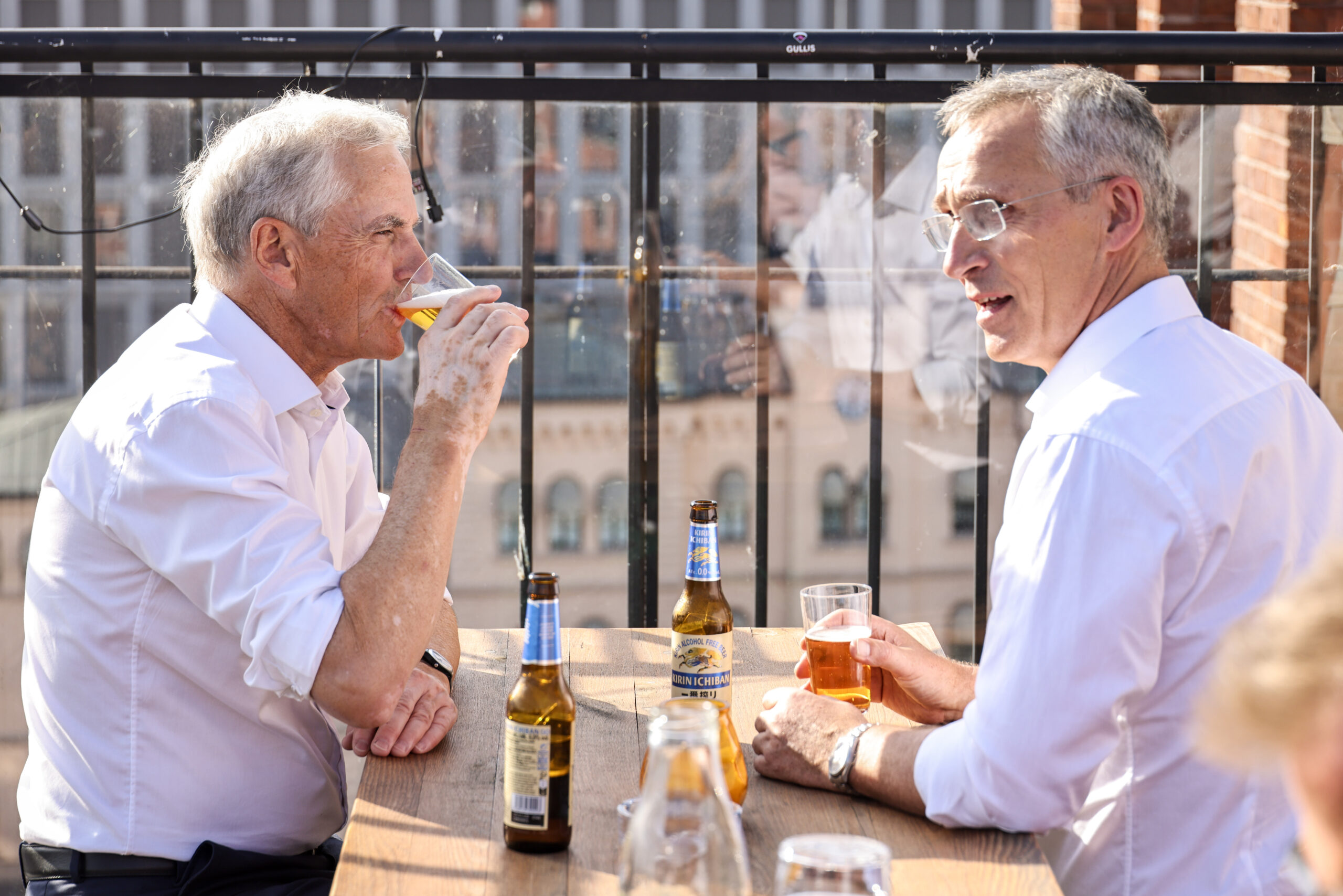 Oslo 28.07.2025.
Prime Minister Jonas Gahr Støre and Finance Minister Jens Stoltenberg during the Labour Party’s election campaign event at Byens Tak on Youngstorget.
Photo: Geir Olsen / NTB
It is this diversion that Svenneby is now contributing to. What Skjervø actually said and did disappears in favour of a discussion about the reactions against him. Skjervø thus once again becomes the victim, those who respond to him become the problem, and the Labour Party once again avoids asking itself why so many people are so angry.
Nor is Svenneby’s account of Skjervø’s intervention particularly recognisable. He writes that Skjervø has merely ‘raised a debate’ about Document’s affiliation with the Norwegian Editors’ Association, comment sections and algorithm-driven social media. The criticism is presented almost as though Skjervø merely asked a few difficult questions and was then met by an unreasonable right wing.
That is a very flattering rewriting of what happened. Skjervø called it a scandal that Document receives press subsidies, questioned Hans Rustad’s membership of the Norwegian Editors’ Association and asked Norwegian editors to consider whether they could ‘stand behind’ it. Afterwards, he toned the whole thing down to saying that he had merely ‘asked for answers’.
But this is not for politicians to decide.
Kjetil Rolness is hardly the first person one would suspect of doing Document’s bidding. He has shared Svenneby’s post and writes that he himself proposed excluding Hans Rustad from the Editors’ Association in 2021. The justification he gave at the time, however, has not aged particularly well. Nevertheless, he too objects to Skjervø acting as an ‘editor-in-chief above the editors’ and telling people who is allowed to call themselves a journalist. Vebjørn Selbekk wrote about the same issue over the weekend.
That is the whole point. One can dislike Document, criticise our journalism and even believe that Hans Rustad should not be a member, without defending a politician using his position to put pressure on the media. Such questions are decided according to the Editors’ Association’s own statutes and procedures, not by the AUF leader or other politicians. As Rolness writes, open and honest debate must have room for Skjervø, Rustad and others as well.
Skjervø also attempts to turn press subsidies into a question of political goodwill. Document receives support because the Norwegian Media Authority has determined that we meet the requirements of the regulations. Skjervø makes it sound as though the state arbitrarily hands out millions to a publication that he believes spreads hatred. He can work politically to change the regulations, but he cannot pretend that the support is a gift that ought to be withdrawn because he dislikes our journalism.
Svenneby also says that he personally knows Skjervø as ‘very pleasant, funny and open-minded’, and that Skjervø has never accused him of being a racist, an extremist or of contributing to radicalisation on the far right.
That is no doubt nice for Svenneby, but it says little about how Skjervø treats political opponents whom he actually regards as enemies. He has no difficulty describing people as dangerous, far-right or dark forces, without being willing to meet them in debate. When those same people react and criticise his statements, it is suddenly described as an aggressive personal campaign.
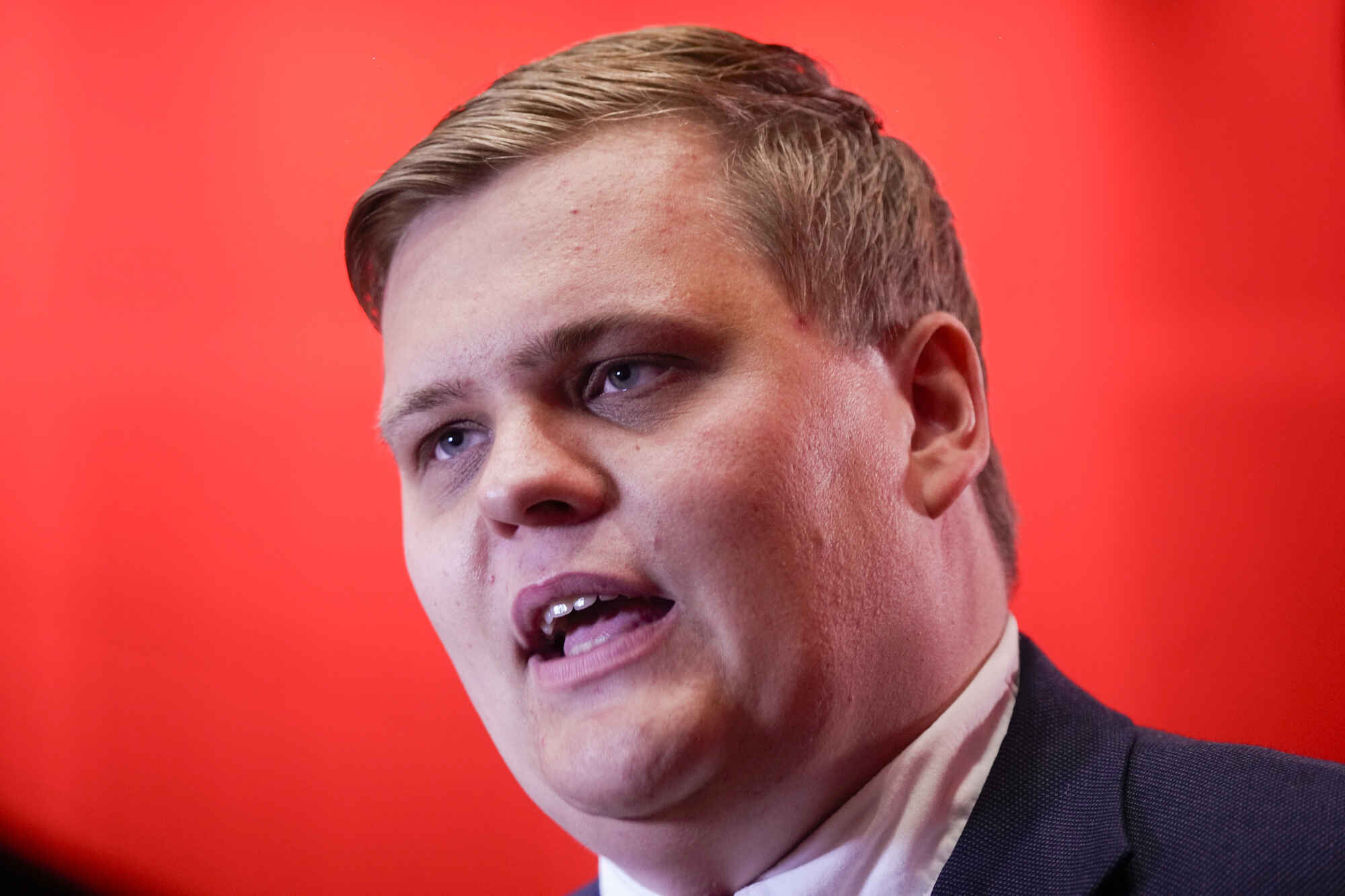 Oslo 08.09.2025
AUF leader Gaute Børstad Skjervø during the Labour Party’s election-night gathering at Folkets Hus during the 2025 parliamentary election.
Photo: Javad Parsa / NTB
On Facebook, Skjervø writes that Document and two of our staff published more than 15 posts about him in two days. I have not counted them, but we have undoubtedly used our platforms to respond to his accusations. Several of the posts contain clips so that people can hear for themselves exactly what he said. When a politician attacks our workplace from NRK’s studio, he cannot expect us simply to sit quietly and take it.
What we have asked throughout is that Skjervø meet us for a debate. Journalist Espen Teigen has repeatedly tried to persuade him to take part. Several other Norwegian media outlets have also tried to facilitate a discussion. Skjervø is happy to talk about Document on NRK, on Facebook and through other media, but so far he is unwilling to talk with Document.
Svenneby concludes his post by calling for a reasoned debate. On that, we are in complete agreement. That is precisely what we have been trying to achieve.
The threats against Skjervø are serious, but they do not exempt him from criticism. Nor do they make the attempt to pressure a political opponent out of the press community any less serious. If Svenneby genuinely wants the reasoned debate he is calling for, he should begin by describing what Skjervø actually did.
Our invitation still stands. Gaute Skjervø can meet us for a debate at any time.


