

Politicians and journalists must ritually pass through a mass of lies, concealments, pretences, denials and distortions before they mention the obvious connection between Islam and terror.
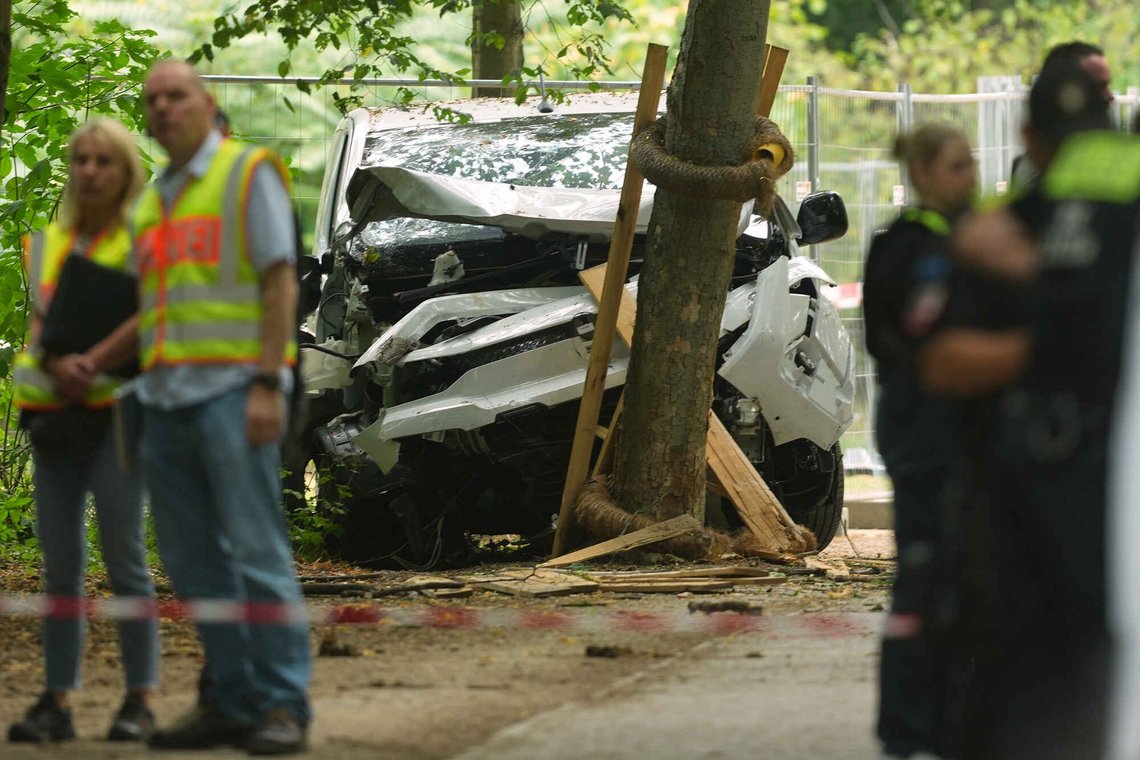
“My thoughts go to all those affected and their relatives,” writes the leader of the Socialist People’s Party (SF), Pia Olsen Dyhr, the day after a 21-year-old Islamist drove into a crowd during the Pride event in Berlin and killed a woman. So far, as expected.
But before the SF leader arrives at the perpetrator’s motive, the reader must go through an entire liturgy of threats: Russia’s war in Ukraine, the climate crisis, the heatwaves, the United States’ pressure on Greenland.
Only afterwards is the “presumption” of the Islamist connection mentioned.
As Ryan Smith has drawn attention to, this extremely circuitous introduction serves a definite purpose: by first listing the left’s official threat picture – Putin, the climate, Trump – the sender documents her loyalty to her own camp, before she very cautiously permits herself to mention Islamism.
It is an ideological “firebreak” intended to prevent the recognition of one uncomfortable truth from casting doubt on the entire world-view on which one has built one’s political identity. Only with an indulgence in hand may the dangerous word be uttered.
It is incredible how many knots the left has to tie on itself.
Culture Minister Zenia Stampe and Climate Minister Samira Nawa entirely omitted to mention the perpetrator’s ideology even after the German Interior Minister had established at a press conference that it was an Islamist terrorist attack.
The journalists live in a different reality
But the denial is not only a political phenomenon; it is embedded in the very institution that is supposed to enlighten us about the world.
A survey from the trade magazine Journalisten shows that while 52 per cent of Danes perceive immigration as a threat to Danish culture, the same applies to only 22 per cent of journalists.
These are two different conceptions of reality, and they have consequences for what journalists at all find it worth the trouble to investigate.
Eva Gregersen has demonstrated how the coverage of citizenship cases is systematically angled from the applicants’ point of view – waiting times, case-processing problems, personal destinies – while the Danes’ perspective does not receive the same attention.
For example that far too many who obtain citizenship are terrorists or sympathisers or simply psychopaths whom we can afterwards not get rid of. As in the case of the fatal violence against the Swedish family father on Bryggen this summer.
For the same reason the Radical Party leader Martin Lidegaard is allowed to get away with incorrectly claiming that by far the majority of those who apply for citizenship come from the West. But that is not correct. The group from the MENAPT countries and the stateless is larger. With Syria as the largest single country.
In other words bad news – which we do not get to hear about.
The same pattern recurred in the coverage of the terrorist attack in Berlin. TV2’s journalist had a special angle: it was the right’s fault, because it – particularly AfD – nourishes the hatred between social groups …
It is this sort of thing that leads ever more people to speak of the lying press.
Whether it is now conscious manipulation or merely an expression of what the journalistic profession instinctively finds it relevant to investigate, the result is the same: the close connection between immigration, Islam and terror is suppressed in the media from which most people obtain their knowledge.
Why does the denial sit so deep?
To acknowledge Islamism’s role in the violence means at the same time for politicians and journalists that they must admit that their opponents on the right were right. It is a loss of status in their own milieu; it costs prestige to give the right its due.
That may be one of the causes of the colossal failure. In addition comes the fact that politicians and journalists often live in good residential areas, send their children to schools with a particular pupil composition and move in milieux where the consequences of the immigration policy are seldom felt.
The denial is cheap for them – and expensive for everyone else.
That was in fact the explanation Zetland’s editor-in-chief Lea Korsgaard gave when she distanced herself from “a quite reality-remote attitude to the consequences of increasing immigration”.
Korsgaard here falls out both with her own milieu and with Zetland’s readers, who are presumably far more left-oriented and liberal than even Politiken’s readers.
She is to be thanked for her remarkably clear speech and for admitting her late recognition, even if action of course must follow the recognition, otherwise it is only words, a private adjustment of mentality or ritualised penance without consequences.
A tortuous path
The path from denial to recognition is long, for it goes straight through entrenched interests: political identity, professional self-understanding and social status in one’s own circles.
Before politicians and journalists dare to undertake that journey, we should not expect to receive anything other than the customary lies and distortions about immigration and Islam.


