

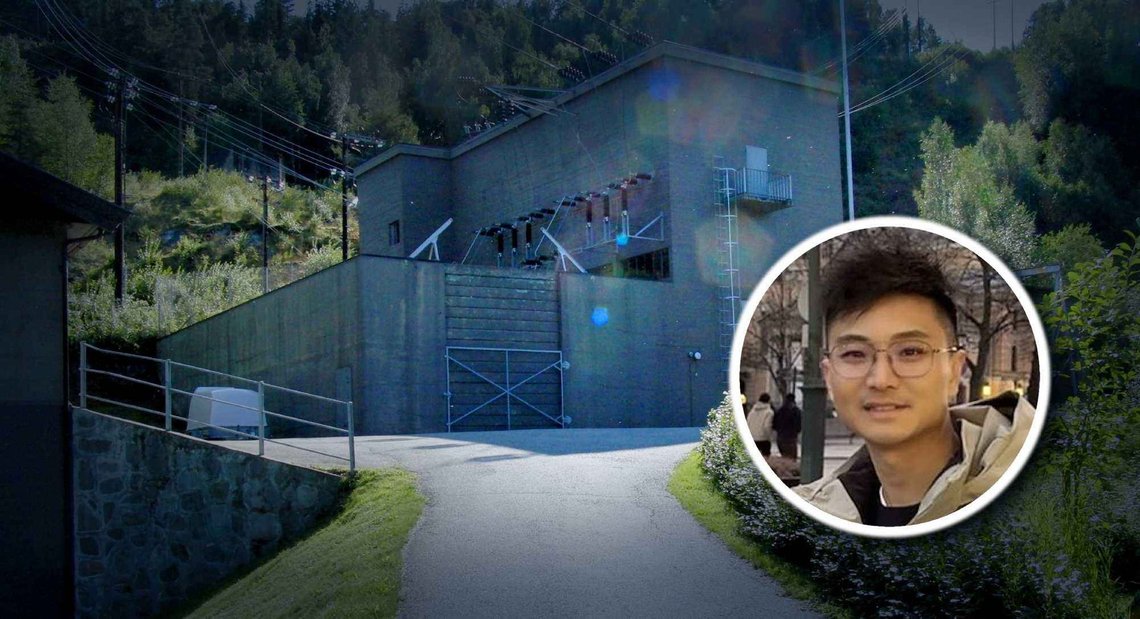
A local insider in Vågå reacted to the delegation of Chinese investors who were to inspect a site for a data centre being most preoccupied with the surroundings and taking pictures of the power station.
In mid-May this year the insider contacted Mayor Harald Sve Bjørndal in Vågå.
The PST has recently arrested a Chinese woman (29) on Andøya and charged her with attempted gross intelligence activity.
Now the two agree to contact the Norwegian Police Security Service (PST) about something that happened several years ago.
The woman in custody has connections to the company Karmøy Health Norway AS, which is owned by one of the other suspects, the Chinese national Wei «William» Qiu (43). He is now likely staying in Singapore.
 Wei «William» Qiu is one of the suspects in the espionage case on Andøya. Between 2021 and 2023 he tried to establish a data centre in the power hub of Vågå. (Photo: Private)
When Qiu came to Norway in 2021, he tried his hand as a data centre entrepreneur in Gudbrandsdalen, together with his Norwegian business partner, Oliver Horvei (31).
On 7 October 2021 the local newspaper Gudbrandsdølen Dagningen writes that a company named Krefter AS is negotiating to purchase all remaining municipal commercial land in Vågå. The unknown company has not even been incorporated. It is first registered in the Register of Business Enterprises a good month later.
 Oliver Horvei. (Photo: Private)
That autumn Qiu and Horvei start several companies under the Krefter umbrella. The company Grandtechnik Pte. Ltd. in Singapore is listed as the owner. Grandtechnik is until this day owned by Qiu and Horvei, together with other shareholders with Chinese-sounding names.
Delegation from Singapore
50 million kroner is injected into the share capital of Krefter AS in February 2022. The entrepreneurs are open about the fact that the money comes from an investor group in Singapore.
They approach a number of landowners in several places in Vågå and Sel municipalities, with a view to purchasing or leasing sites for a data centre.
Proximity to power stations is of particular interest.
On a couple of occasions they bring with them a group of Chinese who are presented as investors behind Krefter. They have allegedly flown in from Singapore.
The then municipal director, Jan Egil Fossmo, was asked to vouch for them so that they could obtain visitor visas.
Farmer and landowner Svein Arne Tessneset believes it was in the autumn of 2021 that the first Chinese delegation came to visit. He remembers that they came in two cars.
– I think there were six in total, perhaps more.
The farmer’s hayfield runs up to the border with two of the power stations in the Tessa watercourse, Nedre Tessa I and II. They belong to the power company Eidefoss AS.
– They went round to all the neighbours here and made enquiries, says Tessneset. He had contact with the company during the winter of 2021 and after the turn of the year in 2022.
– Low level of knowledge
The insider who was present on one of the site inspections was the engineer Steinar Aasgaard. His company was engaged by Krefter to investigate water cooling for two data centres at Lalm and Tessand in Vågå.
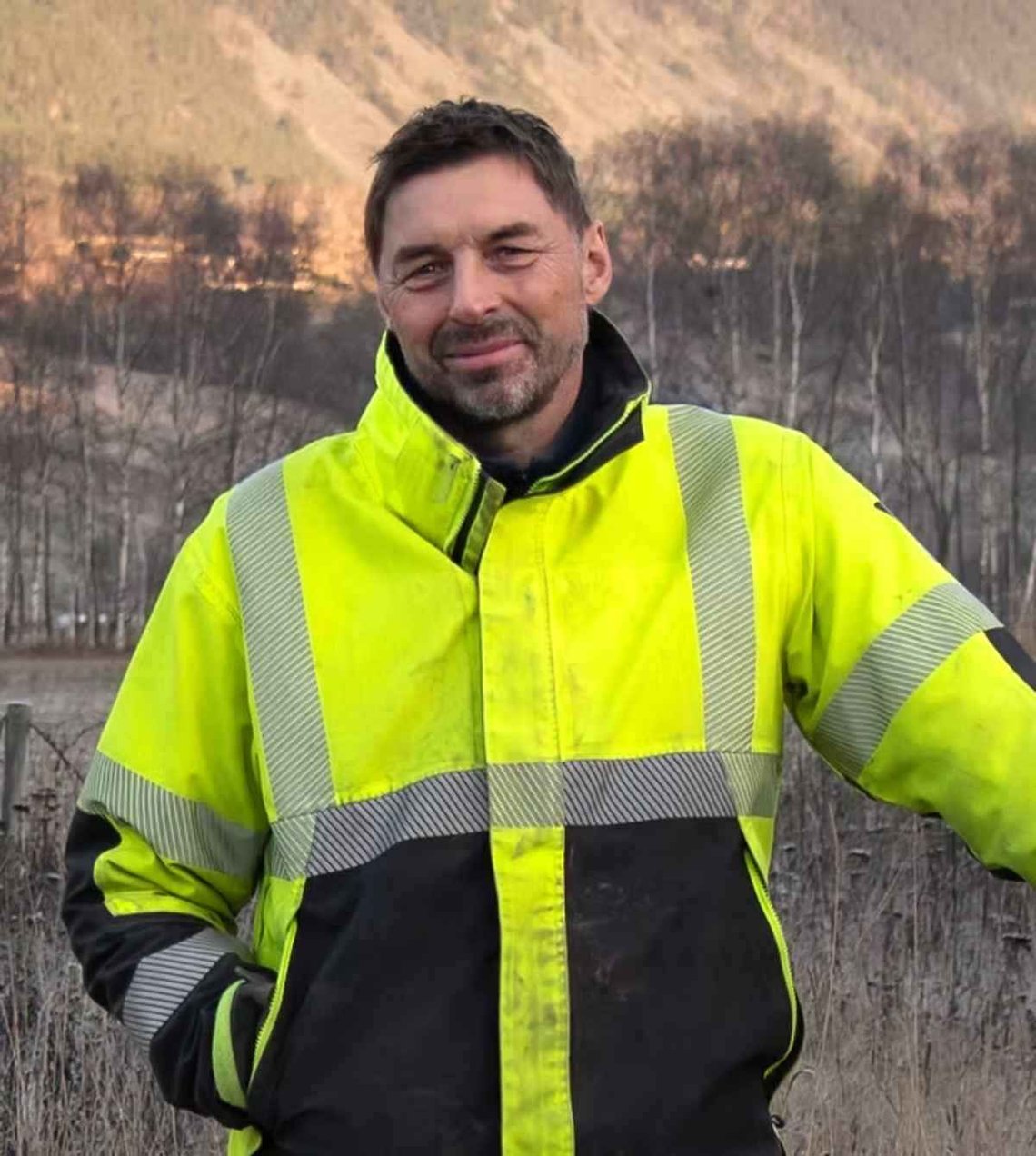 Steinar Aasgaard runs the company VA Prosjektering AS in Vågå. (Photo: Private)
– Their plans were gigantic. I reacted to the fact that they had such a low level of knowledge about what they were going to do. I do not think they knew the difference between metres, square metres and cubic metres, Aasgaard tells Document.
According to their own presentations, Krefter’s owners claim to have built data centres in Asia for customers such as Google Cloud, Microsoft, Alibaba Cloud and ByteDance (TikTok).
– The figures they came up with regarding water cooling suggested that they should find themselves another river, because there is not enough water here. Perhaps except during the spring flood, says Aasgaard.
The level-headed engineer also began to wonder why a group of Chinese, who spoke neither English nor Norwegian, should be present on the site inspection.
– They were both impolite, rude and uninterested in what I said.
– Who were these Chinese people?
– They were younger people who looked like tourists, perhaps at most 30 years old. They did not look particularly like investors. They rushed around taking pictures of all sorts of odd things and seemed more interested in the power station and the surroundings than in the actual site they were supposed to be looking at, says Aasgaard.
When asked what the Chinese people’s intentions might be thought to be, he reminds us that Vågå is a critical hub on the transmission grid between the zones NO1 and NO3, with a large transformer station near the centre.
The area has a total of nine power plants.
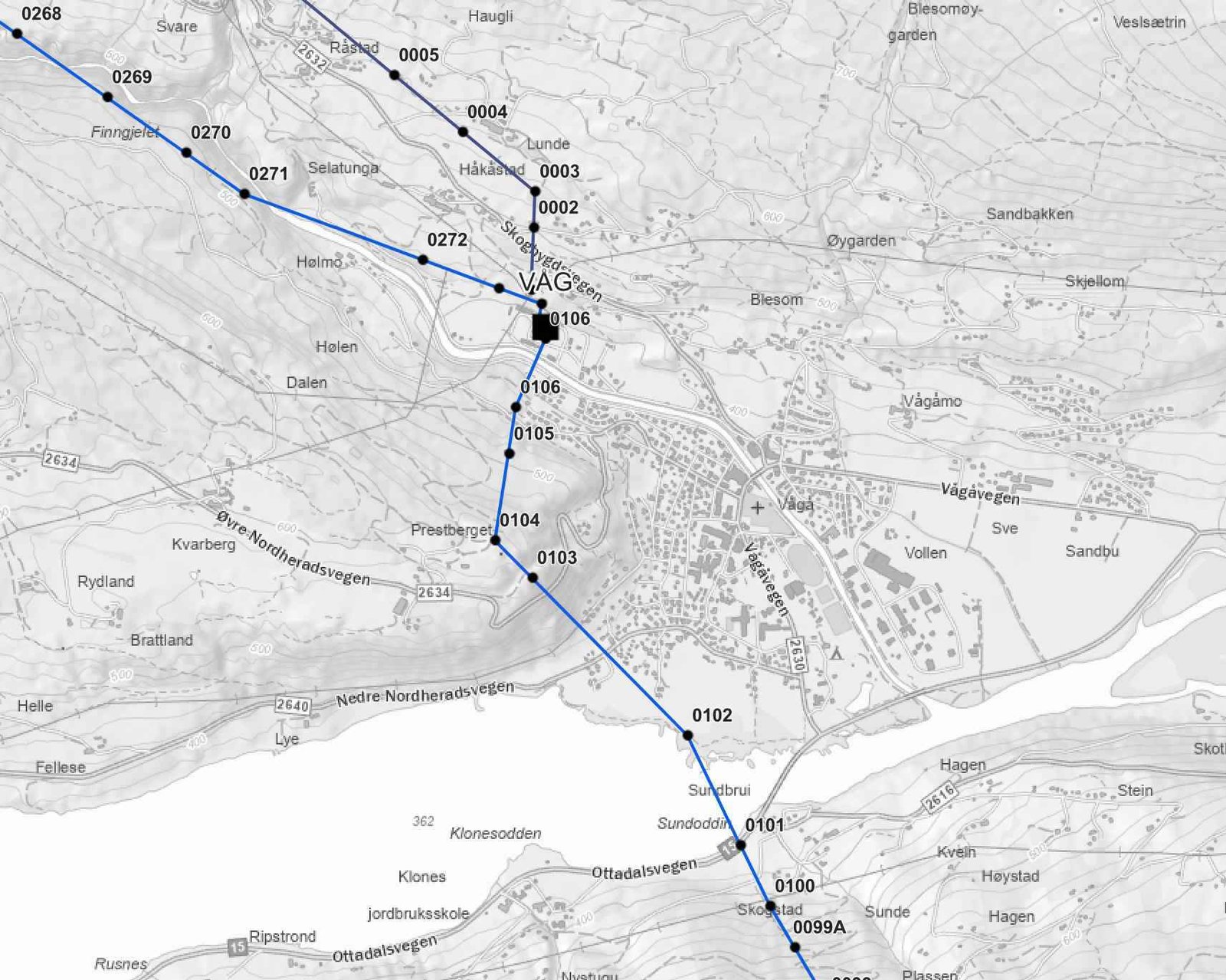 The high-voltage line that connects the power regions of Eastern and Central Norway runs through a transformer station right by Vågå centre. (Map: NVE)
When the delegation wanted to enter the old power station at the bottom of the Tessa river and Horvei said that they had obtained permission to use the building, Aasgaard rang the power company Eidefoss AS. Then he rang the PST.
– It came to a complete stop at Eidefoss. The PST was pleased that I made contact, I know nothing more.
From cancer treatment to data company
He describes Oliver Horvei as an accommodating and pleasant fellow, whom he trusted. He has not met Qiu.
– But I have a feeling that Horvei himself may have been led up the garden path. That he may perhaps have got mixed up in something and been naïve, says Aasgaard.
According to his CV, Horvei lived in China for several years when he was in his early twenties. Among other things he is said to have started Lona Biotherapeutics, a company that develops a cancer treatment based on gene editing and artificial intelligence in the city of Xi’an in 2017.
The very next year he was back in Norway, now as the founder of a «data company» together with two young Chinese people, in Høvåg in Lillesand.
Lona Biotherapeutics has since moved from Xi’an to the city of Suzhou on another side of the country and has established offices in London and Singapore. In Singapore the address is the same as that of Grandtechnik Pte. Ltd., the owner company behind the data centre plans in Gudbrandsdalen.
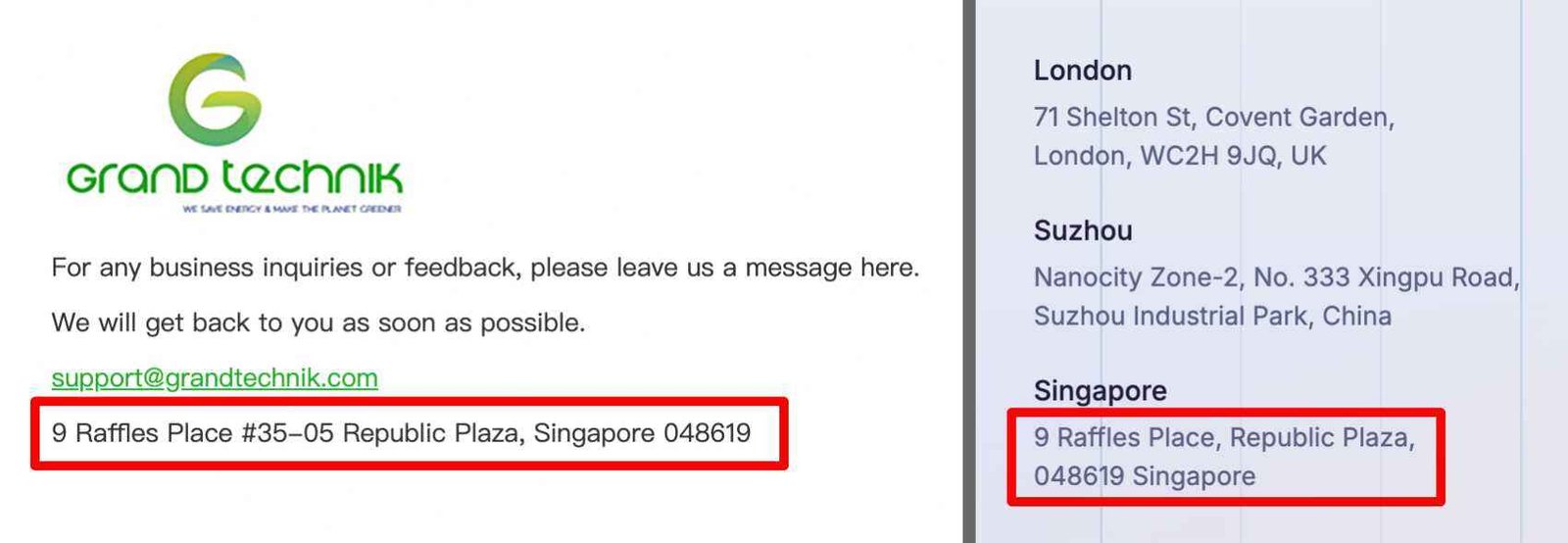 The biotech company that Oliver Horvei is said to have helped establish in China (r.) uses the same office address in Singapore as Grandtechnik Pte. Ltd., which was behind the plans for several data centres in Vågå and Sel municipalities. (Excerpt from the companies’ websites.)
To Mayor Sve Bjørndal the Chinese delegation in Vågå was presented as investors from a kind of pension fund.
– What impression did the municipality get of the two bosses at Krefter?
– Oliver Horvei comes across as a fine fellow who wants the best. I do not have a particularly good impression of Wei Qiu.
– Why?
– He demonstrably did not tell the truth; my impression is that he always had far more information than he shared with us.
Neither Oliver Horvei nor Wei Qiu has responded to requests for comment.
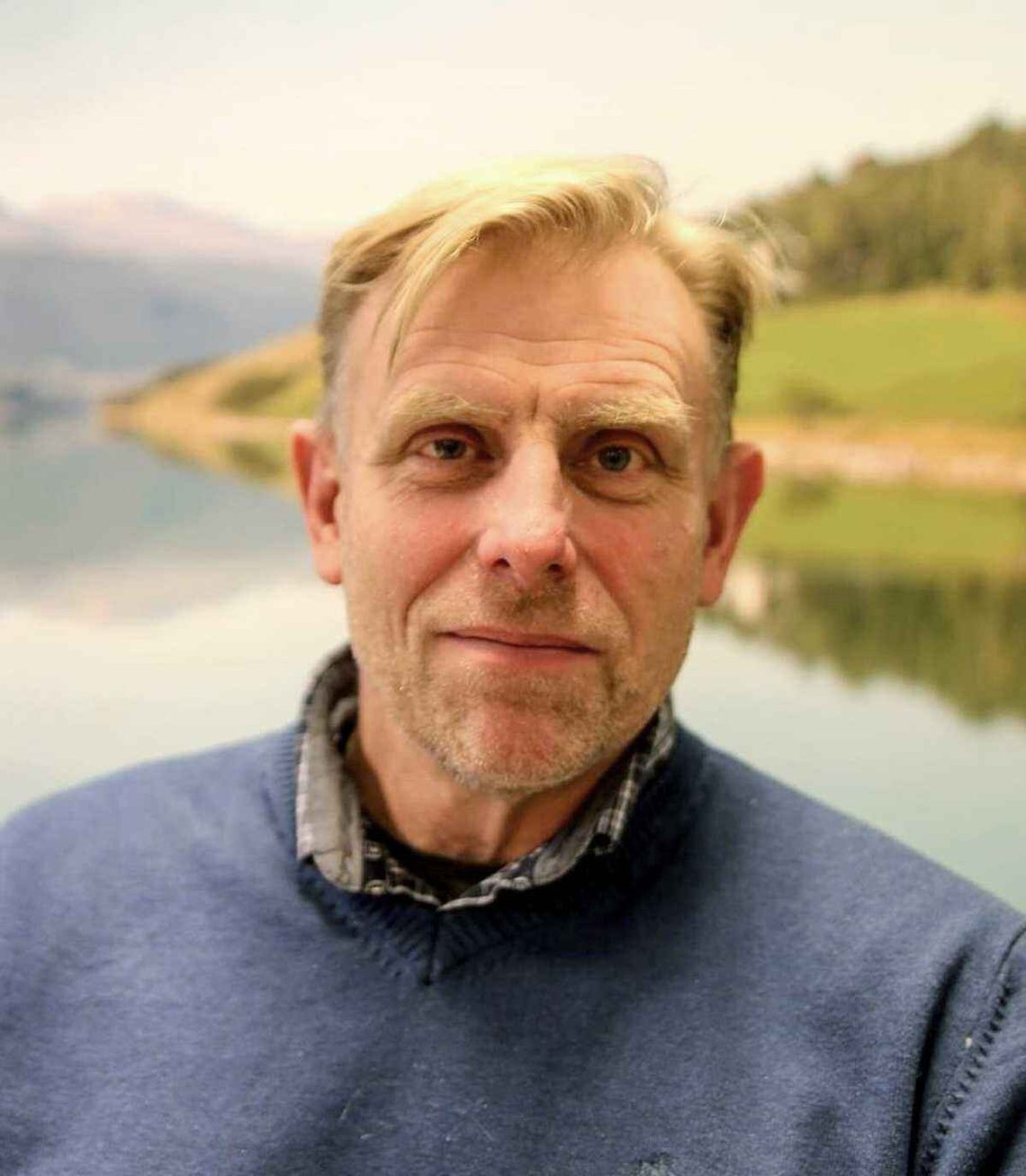 Mayor of Vågå, Harald Sve Bjørndal. (Photo: Vågå municipality)
– What was the reason that Krefter wanted to establish itself in Vågå?
– We were a member of Nordavind, a company owned by many municipalities, the county council and power companies in Innlandet. They work to find foreign and national actors who want to establish power-intensive industry in Norway.
In 2018 Nordavind facilitated a Russian-owned company establishing a «bitcoin factory» in Alvdal just a couple of months before the largest NATO exercise since the Cold War came to the same area.
The company, Dataroom AS, never made a profit and was compulsorily dissolved in 2023. Two former chairmen were charged by Økokrim with gross tax evasion, economic disloyalty and money laundering.
– Even though we tried to be positive, we were completely unfamiliar with data centres and the like. The business manager Live Brimi and I did quite a big job to try to familiarise ourselves with it, says Sve Bjørndal, who represents the cross-party Bygdelista in Vågå.
Received floor plans of the power station
The power company Eidefoss confirms that they had a dialogue with Horvei and Qiu after the two old units in the old power station hall had been removed.
– Horvei was there several times, and possibly Qiu. If they were inside the old hall it was of course always with people from us. The dialogue with Horvei and their local helpers continued until some way into 2022 when we said that it was out of the question to allow a data centre so close to us, states Hans Kolden, who was CEO until very recently.
Krefter was given access to floor plans of the old premises in order to sketch how it could be adapted for a data centre. Kolden rejects the idea that the delegation from China was inside the power station. He also says that he had no reason to believe that Krefter’s activities were a cover for espionage.
– Did not harmonise with the resource base
Krefter claimed early on that they would need access to 300 MW of power, on a par with the really large hyperscale data centres.
– I obtained a report from the Ministry of Local Government. It told us that the plans the company presented in no way harmonised with the resource base they had here in the municipality, recalls the mayor.
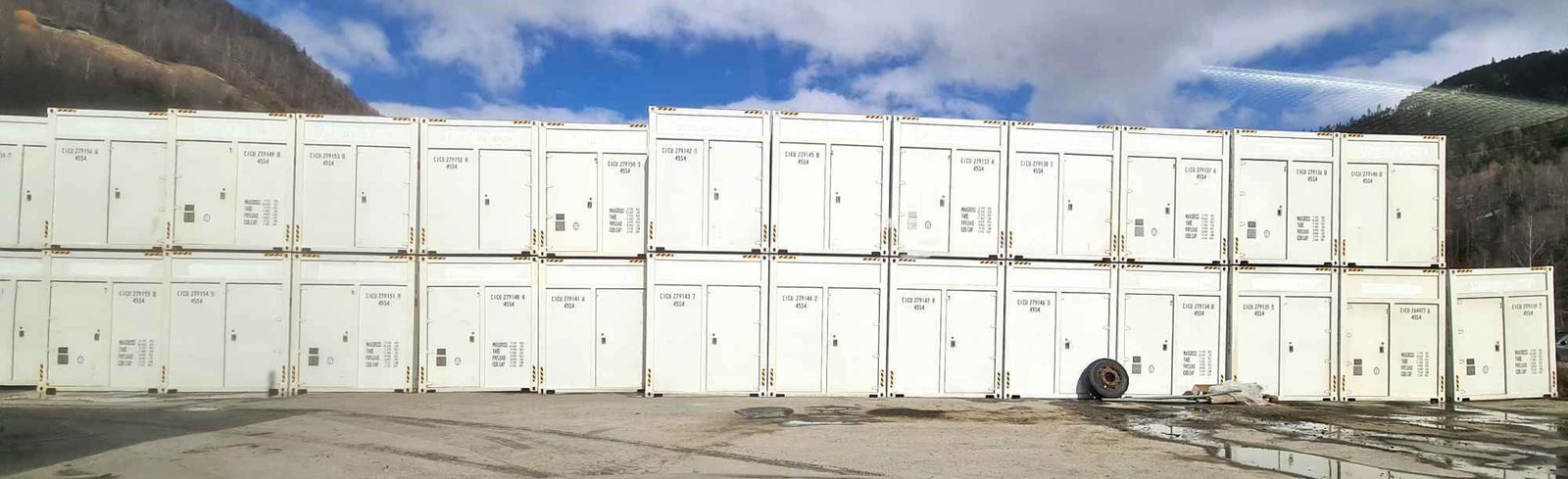 Some of Krefter’s Chinese data containers for cryptocurrency mining stood on the local contractor Tom Stadeløkken’s site in Otta for a long time, before, according to information received by Document, they were sent to Uganda. The value is at least 30 million kroner. The brand names were painted over to conceal the connection to China. (Photo: Private)
The company purchased 52 decares of forest from a private landowner, in addition to the municipal commercial land. According to one of Document’s sources, the PST contacted the landowner after this transaction, presumably to investigate where the money came from.
In 2022 the County Governor arranged two meetings with the municipality and, among others, the PST, the Norwegian National Security Authority and the NVE. It is not known what the PST may have done with the tips from the local community.
– We were concerned. Norway had a data centre strategy in which the country was laid wide open to the world, with a financing arrangement called Invest in Norway. We felt we had a responsibility to speak up to the wider society, says Harald Sve Bjørndal.
– At the same time it is important to emphasise that Vågå municipality has not gone in for compromising Krefter. We have tried to safeguard our societal responsibility, while at the same time we are to act neutrally towards all business actors. We have left it to the relevant authorities to find the answers.
It soon became clear that Krefter was under very high time pressure. Buildings came from China that were to be erected on the industrial site. They were originally supposed to be twice as large, but were not made for snow. The company «began to dig frantically» to create a landing area for crypto containers that came from China, where they could connect to the power supply.
The containers in question are full of Chinese-made computers, specially made for cryptocurrency mining. The brand name on the containers was painted over, in an attempt to conceal that the electronics came straight from the supplier Hengshui BitTech Co. Ltd. in China.
In 2025 American authorities began investigating this type of equipment from China, out of fear that it could be remotely controlled from China and used for intelligence or sabotage of the power grid.
An envelope on the steps
One morning in 2022 there is an envelope on the steps outside the grid company Fjellnett AS.
Inside it is a typewritten sheet with text in English and Norwegian, and a printout showing the ownership structure around Grandtechnik Pte. Ltd. from the Register of Business Enterprises in Singapore.
There is no camera surveillance at the entrance, so no one knows who left the letter.
The content appears to demonstrate that Krefter AS has connections to China and the crypto company Bitmain.
– We handed the envelope over to Vågå municipality. The information did not prove that they were engaged in anything illegal. But we thought it was right that the municipality was informed, given that Krefter had come out strongly and said that cryptocurrency mining was not relevant at any of the sites they were looking at in the municipality, says Vebjørn Haugen, director of Fjellnett AS.
Fjellnett, the municipality and Krefter agree that Ernst & Young’s Singapore office should carry out a background check on Grandtechnik. The connection to China is soon confirmed.
– The reports showed an ownership connection between Grandtechnik and Bitmain in BMFS Holding Pte. Ltd., Haugen relates. Bitmain is a large cryptocurrency mining company in Singapore that was started in China. BMFS Holding had more than 180 million kroner in share capital.
The ownership relations were attempted to be concealed through changes in the register in Singapore.
On 1 March 2022 Qiu and Horvei incorporate BMFS DC AS. Vågå municipality and Fjellnett understand that the name refers to the crypto company Bitmain, as in Bitmain Farming Solutions, or similar.
In an email to Haugen in July 2022, Horvei himself confirms the reference:
He claims to have followed orders from his Chinese colleague to establish the company for a «possible customer».
– Until before the weekend I was not aware that this was a reference to Bitmain. But I want to be very clear that there has been no capital or activity in this company, nor will there ever be, Horvei promises.
But in an email to his Norwegian accountant in 2021, of which Document has a printout, Wei Qiu states that BMFS in Singapore had injected 20 million dollars (USD) into the collaborative project in Norway.
The tie to Bitmain was established at least eight months before Horvei claimed that it was new to him.
Promised «fine, brown-stained buildings»
Krefter has all along claimed that it was data centres for artificial intelligence and the like that they were going to build. But when the data containers came from China, the municipality finally received proof that the goal was cryptocurrency mining:
– What was presented was fine, brown-stained data centre buildings, but instead all these containers arrived, says Sve Bjørndal.
The mayor now gets the impression that Horvei disagreed with the direction everything took, and that this was why he disappeared from the business. Among others, the owner of Kryptovault AS, Kjetil Hove Pettersen, came in together with André Eidskrem and some local investors. But since it was not possible to connect to the power supply, these too soon ran out of steam.
In the end Horvei came back in November 2023 and bought what was left of the company and the sites, together with the local investor Magnus Smidesang Rønningen. The company is now called Ugna Properties AS and is still in the power and concession queue with Statnett and the NVE.
Wei «William» Qiu was left with one of the subsidiary companies in the group and in April 2024 changed its name to Karmøy Health Norway AS. This is the company that bought the house centrally located on Andøya, where the PST believes a Chinese satellite antenna that they seized in Oslo was to be set up. The PST has charged both the company and Wei Qiu.
The shares in the Norwegian company were transferred from Qiu privately to a new holding company in Singapore, Karmoy Health Pte. Ltd.
Read also:
https://www.document.news/news/2026/06/secret-inspection-of-norwegian-spaceport-after-chinese-satellite-receiver-seized


