



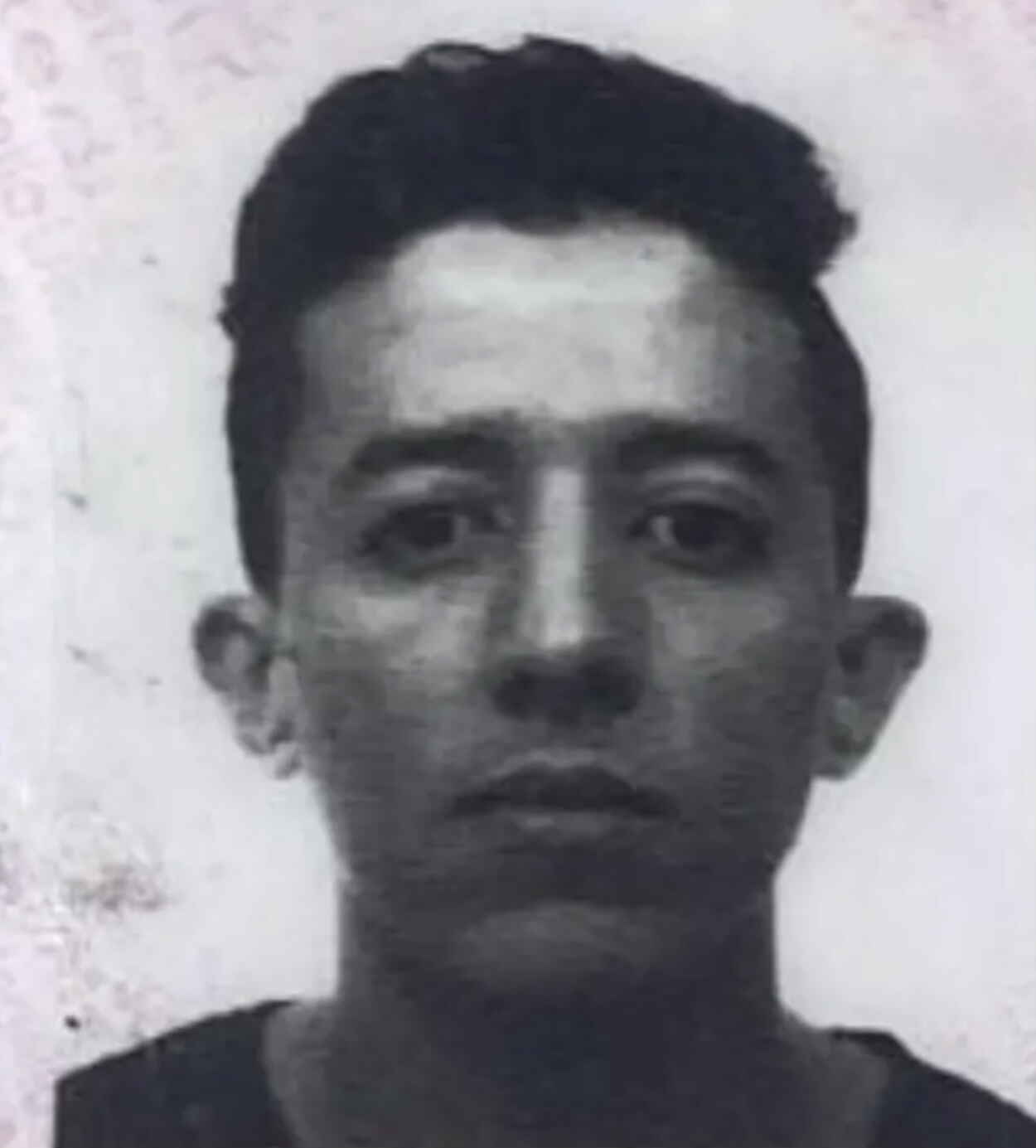
 Photo: Social media.
Salim El Koudri, who on Saturday injured 8 people, 4 of them critically, during a vehicular attack in Modena in Northern Italy, has been charged with attempted mass murder, La Repubblica reports. In the absence of findings indicating radicalisation, the 31-year-old Italian citizen of Moroccan parentage is for the time being not being charged with terrorism, the Rome newspaper states.
President Sergio Mattarella and Prime Minister Giorgia Meloni have visited the injured in hospital in Modena, where four of them are in critical condition, one of whom is hovering between life and death.
The 31-year-old is not forthcoming:
During questioning, he exercised his right not to answer, but according to what has emerged “he was not radicalised”. For the time being, no terrorism charges have been brought. His parents have also been questioned: They confirmed that he had been receiving treatment from mental health services.
Italian investigators nevertheless wish to know why Meta some time ago had shut down the 31-year-old’s Facebook account, Corriere della Sera reports. One hypothesis may be that he had posted extremist material.
The suspicion is that elements may be found linking him to circles close to extremism – particularly Islamic, though nothing else can be ruled out
Meta has nevertheless not alerted the Italian security authorities about El Koudri. It is not known whether the account was removed manually or automatically.
The Milan newspaper does not let go of the terrorism angle:
The fact is that what the 31-year-old has done bears a very strong resemblance to the terrorist acts carried out since 2016 with vehicles in France, Spain, Germany, Sweden and the United Kingdom. The most recent occurred only a few days ago in Leipzig.
Perhaps because it has received privileged information from the police:
In the Modena case, an analysis of El Koudri’s profile is also underway, which in many respects appears to correspond to that of the extremists involved in the copycat attacks of recent years, even though the house search in Ravarino, in the Modena area, uncovered no elements linking him to Islamist circles or cells. But he was armed with a knife that he did not hesitate to use against those who tried to stop him. And therefore the investigation is only in its initial phase.
The suspicion is that the young economics student, who until 2024 had been under the care of a psychiatric treatment institution in Castelfranco Emilia, may recently have begun a process of radicalisation that may have led him to carry out yesterday afternoon’s act.
In recent years, many attacks on innocent people in Europe have been committed by persons originating from the Islamic belt who have been under psychiatric treatment, yet no one appears to draw a line between the cases and ask what it may signify.
Italy’s Defence Minister Guido Crosetto said in a comment on Saturday’s attempted murders that “it is probably something with more individual causes, and therefore entirely impossible to foresee”.
Corriere della Sera, by contrast, points to what it sees as a social phenomenon, something a would-be terrorist might conceivably use as a cover:
People outside control – often with mental health problems – without strong family ties, who radicalise themselves, particularly on social media, in a form of agitation that leads them to commit violent acts.
An Italian Member of the European Parliament from Lega claims to know that El Koudri has said that Italy is a racist country:
“Vivo in un Paese razzista”
Lui è Salim El Koudri, il cittadino italiano di origini marocchine che ieri si è schiantato sulla folla in centro a Modena, ferendo gravemente 10 persone. Un fatto drammatico e senza precedenti nel nostro Paese.
Nonostante sia nato in Italia e si sia… pic.twitter.com/XKSXvyPuik
— Isabella Tovaglieri (@isatovaglieri) May 17, 2026
The 31-year-old struggled to find work, and had embarked upon further studies which were subsequently discontinued. It is often difficult to find employment corresponding to the expectations of people with university education in Italy, particularly for those who lack good connections – and it is normally the natives who have them.


