

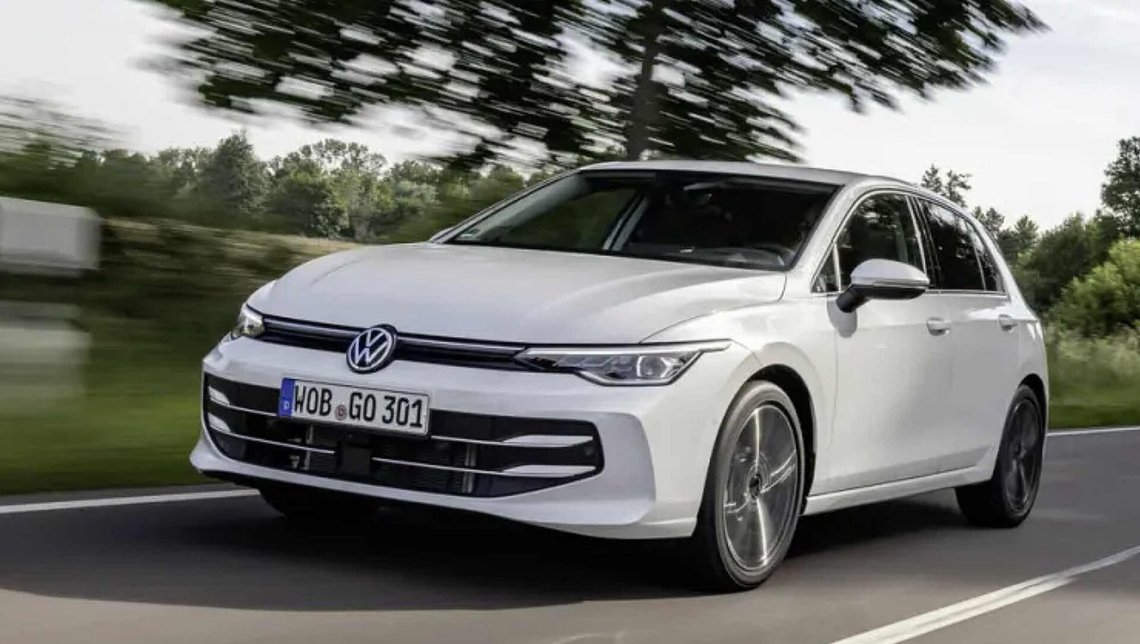


Volkswagen, part of the VAG Group, has put the development of its planned electric Golf on hold. The reason given by the company is that it no longer has sufficient funds to develop a new generation, and this is a rather sensational and alarming admission from what was once one of Europe’s largest car manufacturers. The ID-Golf was due to be launched in 2028 and would have been the ninth generation of the car brand’s best-seller since 1974, but now everything is up in the air. Reuters was the first to break the news, after gaining access to an internal memo.
“We simply cannot afford this work right now,” says Thomas Schäfer, head of Volkswagen’s volume brands, in the memo.
This worrying announcement comes hot on the heels of VW reporting its biggest quarterly loss in over a decade last week. The announcement comes on top of massive cost-cutting measures, with VW currently planning to cut 100,000 jobs and possibly close four factories in Germany – and many fear this is only the beginning.
The new Golf is set to be one of the first models based on Volkswagen’s SSP architecture, a platform designed to reduce complexity and lower production costs. But just as in the last ten years, VW’s engineers are struggling to deliver: the SSP platform was an open secret as early as 2021, yet it continues to face new problems. This is reminiscent of the Dieselgate scandal and the crisis surrounding VW’s in-house software, Chariad, which ultimately resulted in VW having to resort to a joint venture with the electric car company Rivian, which is also in trouble.
Political control took precedence over engineering and market considerations
The ID-Golf will now likely be delayed until 2030 or even later. However, this is not the first time VW’s management has announced delays to the ID-Golf: At the ‘Future of the Car’ event in London in May 2026, the company’s CEO Thomas Schäfer announced that the battery-powered Golf would be postponed from the 2028 target, but for a completely different reason.
– “We have a fantastic product range right now, so much so that we don’t need an electric Golf in 2028. We have everything we need in our range,” he said, according to Autocar
The fact is that VW’s electric car strategy is politically driven and came about through political pressure due to the Paris Agreement and the 2030 sustainability targets – which in turn required that VW’s total sales had to consist of a certain proportion of electric cars. Failure to comply with this planned economy would trigger huge fines. The problem with this was quite predictable: the Chinese electric car market collapsed because Chinese electric cars are cheaper and feature software and functions that the Chinese love. And the European electric car market was never really a reality.
The decision is about giving the ID. Polo, ID.3 Neo and ID. Cross a bit of breathing space.
But Schäfer himself hints at another, underlying reason: work on the long-planned SSP electric car platform is said to have been further delayed. Motor first reported on this project in 2021. According to the latest updates, 2029 is a more likely completion date.
VW is unfolding an industry tragedy
In the early 1970s, sales of VW’s ‘Beetle’ were on the wane, after sales of over 20 million. At that time, VW was led by clever people and engineers who realised that soon someone would build the world’s best people’s car to replace the ‘Beetle’. (And realised they couldn’t erect a statue of the founder outside the head office.) Consequently, VW’s management decided they would replace the people’s car themselves, and in 1974 the sensational Volkswagen Golf was unveiled.
Since then, VW has sold millions of Golfs across eight generations. It has been a cash cow, but around 2010 something very serious happened: politicians took control of technological development through the introduction of increasingly unreasonable environmental requirements. This was not just about the use of recyclable materials and demands for ever more complex exhaust gas purification, but also about stopping emissions of the plant nutrient CO₂. But as everyone knows: there are limits to how ‘clean’ a combustion process can become, and by 2014, modern Western cars were more than clean enough.
Politicians should have said ‘that’s good enough now’, but environmental fanatics never do that, and in 2015 the Paris Agreement came into force. This resulted in huge fines for breaching the ‘fleet requirement’, which in practice meant either building electric cars or being driven into bankruptcy by the authorities. In sheer desperation, VW forgot to focus on quality and satisfied customers, and became more concerned with EU regulations and keeping politicians happy. And they were not alone. Nor did it help that VW’s management increasingly took on the characteristics of a cult, with a cult leader making ever more absurd decisions.
The result of this political sabotage is becoming increasingly clear: after 40 years of deindustrialisation to China in the name of globalisation, it is now the turn of Europe’s powerful and vital car industry. China has been given free rein, whilst the EU’s industry has been attacked and undermined by climate hysteria, and finally both politicians and trade unions are beginning to protest – far too late and far too cautiously. They should have taken a cue from consumer surveys, which show that enthusiasm for buying electric cars is very lukewarm in Europe.
Reality has finally caused the EU’s climate fanaticism to falter. One might therefore speculate as to whether VW cannot afford to develop the ID Golf, or whether they simply want to save money and wait and see? The signals the European Parliament is now sending out cast doubt on the ban on petrol and diesel cars in 2035. So perhaps car buyers in the future will still be able to enjoy a worry-free range of 1,000 kilometres, regardless of the weather, driving conditions, temperature and weight.
However, that’s not going to happen in Norway. We’ll never get a free car market back. You’ll have to buy a Trabant – I mean an electric car – because that’s what the nanny state has decided, and Norwegians love to do as the state demands.
https://www.motor.no/aktuelt/har-ikke-rad-til-a-utvikle-elektrisk-golf/373553


