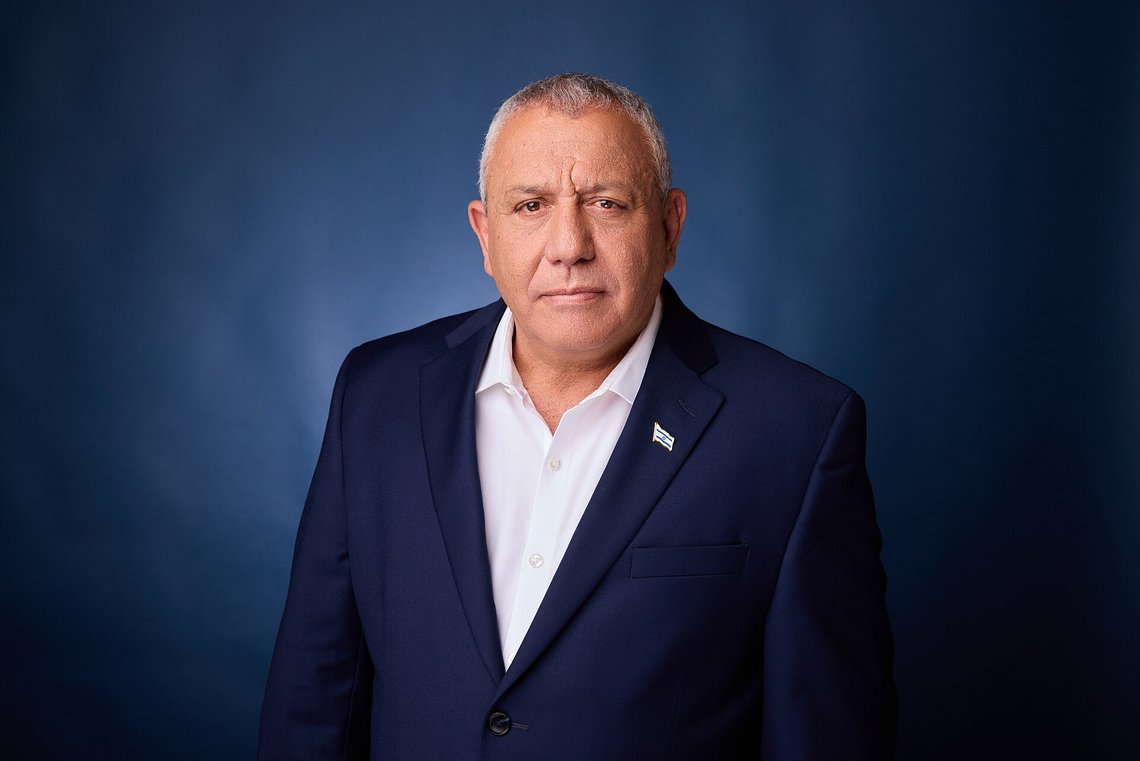


On Saturday evening, Gadi Eisenkot, leader of the Yashar party, was given a mandate by President Isaac Herzog to form a coalition government in Israel.
Eisenkot’s majority relies on the support of the two Arab parties, with whom Prime Minister Benjamin Netanyahu and the Likud party refuse to cooperate.
The mandate suggests that Eisenkot may have secured the support of one or more of the ultra-Orthodox parties. Earlier in the day, Eisenkot stated that he believed he could succeed in forming a ‘national crisis government’ with a minority.
– “The current government threatens, at its very core, the very existence of Israeli democracy,” he wrote on X.
Late on Saturday evening, the ultra-Orthodox Jewish party Shas denied that it had joined forces with Eisenkot, according to The Jerusalem Post.
– Will destroy Israel from within
In a speech on Saturday evening, Netanyahu spoke out for the first time since the election in favour of a unity government comprising his entire political bloc.
– Now is the time for unity. This is the will of the people; this is what is needed right now. A government that relies on supporters of terror will not fight terror, he said according to The Jerusalem Post.
The Yashar Party completely rejected Netanyahu’s stance, describing his speech as ‘hysterical’.
– “If Likud wants a broad coalition government, they are more than welcome to dissolve their alliance with the extremists and join a government led by Prime Minister Eisenkot,” the party wrote in a statement.
Netanyahu also said that Israel would not survive a coalition government between the opposition and the Islamists, whom he called “supporters of terrorism”. He claimed that such a government would “destroy Israel from within”.
Ceremony on Sunday
Former IDF Chief Eisenkot will receive the official mandate at a ceremony tomorrow, Sunday, at the Presidential Residence in Jerusalem. By law, he then has 28 days to form a government, with a possible 14-day extension granted by the President.
If all statutory attempts fail, the Knesset will be dissolved and new elections called.
Of the Knesset’s 120 members, 67 recommended Eisenkot, whilst 46 favoured Netanyahu. The latter lost the support of two former allied parties in the ultra-Orthodox political alliance Yahadut HaTorah.
The two Arab parties, the Joint List and the Islamist party Ra’am, have gained increased support and now hold 19 seats. Neither Netanyahu nor Eisenkot secured enough seats to form a government on their own.