

90 per cent of the electricity used by data centres in Norway is consumed by foreign operators. This is shown by a new report from Teknologirådet.
> – The centres generate limited value, says the council’s director Sverre Gotaas [to NRK](https://www.nrk.no/vestfoldogtelemark/ny-rapport_-datasentre-sluker-strom-_-gir-begrenset-verdiskapning-1.18036425). Gotaas points out that once the construction period, with its many jobs, is over, little remains for the local community.
The value creation that serves Norwegian interests is therefore significantly lower than in traditional industry.
> – Moreover, there is little to suggest that they are establishing themselves in Norway in order to fulfil the government’s objectives.
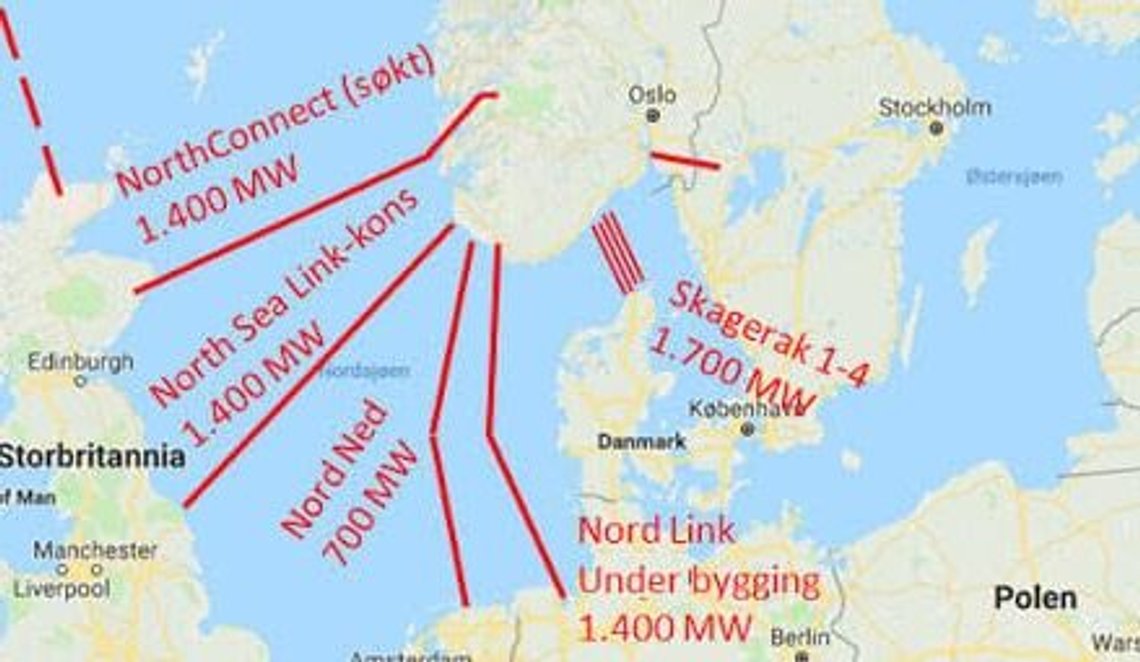
Traditional industry now fears for the future and is demanding that the regulations be tightened quickly. The data centres are gaining access to enormous quantities of electricity at a time when the connection to the dysfunctional European energy market has hit Norwegian households and businesses extremely hard.
[https://www.document.no/2026/09/29/eu-ber-regjeringene-i-smug-om-a-redusere-energibehovet](https://www.document.no/2026/09/29/eu-ber-regjeringene-i-smug-om-a-redusere-energibehovet)
Municipal councils across the country are handing out access to power and land for such things as data centres and battery factories. They are generally motivated by climate philosophy and the dream of green industry.
The municipal councils appear to believe that this will strengthen municipal finances and create jobs, but this is not being realised, as many critics – including Document – have pointed out for a long time.
[https://www.document.no/2025/11/29/regjeringens-plan-om-datasentre-er-basert-pa-manglende-kunnskap-eller-rene-logner](https://www.document.no/2025/11/29/regjeringens-plan-om-datasentre-er-basert-pa-manglende-kunnskap-eller-rene-logner)
> Skien is among the municipalities investing heavily, with [Google’s development at Gromstul](https://www.document.no/2025/04/19/google-topp-forsvarer-stromslukende-ki-datasentre-i-norge) and the company Nscale’s plans for an AI data centre on the neighbouring site.
>
> – It means jobs and new industry that are helping to build the future. These are large and important investments in Skien and for the country, says Mayor Marius Roheim Aarvold (H).
Admittedly, short-term jobs are created during the construction period itself, but automated operations require a minimal number of employees while consuming enormous quantities of power. The profits are largely sent directly out of the country.
All construction projects create temporary jobs, but one should think more long-term, Gotaas believes.
> – What matters is what remains when the construction period is over. We want a discussion about what provides the greatest value to Norway for the least possible effort.
A ‘first come, first served’ principle determines who gets to build.
> – Everyone is treated equally in the grid connection queue here, whether it is Google, TikTok or a data centre that is absolutely essential for health data.
Nor is there anything to suggest that politicians’ idea that data centres strengthen Norwegian emergency preparedness is correct.
Gotaas uses the US-owned Google centre in Skien as an example. Although the data centre is located in Norway, it is subject to US law.
> – In the worst case, this could mean that the US can demand that all the data be handed over, says Gotaas.
In the Storting, Rødt has strongly warned about how foreign-owned data centres are consuming Norwegian electricity and has demanded stricter controls.
> – The government believes that the tech giants have our best interests at heart. They think it is wonderful that Microsoft and Google want our power. Naturally they do. It is cheaper than almost anywhere else, says Bjørnar Moxnes, former party leader and now a member of the Storting for Rødt.
Rødt is demanding that the government introduce an immediate moratorium on the establishment of data centres until a strict licensing system is in place. Moxnes believes that the focus on data centres could spell the end for Norwegian industry.
Roger Hansen, head of Herøya Arbeiderforening (HAF), shares these concerns.
> – We do not need an uncontrolled proliferation of data centres that require the electricity industry needs for the green transition. We fear for our jobs. If we do not get the electricity we depend on, thousands of jobs will disappear.
Minister Torgeir Micaelsen (Ap) writes in an email to NRK that Norway wants to be attractive to data centres that contribute to value creation and Norwegian interests.
> – The Labour Party’s national executive committee has resolved that we will consider criteria for establishment, better controls and stricter energy requirements.
Labour has had several years to change this policy. But it appears that the governing party believes that foreign-owned data centres, which contribute minimal Norwegian tax revenues and almost no long-term jobs, are the way to safeguard Norwegian interests in terms of value creation and security.
The average electricity price in south-western Norway today is NOK 1.41 per kWh.


