

GREENSBORO, North Carolina — Norway did not arrive at the 2026 FIFA World Cup carrying only football boots and training gear.
The Norwegian delegation also brought a substantial piece of home.
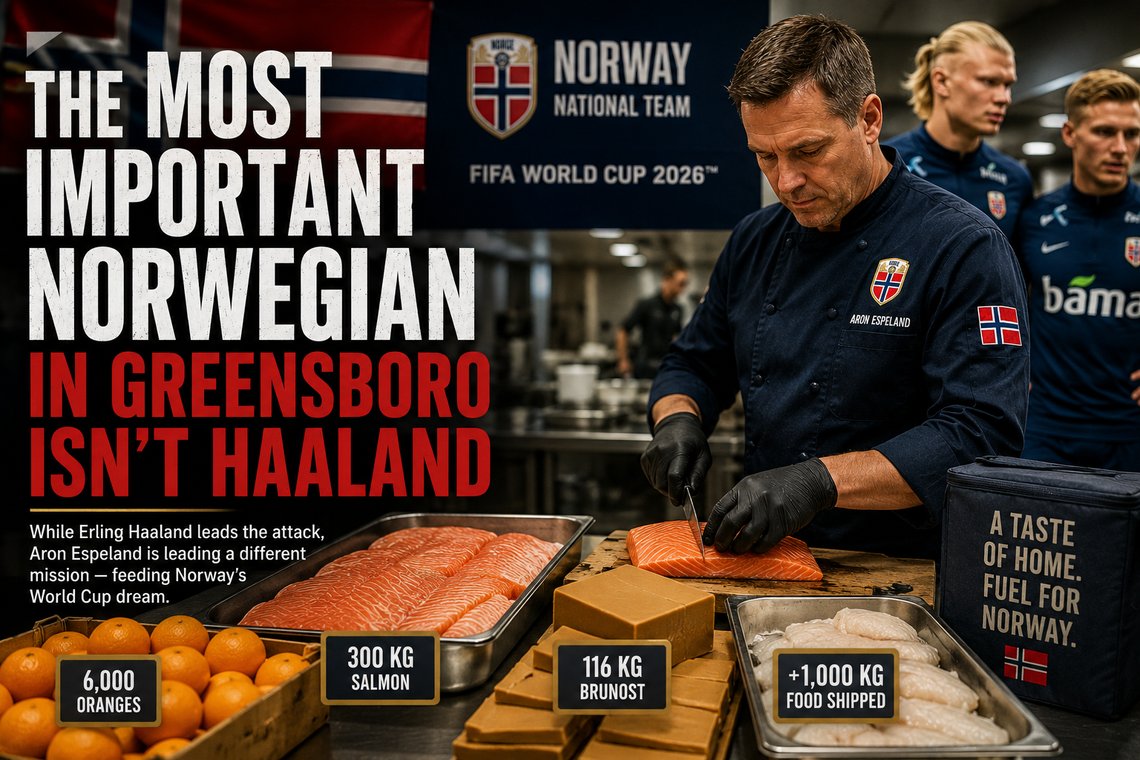
According to multiple reports, the Norwegian Football Federation shipped more than 1,000 kilograms of food and supplies to the team’s World Cup base in Greensboro, North Carolina, as part of a nutrition program designed to maintain familiar eating habits during the tournament.
The shipment includes approximately 300 kilograms of Atlantic salmon and white fish, 116 kilograms of brunost (Norway’s distinctive brown cheese), and an astonishing 6,000 oranges for players and staff.
For a country returning to the World Cup for the first time since 1998, the operation reflects the increasingly professional approach national teams take to major tournaments.
Leading the effort is Aron Espeland, who has worked with Norway’s national team for more than three decades. Espeland and a team of chefs are preparing four meals a day for a traveling party of more than 60 people during the competition.
The objective is straightforward.
Avoid surprises.
Tournament football places enormous demands on players. Training loads increase, recovery windows shrink, and teams often spend weeks away from familiar routines. Norwegian staff believe maintaining consistent nutrition can reduce the risk of digestive issues, disrupted sleep, or other problems that might affect performance.
The choice of food also says something about Norway itself.
Salmon remains one of the country’s most recognizable exports. Brunost occupies a unique place in Norwegian food culture. Even the oranges have a distinctly Norwegian sporting connection, having long been associated with youth football and outdoor recreation.
The timing is notable for another reason.
The World Cup is taking place in the United States, a market of growing importance for Norwegian seafood exporters. The Norwegian Seafood Council has launched a major marketing campaign tied to the tournament, using football and the popularity of Erling Haaland to promote Norwegian seafood to American consumers. The campaign includes digital advertising, social media promotion, and high-profile placements in New York during the tournament.
Karine Rød Haraldsson, the Norwegian Seafood Council’s U.S. director, recently described the World Cup as an opportunity to connect Norwegian seafood with major sporting moments and shared dining experiences.
For Norway’s players, however, the focus is less commercial and more practical.
The goal is to make Greensboro feel a little more like home.
If the team consumes all 300 kilograms of fish before returning to Norway, it may also mean something else.
Their World Cup journey lasted longer than expected.


