

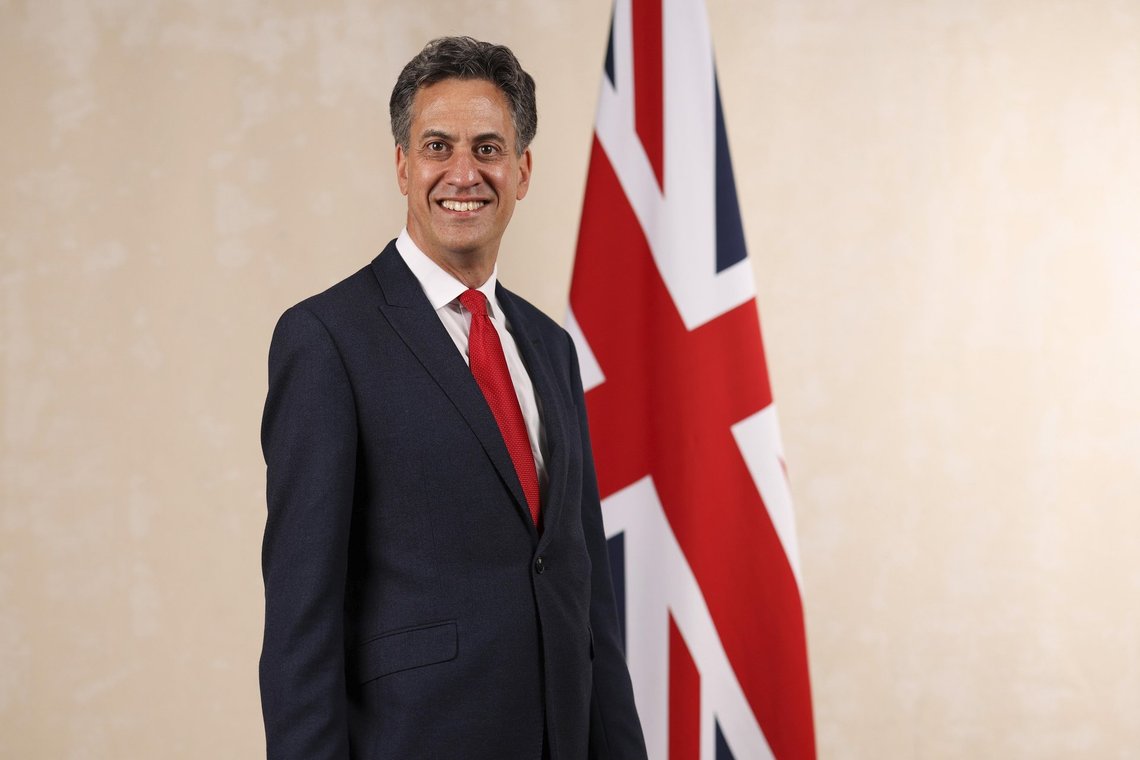


Many had expected former Energy Secretary and Net Zero chief Miliband to become the next Chancellor of the Exchequer. But on Monday he was appointed Foreign Secretary as Burnham carried out a sweeping reshuffle of his government.
Former Defence Secretary John Healey was chosen as Burnham’s Chancellor. Healey resigned from the government in June after clashing with Keir Starmer over the defence budget, which Healey considered too low.
Britenes forsvarsminister Healey går av etter uenigheter med Starmer
Healey replaced the historically unpopular Rachel Reeves. She was offered other responsibilities in the Cabinet but declined, and will not be part of Burnham’s government.
Closer ties with the EU, ambiguous about the US
Miliband told BBC that it was “the honour of my life” to serve as Foreign Secretary. He led the Labour Party from 2010 to 2015 but never became Prime Minister. Miliband failed to lead the party to electoral victory. A photograph of his attempt to appear down-to-earth by eating a bacon sandwich became the perfect illustration that Miliband was, in fact, not one of the British people.
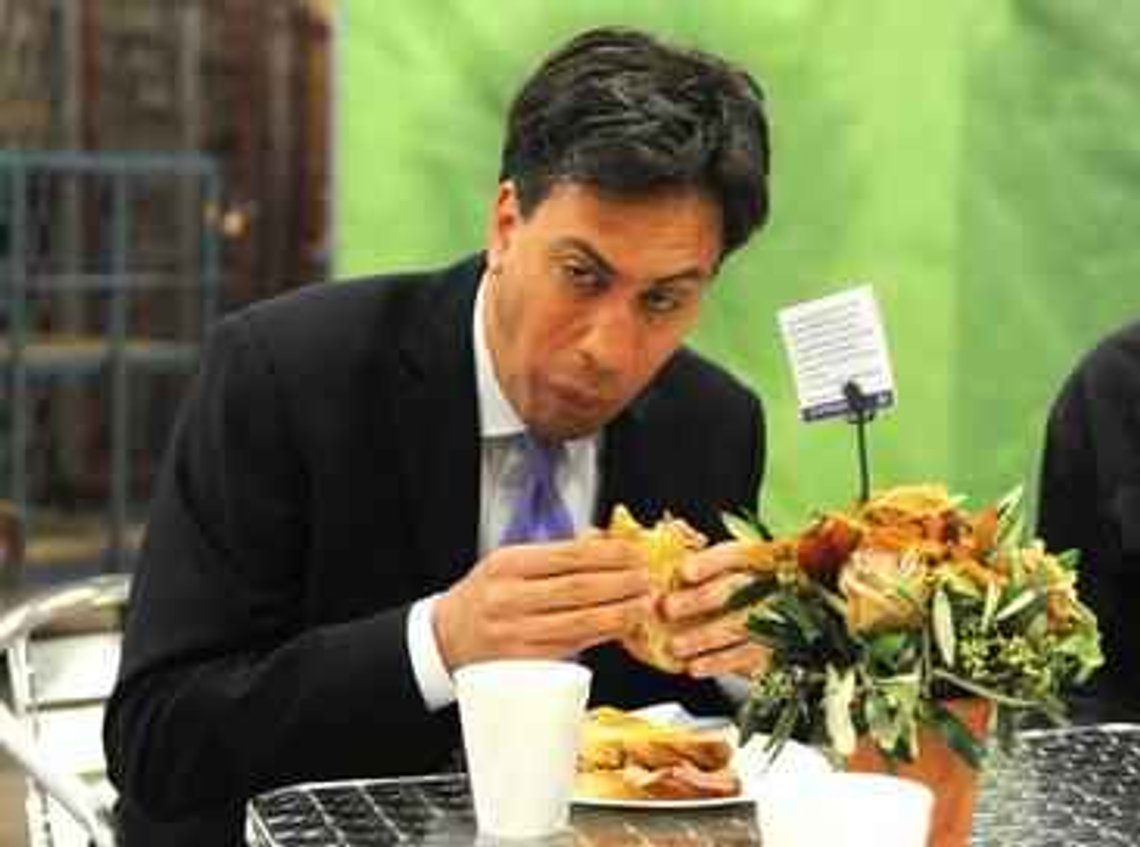 Photo: Jeremy Selwyn / Wikipedia
Ed’s brother David served as Foreign Secretary under Gordon Brown from 2007 to 2010. Following his appointment, Miliband pledged to strengthen ties with the EU before speaking of Britain’s “crucial alliance with the United States”.
Burnham ignored warnings from Donald Trump’s team that they would find it difficult to work with Miliband in any role involving international responsibility, according to The Telegraph.
A senior official in the Trump administration told the newspaper that Miliband would become “a point of friction” in the relationship known as The Special Relationship, because of his support for “green energy”, which Trump has criticised.
Trump’s team is said to have expressed its concerns in discussions with Burnham after it became clear that he was on course to become the new Labour leader and, consequently, Britain’s new Prime Minister.
Miliband’s previous positions have frequently stood in sharp contrast to those of the White House.
In February, Miliband led the opposition to the use of British bases by American bombers. This marked the beginning of the end of Sir Keir’s relationship with President Trump, who described Starmer as “not Winston Churchill”.
Opposition from figures such as Miliband prompted Starmer to reject an American request to use Diego Garcia, the strategically important military base in the Chagos Islands, at the outset of the United States’ and Israel’s war against Iran.
These are the islands that the Labour government has decided to hand over to Mauritius, something critics regard as a clear advantage for China. The Chagos Islands have been British territory since the Napoleonic Wars drew to a close in 1814.
Nor was Britain’s former Foreign Secretary David Lammy especially popular in Trump’s camp.
Trump-seieren er en krise for Starmer og et mareritt for utenriksminister Lammy
Trump, who is known for the phrase drill, baby, drill, also strongly dislikes Miliband’s opposition to British oil production in the North Sea. As Energy Secretary, he refused to issue new licences for oil and gas exploration.
Among other things, he blocked the development of Rosebank, Britain’s largest undeveloped oilfield, even as the Iran war and the blockade of the Strait of Hormuz drove oil prices to record highs around the world.
Like both the Solberg and Støre governments in Norway, Miliband has instead focused on extensive subsidies for exorbitantly expensive wind power, both offshore and onshore. The bill is passed directly on to households and private businesses through higher taxes and increased energy costs.
Britenes Net Zero-general forventes å stanse oljeleting i Nordsjøen
For many years, Miliband has focused heavily—some would say single-mindedly—on “the green transition”. This stands in stark contrast to the policies championed by Trump. In 2023, he criticised then Prime Minister Rishi Sunak for weakening Britain’s climate targets, stating:
“A Trump-style climate culture war is not what the British people want.”
Since Labour took office, Britain has experienced an intense focus on achieving net zero, soaring energy prices, higher taxes and duties, high interest rates, massive illegal immigration and a significant housing shortage. There is little to suggest that this is what “the British people want”.
Miliband has also criticised Trump in the past, as when he wrote in 2016:
“We must do our best both at home and abroad to resist the worst of Trumpism… These are dark times for America and the world. There is precious little comfort to be found right now.”
He followed this by telling the BBC’s World At One:
“The idea that we should have shared values with a racist, misogynistic man who has himself admitted to committing sexual assault is quite extraordinary.”
In 2017, he said that Trump had “lowered the threshold for idiocy”, and later took part in a “Stop Trump March” in London.
Miliband as Foreign Secretary could quickly put the special relationship between Britain and the United States under strain.


