

How popular culture shapes the narrative
Politics is downstream from culture, said Andrew Breitbart, founder of Breitbart News. One may hold different views about that statement, but there is no doubt that popular culture surrounds us all and helps to shape the narratives, stories and accounts within society.
In much the same way as the saying, “There are lies, damned lies, and statistics”, we may say that there is propaganda, PR and popular culture. It is no coincidence that Edward Bernays (1891–1995), who is regarded as the father of PR, also wrote a book about propaganda, and used mass psychology to “engineer consent”.
Both propaganda and PR are concerned with communicating narratives so that they can create a shared understanding and way of interpreting or perceiving the world. Popular culture may be seen as a way of shaping opinions, viewpoints, perceptions and attitudes by presenting particular stories or well-presented and engaging fantasies. This is done in order to recall or revive old perceptions, myths, legends and traditions, to alter or update them, or to introduce entirely new stories and narratives, perhaps even about how the future can or should come to be.
And one of the most powerful ways of doing this is through film. Film gives us visual impressions, and the visual sense is one of the strongest senses we possess. Combined with music, sound and voices, the images and action of film leave lasting impressions. Film is therefore well suited to creating personal and enduring memories that people may carry with them throughout their lives. (In this case, think of your favourite films, and what it was that made them become favourites.)
Visions of a dark future
Perhaps visions of the future are especially something that film is well suited to presenting. For it is not change in itself that frightens people most, or that can create panic, but the rate of change. Too many changes over too short a period create confusion, chaos and perhaps collapse.
But many small changes, presented over a long period of time, perhaps do not. In this way, can the ground and the narratives be prepared for situations that large sections of the population would not initially desire and would not like? With such preparation, they may nevertheless become accustomed to the idea and come to accept it.
Since the beginning of the twentieth century, Hollywood has produced many famous visions of the future and ways of interpreting the future. It is sufficient here to mention films such as Metropolis, Terminator, 1984, Minority Report, Her, among others.
As a rule, these visions of the future are bleak and dark, yet at the same time exciting and engaging enough to attract audiences and be watched. Here are some that are particularly relevant.
The ambition of a pandemic – Contagion
The film Contagion by Stephen Soderbergh was released in 2011. That was only a few years after the swine flu outbreak of 2009. In this film, a virus originates in bats and then passes through pigs, thereby becoming capable of crossing the species barrier to humans and subsequently from human to human. It begins with one person, patient zero in China, and rapidly spreads to all parts of the world.
Unlike a certain other virus, this virus is so dangerous that very many people die from it, and a health crisis, societal crisis and international crisis arise simultaneously. In the film, brave researchers calculate the infection rate in alarming figures and dramatic calculations on a blackboard in order to explain to the audience what R-nought means.
Meanwhile, societal collapse is imminent. Grocery stores are raided by desperate people and mass graves are dug in respectable American suburbs. But, as is always the case with viruses, a few people are immune, and a vaccine is eventually produced from them. One that actually works.
In the spring of 2020, shortly after the coronavirus pandemic had been declared an actual pandemic, Contagion was one of the most watched films on online streaming services. By then the film was no longer new, but one of the few films showing what could happen during a pandemic. Fortunately, that is not how things turned out.
The fertile refugees must be saved – Children Of Men
Today, it is perhaps a film about another “pandemic” that is more relevant: Children Of Men, directed by Alfonso Cuarón and released in 2006. Here, the birth rate in most countries around the world has fallen to nearly zero, for reasons the film does not explain. The prolonged absence of children has led to fears that humanity will die out, and that in turn has led to war and conflict throughout the world.
In this dystopia, the United Kingdom is the last stable country and has therefore been overwhelmed by refugees and migrants from around the world. The United Kingdom has consequently become a police state that keeps migrants in camps and deports them. At the same time, most people are deeply depressed and disillusioned because it is no longer possible to have children, and because some regard this as a punishment from God. Therefore, anyone who wishes may receive antidepressants or medically assisted suicide.
Nevertheless, an underground movement has emerged that helps the refugees. When one refugee turns out to be pregnant, she is assisted by the film’s protagonist in hiding and getting the child to a research project working to cure humanity’s infertility. Naturally, both the mother and the child are non-Western, and the Western man must ultimately sacrifice himself in order to bring them to safety.
Wishful thinking with journalists as heroes – Civil War
Finally, we have the film Civil War, directed by Alexander Medawar Garland and released in 2024. In this film, civil war has broken out between the American government, led by a president who has retained power for a third term, and the states of California and Texas.
These two states have joined forces and seceded from the Union and, in the film, are in the process of advancing into Washington, DC to take over the White House and the other institutions of power. Here, the president’s wicked ultranationalists are dispatched in various violent ways, together with the power-hungry president and his forces, while the heroes are journalists and war photographers documenting the acts of violence.
This film is perhaps more a distorted perception of reality, wishful thinking and war fantasy from the political left.
Yet that does not make the fantasies of violence any less dangerous. It recently emerged that terrorists were planning to attack the White House with drones during the celebration of Trump’s eightieth birthday, with members of the public present, and then storm the building.
Viva la Idiocracy – One Battle After Another
When the fantasies of the political left about saving illegal immigrants and carrying out “armed revolution” against an imagined white supremacy go completely off the rails, we get the film One Battle After Another. This film won six Oscars in 2026, including Best Picture and Best Director. Originally, it was nominated for thirteen awards, which says much about where Hollywood now finds itself and why so many films are commercial flops.
Leading actor Leonardo DiCaprio plays Bob Ferguson, a former red terrorist (read: revolutionary) who had a child with one of his black “comrades”, who failed as a mother and ran off in order to continue the revolution. Since then, Bob has raised the daughter alone, but what he does not know is that her real father is Colonel Lockjaw, a racist who hunted Bob and his friends back then.
Now Colonel Lockjaw wishes to join a racist elite club, and therefore he cannot have a child with a black woman remaining alive. Thus begins a hunt for Bob’s daughter, and Bob must be “activated” once again, thanks to his old friends, in order to protect her.
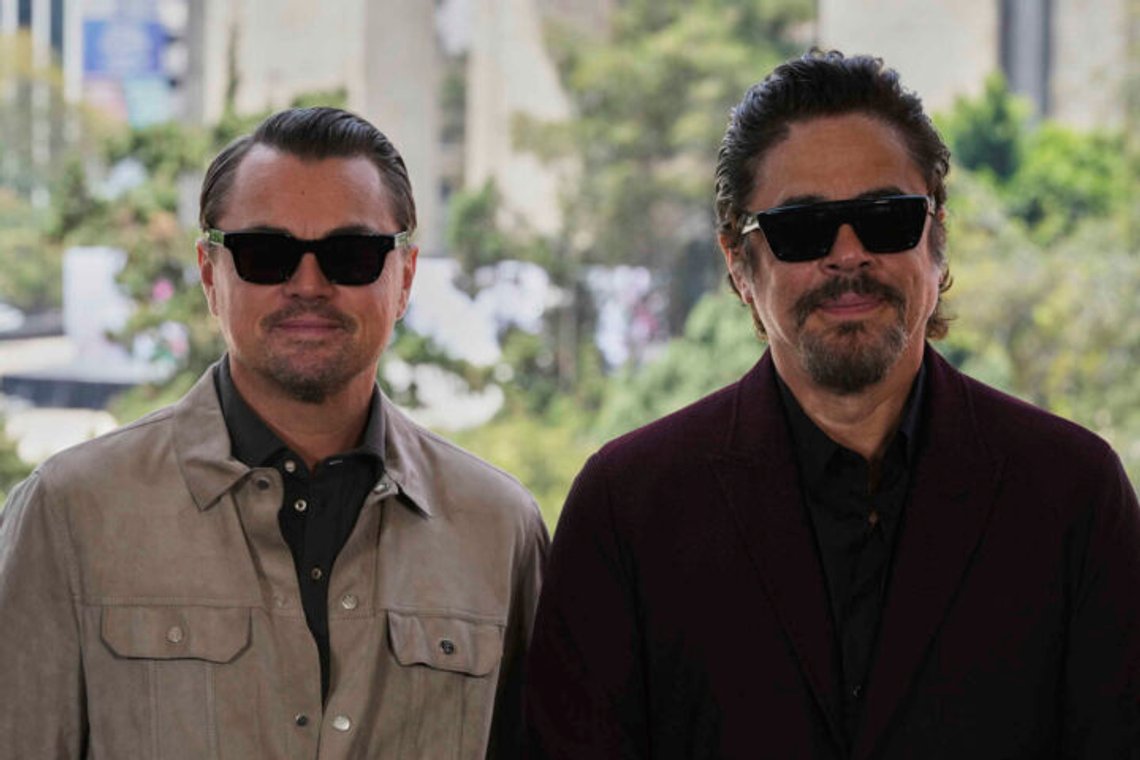
Both DiCaprio, comic relief Benicio Del Toro and Sean Penn appear to be well past their best years, and it is sad to see formerly talented actors involved in something like this. One Battle After Another is supposedly intended as cheeky political satire, but comes across only as pathetic, thoughtless and depressing.
The fact that a film like this is hailed as genius and wins the Oscar for Best Picture merely shows how far an internal decay has progressed in Hollywood. Fortunately, this film convinces few people other than those already trapped within the woke narrative.
More troubling is that the distance between the American left’s fantasies of violence and reality appears to be growing smaller and smaller. When the FBI raided Trump’s home at Mar-a-Lago in 2022 in search of classified documents, the FBI had authorisation to use deadly force. Trump and his family were not at the property when the raid took place, but what might have happened had they been?
Countless demonstrations and actions against ICE agents in the United States have turned violent, without this being condemned or repudiated politically. Instead, there are more calls for “resistance”, and more radical representatives may be elected to the Senate, such as Graham Platner in Maine. This does not signal a peaceful future or less division for the country in the years to come.
There will be more about film on Document
Pure doomsday visions, in the form of various apocalypses, also emerge from Hollywood at regular intervals.
The latest of these is The Dog Stars by none other than Ridley Scott. Here, most of humanity has died from a virus, while most of the survivors have become rabid near-zombies that hunt anything that moves. This has led to total societal collapse, and the few who remain healthy are so desperate for food and other resources that they have formed gangs that kill one another. Only a few manage to live relatively peaceful lives in small places far away from other people.
The Dog Stars premieres in Norway this autumn, and we shall provide a more detailed review of it.


