

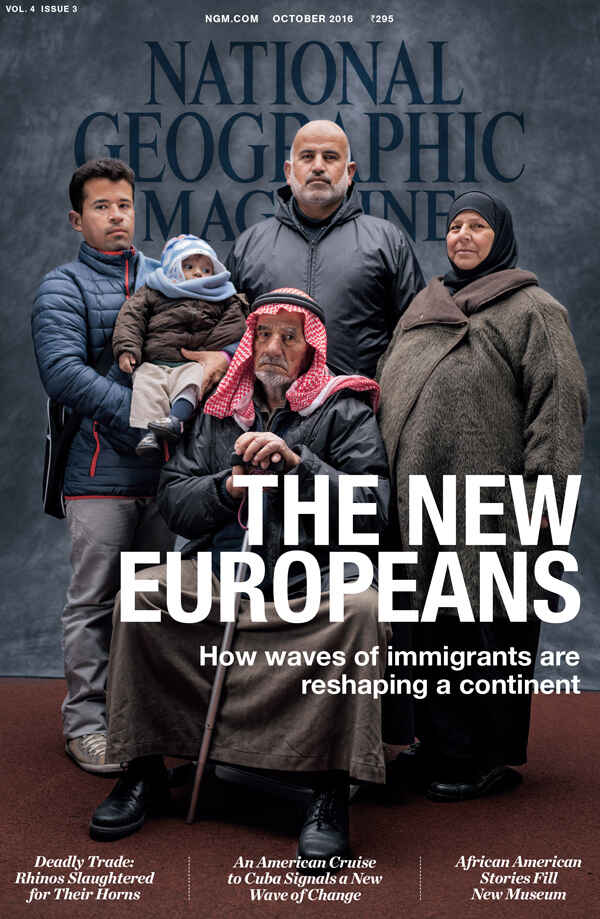
 This issue of National Geographic is from October 2016. It has now been ten years since the migration crisis of 2015.
The European Commission’s Demography Report 2026 paints a bleak picture of the continent: Europe is ageing rapidly, fertility is declining and the working-age population is shrinking. Yet the conclusion is not that a major effort is needed to reverse the native demographic collapse. For the EU, mass immigration from non-European countries is the solution.
The EU’s demographic report, “Demographic transformation in the EU: understanding change and adapting to its consequences“, was published in July 2026. It points out what everyone already knows:
- Birth rates in most EU countries are at record lows.
- An ageing population is placing pressure on pension systems and healthcare.
- A shrinking workforce threatens economic growth.
When Europeans do not have enough children, others are expected to do it for them
While many European voters and national governments are calling for policies that make it easier to have children – housing, tax relief, family-friendly working conditions and security – Brussels appears to prioritise continued high levels of immigration.
The Commission presents immigration from non-EU countries as a practical means of compensating for the decline of the native population. This is nothing new from that quarter. For decades, EU institutions have argued that Europe “needs” migrants in order to sustain the welfare state and the labour market.
Critics such as European Conservative argue that this is a deliberate strategy: by doing so, the European Commission avoids the difficult questions of why European women are having fewer children; it ignores integration problems, crime and the cultural tensions that already characterise many cities; and it assumes that immigrants will fill the same roles and pay the same taxes—something experience in several countries has shown to be far more complicated than that.
#Ceuta
Brussels Builds Continued Immigration Into Europe’s FutureEurostat’s model adds further immigration whenever the working-age population falls, while treating a return to replacement-level fertility as unlikely. https://t.co/thmfavGRKx
— Noway (@Noway499763) July 31, 2026
While Japan, South Korea and large parts of Eastern Europe are attempting to stimulate their own fertility rates, Brussels has largely avoided a serious debate on how to reverse the demographic trend from within. Tax relief for families with children, better housing policy, safer cities and a culture that values family formation are measures that do not receive the same priority as migration agreements and “legal pathways”.
Building Europe’s future on permanently high levels of immigration from culturally distant regions is not neutral demography. It changes the composition of the population, political preferences and cultural identity. Several countries – Italy, Hungary and Denmark – have begun to question this approach. Yet the Commission’s report confirms that the dominant mindset in Brussels remains the same: when Europeans do not have enough children, others are expected to do it for them.
National Geographic applied an American model to Europe:
“The Syrian and other refugees who have streamed into Europe since 2015 have roiled politics and tested tolerance. But they are only the latest in many waves of immigration since the Second World War. Indians in Britain, Algerians in France and Somalis in Sweden are among the immigrants who are reshaping the continent.“ (Robin Hammond, 2016)
“At the core of German politics there is now agreement that the country needs immigrants. Deaths exceed births in Germany by almost 200,000 a year, and that figure is rising. Without immigration, the population would shrink. The Berlin Institute for Population and Development estimates that, in order to maintain a constant working-age population—the people who finance pensions for the growing number of retirees—Germany will require net immigration of around half a million people per year until 2050.” (Robert Kunzig for National Geographic, 2016)


