

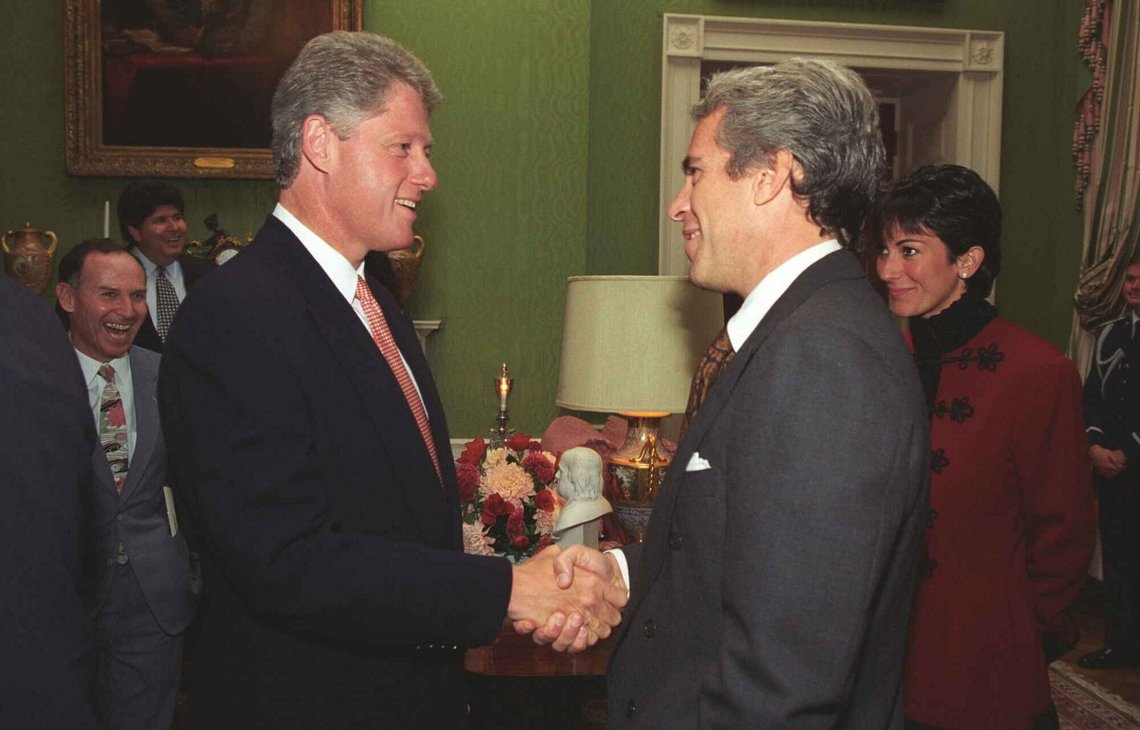
Was Jeffrey Epstein a successful and wealthy businessman and global network-builder who liked young girls and was generous to his close friends?
Or was he an information broker and network facilitator who ran a sex and paedophile ring to compromise his “friends” and extort money and favours from them?
Or was he simply an agent running his operation on behalf of American, Israeli, or other countries’ intelligence services? Conspiracy theories abound. Some are quite plausible.
Was he just a rich man, or a global information broker, or was he outright a spy running a large-scale global honeytrap and kompromat operation? Tinker, Tailor, Soldier, Spy?
The answer matters, because this is clearly far more than mere “friendship services” that “victims” can excuse as showing “poor judgement” and present themselves as repentant sinners.
For several of those involved, this plainly crosses into corruption provisions under the Penal Code, and breaches of security regulations and the Security Act.
This is not primarily a matter for the Office of High Moral Oversight. Mette-Marit’s case concerns her own future and that of the Norwegian royal house. But for the others, this is a matter for Økokrim and the Norwegian Police Security Service (PST).
We don’t yet know precisely what Jeffrey Epstein really was. Only further investigation will uncover the truth. But we do know that the key elements of “kompromat” are present.
These include sex, money, and free services, along with targets who can “pay back” with valuable or sensitive information—or positions that give them leverage over major decision-making processes.
This applies to Jagland, Brende, Rød-Larsen, and Mona Juul, and possibly others who have yet to come under media scrutiny.
We don’t know for certain, but there are rumours in the US that Epstein’s Manhattan townhouse near Central Park was visited by several high-level Norwegians as early as the early 2000s.
Could this have influenced Norway’s purchase of F-35 fighter jets from the US, or the Oil Fund’s massive investments in the United States—totalling more than NOK 11,000 billion?
That’s what I would ask those responsible for major procurements in the Ministry of Defence, and those handling US investments at Norges Bank.
Could it have affected Norwegian Middle East policy, Norway’s negotiating stance in the Oslo process, or the allocation of Norwegian aid to Palestine and other Middle Eastern countries?
I would question Mona Juul, Terje Rød-Larsen, and others in the Ministry of Foreign Affairs about this.
Could Epstein’s use of Jagland as an intermediary to establish contact with Lavrov and Putin have influenced Jagland’s role as Secretary General of the Council of Europe—for instance, his active opposition to expelling Russia from the Council after the 2014 annexation of Crimea?
Yes, that would be one of the obvious questions to put to Jagland.
Did Børge Brende’s close and long-term contact with Epstein lead the World Economic Forum (WEF) to develop a plan to replace the UN with a new, oligarch-driven structure for global governance?
I’d ask Brende directly about that—and whether he personally benefited from any of Epstein’s many favours.
You literally couldn’t make this up! This scandal has explosive potential—far greater than the Treholt affair in 1984!
There are clear violations of anti-corruption laws. There may also have been espionage and breaches of the Security Act.
They all had access to something tradable—information or influence—that could serve as quid pro quo for lavish holidays, stays, cash gifts, favourable loans, or even sex and substantial bequests.
It’s a basic sociological fact that a gift is rarely—if ever—given without an expectation of reciprocity. Gifts bind social relationships. Reciprocity maintains balance, avoids conflict, and sustains the connection over time.
That’s precisely why we have rules—in the foreign service and elsewhere—that significant gifts must be refused, and even modest ones (worth more than NOK 500) must be reported to the employer and declared on tax returns.
Of course, this applies equally to holidays, flights, loans, outright cash gifts, or compromising services that could place the recipient under obligation to repay in kind.
What we know so far is that Mette-Marit, Thorbjørn Jagland, Terje Rød-Larsen and Mona Juul—and likely Børge Brende, and possibly others—have placed themselves in precisely such a compromising position.
Those now in the spotlight are all trying to frame their Epstein connections as mere “poor judgement”—and themselves as repentant sinners. This simply isn’t credible!
No, this isn’t a matter for some Supervisory Board for High Morals. This concerns the very top tier of social democracy, touches on vital national interests, and demands a thorough, in-depth investigation—not just by Økokrim and the Ministry of Foreign Affairs, but also by PST.
And the probe must be conducted and prosecuted by truly independent figures, not by anyone tied to the same elite network now under scrutiny—such as Pål Lønseth (Ap) at Økokrim, who has close links to the Labour Party, or Foreign Minister Espen Barth Eide (Ap), who has now called Mona Juul to account for her Epstein ties. Both Barth Eide and Lønseth appear disqualified from handling this case.
The investigation must be carried out rigorously and without the slightest doubt that the full truth—and nothing but the truth—will emerge.


