

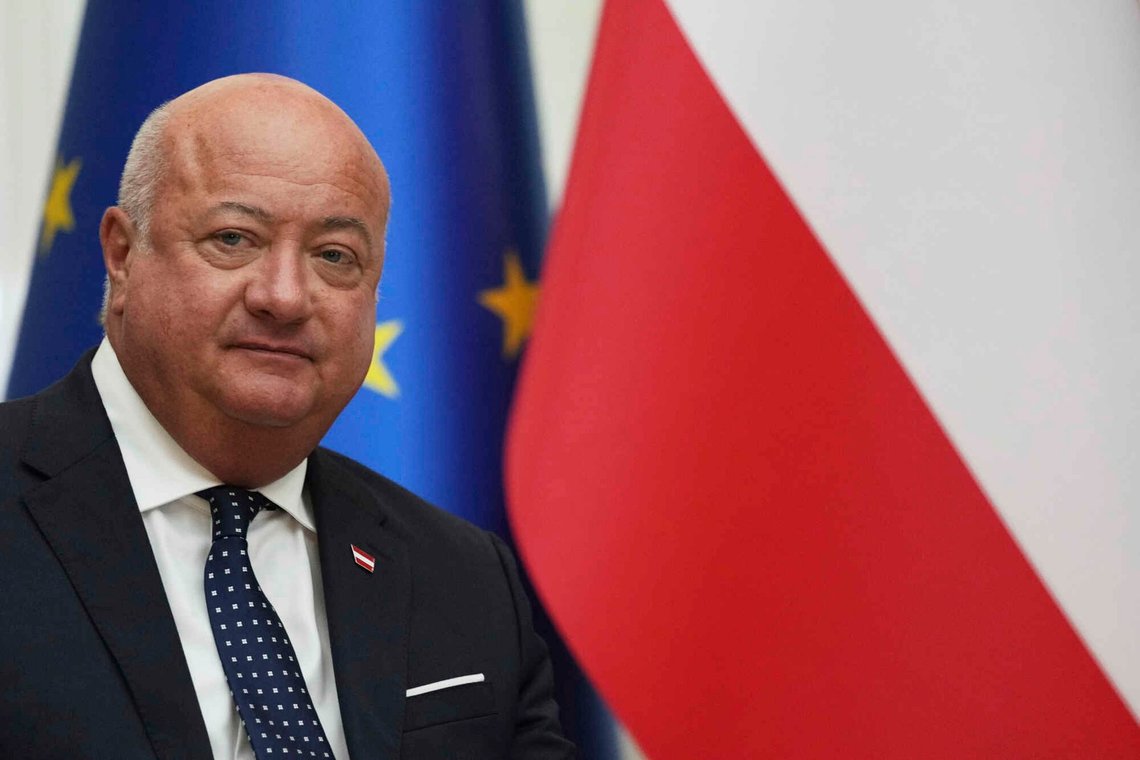


Austria’s Chancellor Christian Stocker has, in several interviews since Friday, called for a ban on political Islam to be enshrined in the country’s constitution.
Stocker’s justification for a ban includes the argument that the political use of religion must be vigorously opposed, as a distinction between believers and non-believers is «out of the question here», and since men and women have equal rights in Austria. He also believes that political Islam is «incompatible with democracy and Western values».
In an interview with the public broadcaster ORF, the Chancellor has also said:
It cannot be the case in this country that morality police also decide in schools what girls should wear or how they should behave.
On Sunday, it emerged that Austria’s Integration Minister Claudia Bauer, who, like Stocker, represents the People’s Party (ÖVP), is already in the process of drafting such a proposal, Der Standard reported the same day.
She wants to design the measure «broadly and comprehensively» – in the same way as with the ban on the hijab for children. The Minister announces that they will «combat political Islam and its organisations in Austria and Europe by all means». She describes it as «the greatest danger of our time» and accuses it of placing itself above the democratic rule of law and seeking to reshape society and the state.
The next step will be to send the proposal to the coalition partners.
Following the 2024 election, the ÖVP, Austria’s old conservative party, ended up in a coalition with the Social Democratic Party (SPÖ) and the liberal Neos, after attempts to reach an agreement with the right-wing populist Freedom Party (FPÖ) had foundered. The disagreement was due in part to the ÖVP’s view that FPÖ leader Herbert Kickl was too «radical».
Neither the Social Democrats nor the liberals reject the idea of a ban on political Islam in principle, but both are nevertheless sceptical. The SPÖ wants a more «comprehensive» approach, in which right-wing extremists are also thrown into the same pot.
The Social Democrats are admittedly «against every form of religious extremism», including Islamist extremism and «caliphate fantasies». At the same time, when it comes to protecting democracy, there must «quite clearly also be a comprehensive debate about right-wing extremist and Identitarian structures». In other words: The subject is not to be limited to political Islam. The SPÖ says that it wants to «look closely at» concrete proposals.
The Freedom Party, for its part, believes that the Chancellor is bluffing.
In terms of substance, the FPÖ ought to be persuadable to support a ban. Politically, however, the party is reacting sharply – and is attempting to portray Stocker’s initiative as the adoption of a demand that the FPÖ has been making for many years. Party leader Herbert Kickl considers the announcement lacking in credibility. He argues that the ÖVP has repeatedly rejected the FPÖ’s proposals for a prohibition law and has even branded them a «criminal law against opinions».
In addition, Stocker’s predecessors as ÖVP leader, Karl Nehammer and Sebastian Kurz, also called for a similar ban, but went no further than talk.
– I do not want our children and grandchildren to grow up in an Islamic state, says Stocker. But time and demographics are not on the side of the anti-Islamist politicians. 41 per cent of primary school pupils in Vienna are Muslims.
In the meantime, the Freedom Party has become by far Austria’s largest party, with around 35 per cent support. But the next election is not until 2029 – the same year as in Germany.


