

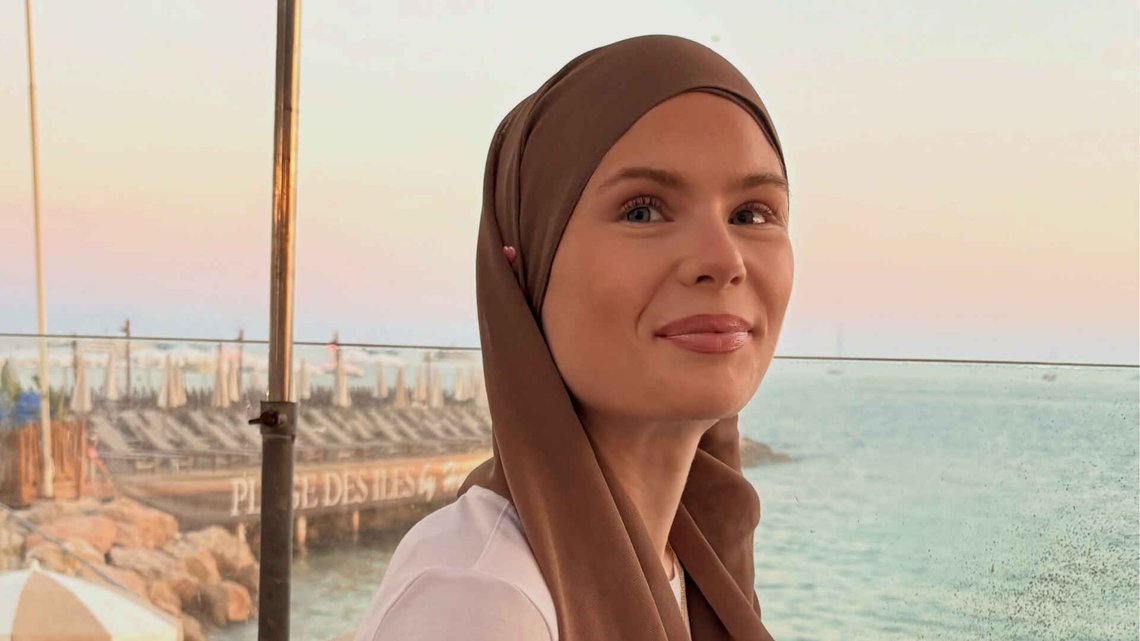
Ingrid Kvalheim was around ten years old when she saw two women wearing hijabs at Strømmen Storsenter shopping centre. At home, she borrowed her sister’s scarf and fashioned her own hijab in front of the mirror.
“I thought it was one of the most beautiful things I had ever seen,” she says.
Today, the 21-year-old from Romerike is a Muslim. She prays five times a day, eats halal food, attends the mosque on Sundays and has worn the hijab permanently for almost a year. She is the only member of her family to have converted.
Kvalheim cannot pinpoint exactly when her interest in Islam began. It had always been there, she tells ABC Nyheter. But the memory from the shopping centre stands out.
“It was probably because it was something different, something I had never seen before. I became fascinated and curious,” she says.
As early as Year 5, she found her sister’s scarf, put it on as a hijab and wore it around the house.
Confided in a friend at the age of 14
At lower secondary school she began reading about Islam. She listened to podcasts and watched documentaries in the evenings.
At around the age of 14, she told a friend that she would one day convert.
“I didn’t know when, but I just put it out there,” she says.
At the same time, questions arose from those around her. Many assumed she would convert because of a man.
“Several people thought my interest in Islam had to be because of a boy. I was afraid people would think the decision wasn’t my own.”
She then put the idea aside. Shortly afterwards, she underwent a traditional Christian confirmation.
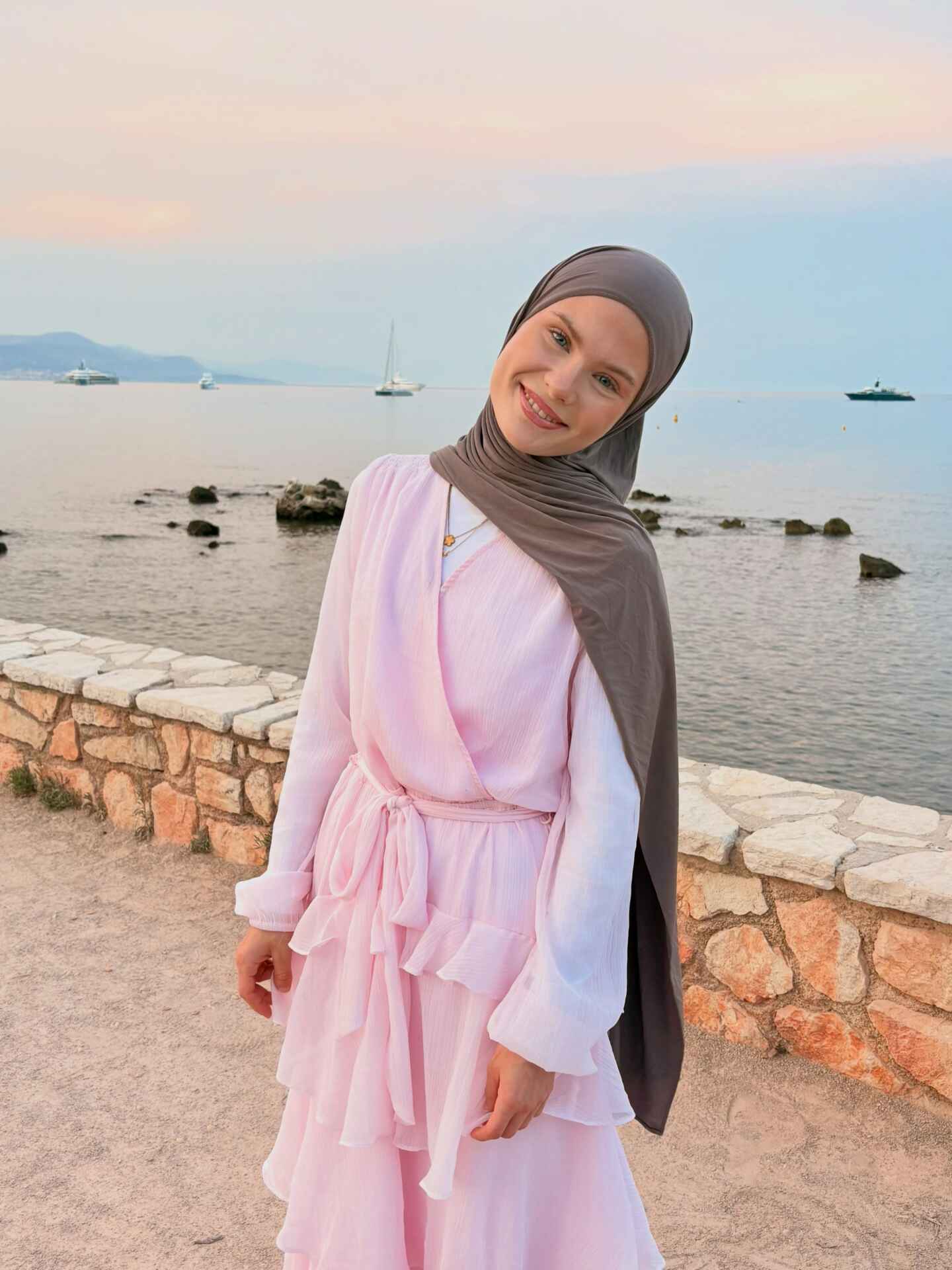 Ingrid Kvalheim happily presents herself wearing a hijab on Instagram. Photo: Instagram
The verse that appeared on her phone
The turning point came in the autumn of 2024. Kvalheim had dropped out of upper secondary school the previous year. Her friends were about to begin university, while she was preparing to work full-time in a shop.
Then a verse from the Qur’an appeared on her phone.
“I hadn’t searched for anything. I hadn’t triggered the algorithm, but then it appeared, and it really struck me,” she says.
She wrote the verse down on a piece of paper and carried it with her. In the car, she began listening to the Qur’an.
“Eventually I had accumulated so much information that I felt I could no longer suppress it.” In September 2024, she converted at the mosque. She was 19 years old.
Her parents were not told in advance. One day she deliberately placed the Qur’an on top of her bag where it was clearly visible when her father came to collect her from work.
“‘Have you become a Muslim now?’ he asked.
‘Yes,’ she replied.
‘It’s like a protective garment’
At first she wore the hijab on some days but not on others. She especially noticed a difference in the way people treated her at work.
“When I didn’t wear the hijab, I felt I was judged a great deal by the way I looked. Now customers thank me for good service and care more about how good I am at my job. I am seen more for who I am as a person. It’s like a protective garment,” she says.
Her everyday life has changed in practical ways. She has stopped drinking alcohol and no longer goes to places where alcohol is served. She avoids everything regarded as haram.
The conversion cost her her circle of friends.
“The job came afterwards, because I cut off all my friends,” she says.
She describes that period as confusing and lonely. She has since resumed contact with several of them.
Researcher: Social media have taken over
Kvalheim barely knew any Muslims when she converted. That is no longer unusual.
Olav Børreson Fossdal, a doctoral research fellow in the Study of Religion at the University of Oslo, researches religious conversion. He describes how the path into Islam has changed.
In the late 1990s and early 2000s, it typically came through marriage – what he calls a “love conversion”. Later, what he terms “friendship conversion” became more common, whereby ethnic Norwegians became acquainted with Islam through friends with a Muslim background.
Today, social media mean that increasing numbers of people convert without previously knowing any Muslims, the researcher says.
No one knows how many this involves. There are no official statistics on conversion to Islam in Norway, and conversion does not require membership of a religious community.
“Some people want me dead”
Kvalheim recently began sharing her story on social media. The reactions have been harsh.
“A lot of people call me a traitor. They say my father must be disappointed in me. Some people want me dead. I’ve also had customers who didn’t want to shop with me because I’m Muslim,” she says.
She believes many people confuse Islam with culture.
“Forced marriage is not Islam. But because there are cultures in Muslim countries where it happens, many people associate it with Islam.”
Today she describes her family as supportive.
“I am incredibly proud to be Norwegian. And I am also a Muslim. That’s something in addition.”


