

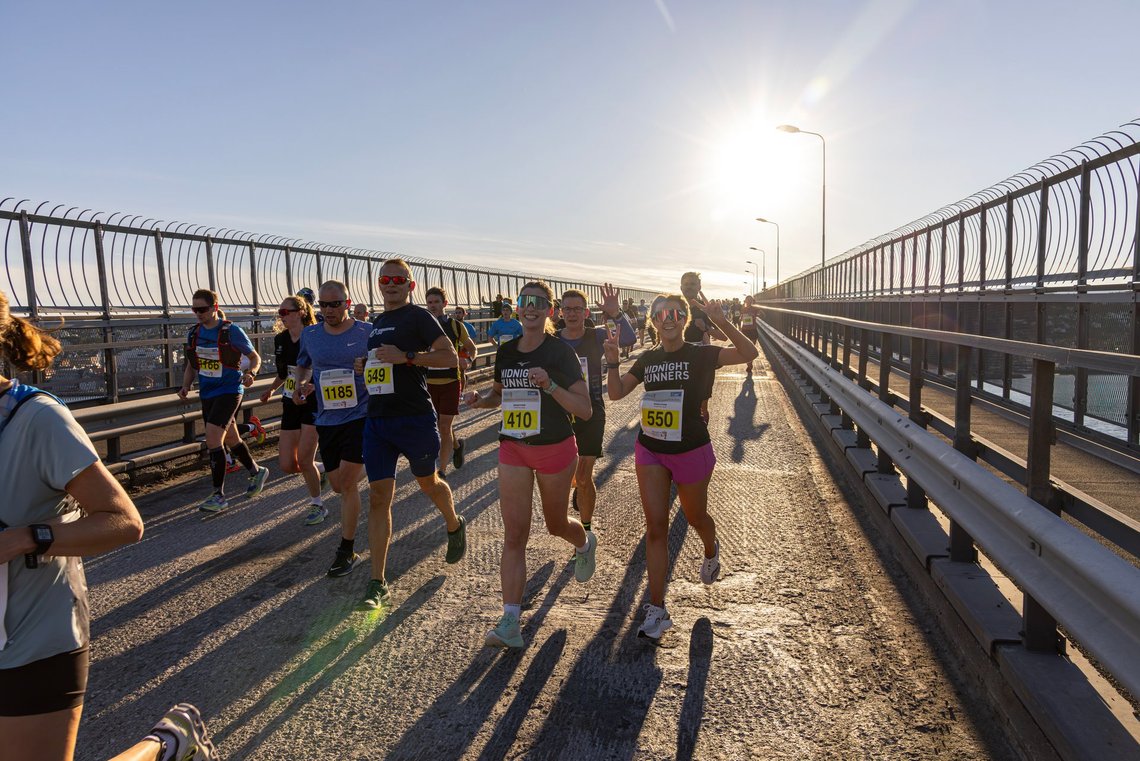
Most marathon runners spend months looking for advantages.
Better shoes. Smarter training plans. Improved nutrition. A flatter course. Cooler temperatures. Anything that might make 42.2 kilometers slightly less punishing.
Then there are the people who travel to Tromsø.
On Saturday, June 20, thousands of runners will gather in northern Norway for the 2026 Tromsø Midnight Sun Marathon. According to race organizers, the marathon begins at 20:30 (8:30 PM), with many participants not crossing the finish line until after midnight.
On paper, that sounds like an unnecessary complication. Most marathon organizers spend years trying to make their events easier to reach, easier to understand and easier to sell.
Tromsø went in the opposite direction.
A runner living in Berlin, London or Amsterdam can choose from dozens of established marathons. Many are closer. Some are faster. Others attract larger elite fields and bigger crowds. Yet every year, runners willingly board planes and head north toward a city where the race starts when most sporting events are already ending.
The attraction has very little to do with finishing times.
The race takes place during the season of the midnight sun, when the sun remains above the horizon throughout the night. The phenomenon is one of northern Norway’s most recognizable natural attractions and forms the foundation of the event’s identity.
That sounds charming until you are several hours into a marathon and your body starts arguing with the sky.
As midnight approaches, runners glance at their watches and do a double take. The numbers insist the day is ending. The horizon disagrees. The light lingers. Shadows remain. The normal signals that tell the body it is time to slow down never quite arrive.
Tromsø has a habit of doing that.
Most runners spend months preparing for distance, hills and fatigue. Few spend much time preparing for the strange moment when time itself starts feeling unreliable. The watch says one thing. The sunlight says another.
Try explaining that to somebody who has never been north of the Arctic Circle.
At some point, the Midnight Sun Marathon became something larger than a race. Participants are not simply purchasing an entry bib. They are signing up for a story that sounds slightly unbelievable when they tell it later.
“I ran a marathon above the Arctic Circle and wore sunglasses at midnight.”
That sentence alone probably explains part of the event’s appeal.
The race has also become an important weekend for Tromsø. Visitors arrive from across Norway and from abroad. Hotels fill. Restaurants become busier. Tour operators welcome travelers who often decide that a race weekend should include a few extra days exploring northern Norway.
For the city, the economic benefits are meaningful. Destination events like the Midnight Sun Marathon generate spending on accommodation, food, transportation and tourism services while also showcasing Tromsø to an international audience.
For many runners, however, the memory has very little to do with hotels, restaurants or tourism statistics.
What they remember is standing on a starting line late in the evening while the sun refuses to leave. They remember crossing bridges, seeing mountains in the distance and looking up at a sky that seems detached from the clock.
Most marathons are defined by distance.
Tromsø is defined by the strange realization that 42.2 kilometers can feel completely different when the sun forgets to set.


