

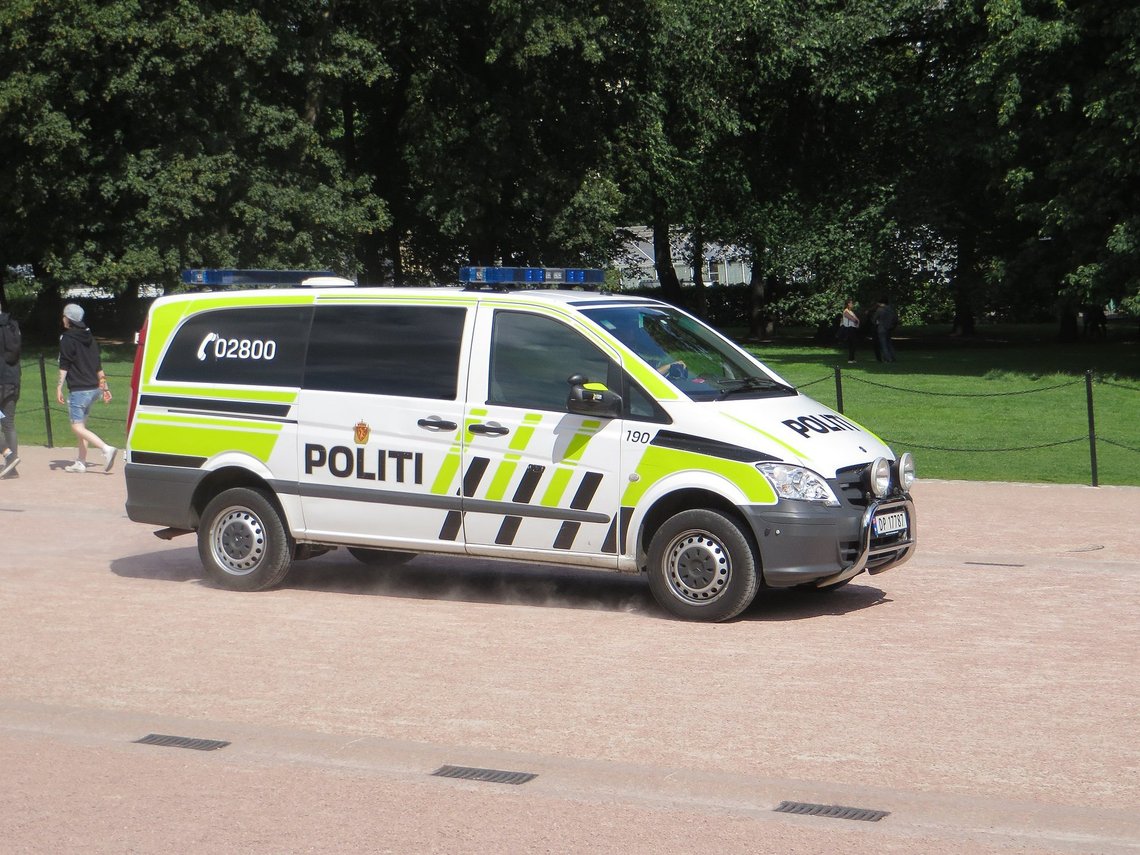


Teachers are being punched, kicked and had their hair pulled, and some schools have had to introduce their own alarm systems to call for help when pupils attack them.
For many years, *Document* has been reporting on developments in Norwegian schools. NRK has also reported on the rising levels of violence, but questions regarding the perpetrators’ backgrounds have all too often been absent from the state broadcaster’s coverage.
Now, however, an NRK report is bringing to light information that should have been the subject of far greater journalistic interest several years ago.
Five headteachers on Askøy in Vestland are sounding the alarm about a trend that is making everyday school life untenable for both teachers and pupils.
At Tveit Primary School, which has around 300 pupils, the headteacher reports 300 incidents involving violence and threats.
At Kleppestø Lower Secondary School, teachers have set up a dedicated chat group to call for help when the situation gets out of control.
There are reports of pupils kicking down classroom doors to attack fellow pupils, and of teachers being pulled so hard by their hair that it is torn out.
Over-represented
The most interesting part of the NRK article, however, comes quite a way down in the text.
Jan Erik Johannessen, a counsellor at Kleppestø Lower Secondary School, talks about young people who do not respect either the school’s or society’s rules.
– In recent years, we have seen that young people from minority backgrounds are over-represented at our school. I believe that, as a school, we are in some cases not clear enough in our communication with families from minority backgrounds,” Johannessen tells NRK.
This does not, of course, mean that all pupils from minority backgrounds are a problem, a point also emphasised by Johannessen and the headteachers.
However, if certain groups of pupils are over-represented, it should go without saying that we investigate why.
It is precisely this kind of information that Document has been calling for for years in the Norwegian media’s coverage of violence in schools.
Document has been warning about this for years
As early as 2018, both NRK and Document the serious violence problems at Rosenborg School in Trondheim.
In August 2025, Document’s Erling Marthinsen referred back to his own coverage of the serious violence problems at Rosenborg School in Trondheim in 2018. Marthinsen explained that, at the time, parents of pupils at the school linked the violence to the school’s role as a reception school for immigrants.
In March 2023, Document published the article ‘NRK is concerned about violence in schools, but does not ask about the causes’.
As recently as April this year, Document highlighted the lack of national statistics on school violence broken down by pupils’ background.
There has been no shortage of opportunities to ask these questions.
The Minister has not seen the figures
NRK is now asking Minister of Education Kari Nessa Nordtun (Labour) whether boys from minority backgrounds are over-represented among pupils with this type of behavioural problem.
– I haven’t seen any figures on that. It may well be the case. I trust that what they are telling us is correct, replies the Minister.
One might then ask how it is possible that Norway’s Minister of Education, after several years of a steady stream of reports on violence in Norwegian schools, has not seen the figures on this.
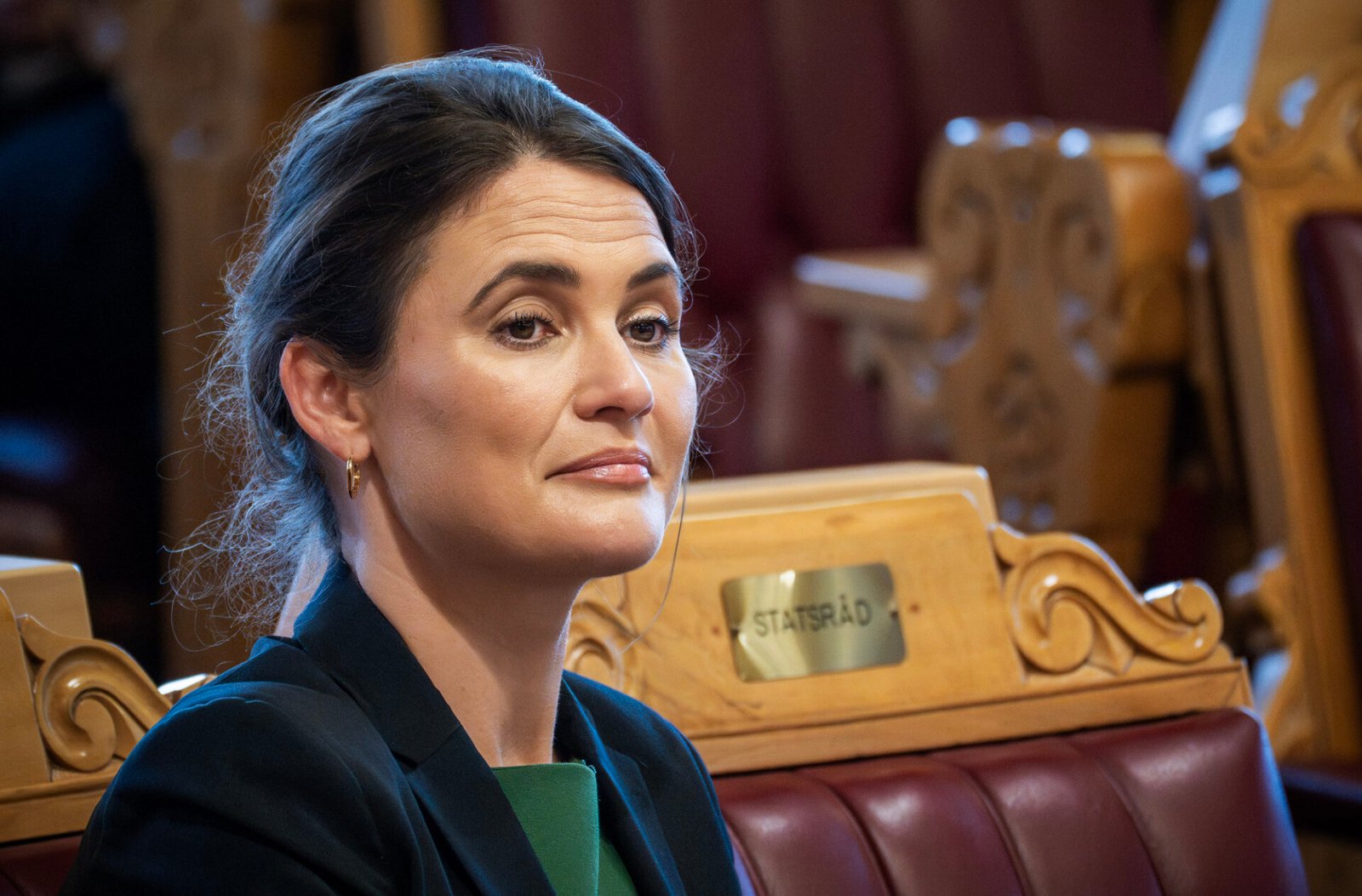
Minister for Education Kari Nessa Nordtun says she has not seen any figures showing that boys from minority backgrounds are over-represented in cases of violence at Norwegian schools.
Photo: Ole Berg-Rusten / NTB
Over the past few days, TV 2 has reported on around 130,000 incident reports concerning violence and threats at Norwegian primary and lower secondary schools.
Around 20,000 of the reports since 2020 have been classified as serious or very serious.
Nevertheless, we still lack answers to very basic questions about who is behind the violence and whether there are systematic differences between different groups of pupils.
NRK’s editors should respond
Over the years, NRK and several other Norwegian media outlets have been adept at telling us how concerned politicians, school leaders and trade union representatives are about these developments.
Far less prominent, however, have been the questions regarding the perpetrators’ backgrounds.
We also know that amongst immigrants in Norway, there is one group that clearly stands out in all statistics on violence – a group that NRK does not wish to mention in negative terms.
NRK is funded by the Norwegian people and therefore has a special responsibility to shed light on developments in society, even when the information may be politically inconvenient.
That responsibility entails more than merely echoing politicians’ concerns when the problems have become so widespread that they can hardly be overlooked.
Have forgotten the sense of community
Headteachers on Askøy report that some disruptive pupils take up so much of the teachers’ time that it is detrimental to the education of all the other pupils.
They also fear that pupils are staying away from school because they do not feel safe.
Headteacher Randi Nordnes Olsen believes that Norwegian schools have been burdened with so many laws safeguarding the interests of the individual that the sense of community has been forgotten.
That is worth noting.
For what has become of the rights of the many thousands of pupils who come to school to learn, and who neither hit, kick nor threaten their teachers and fellow pupils?
And who looks out for the teachers?
Document has been asking uncomfortable questions about developments in Norwegian schools for years. The Progress Party (FrP) has done the same in the Storting.
It is good that NRK is now also giving a platform to an adviser who dares to speak out about over-representation amongst pupils from minority backgrounds. The question is why this has not happened before.


