

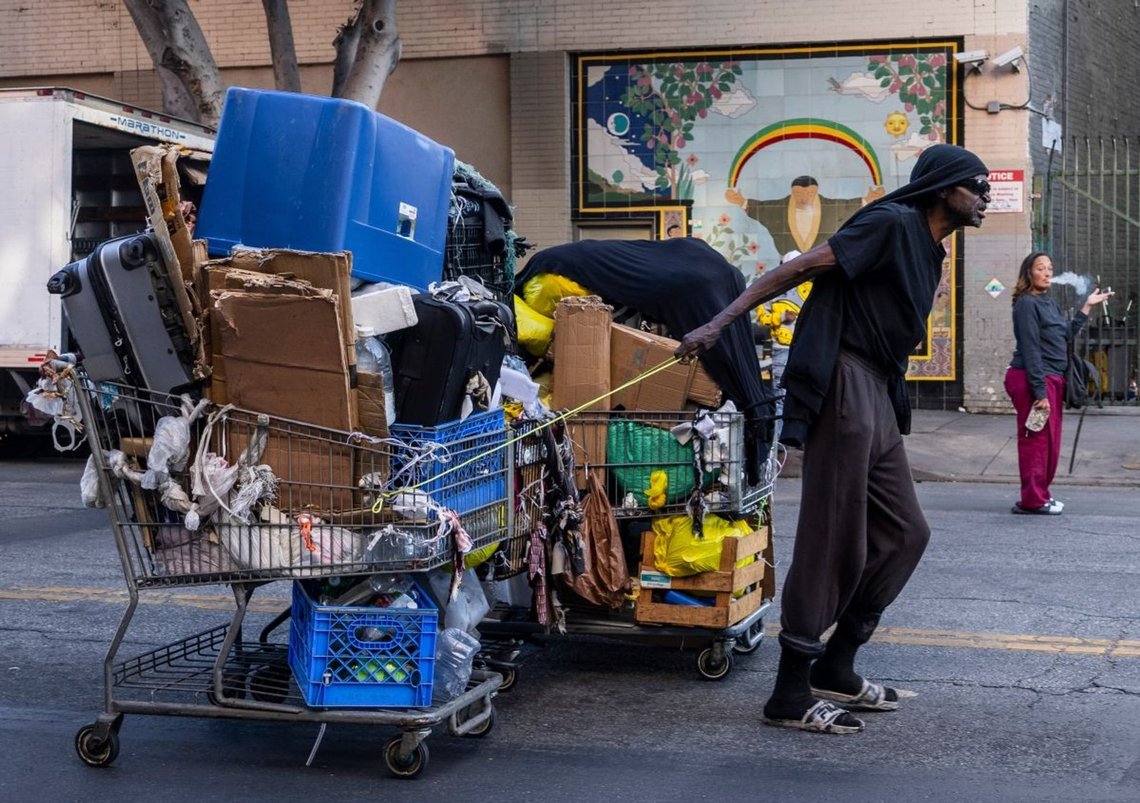


After several years of rising to record highs, homelessness in the US fell by more than six per cent in 2025. This is shown by the annual count of homeless people in American cities and communities.
It is the largest decline in more than ten years, and this is the second year running with a falling number of homeless people. In 2024, the decline was smaller.
Scott Turner, Secretary for Housing and Urban Development, stated in a press release that Trump’s policies have contributed to this historic decline.
– President Trump’s measures to secure the border, remove criminal illegal immigrants from our streets and restore safety to our local communities have led to a historic decline in the number of homeless people.
NPR reports on this development in an article at article published on 7 November, just a few days after the mid-term elections. NPR is considered to be on the far left of the American media landscape, but is among the few media outlets to have reported on the decline.
Changes to immigration policy
The Trump administration points to changes in immigration policy as a key factor behind the decline, according to NPR.
Under the Biden administration, cities including New York, Chicago, Boston and Denver saw a sharp rise in the number of asylum seekers seeking places in homeless shelters.
“It is also these four cities that have accounted for half of the recent decline,” said Devon Kurtz, director of public safety policy at the Cicero Institute, which supports the administration’s policy in this area.
Kurtz also pointed to the decline in cities such as San Francisco, where the authorities are now focusing on providing more drug-free housing options. These are accommodation facilities where the use of drugs and alcohol is not permitted. The Trump administration believes that such requirements can help more people overcome their addiction and wishes to expand these schemes.
The administration also intends to reallocate several billion dollars in homelessness funding towards short-term housing solutions combined with mandatory treatment for substance abuse and mental health conditions. The proposal has so far been blocked by the courts, according to NPR.
The administration believes that the previous federal policy – whereby permanent housing is secured first and voluntary treatment is offered afterwards – has not been sufficient to solve the problem.
NPR refers to an independent analysis commissioned by the National Alliance to End Homelessness, which confirms the decline. The organisation’s director, Ann Oliva, points to publicly funded housing programmes authorised by Congress as a key factor, particularly for veterans. Homelessness amongst veterans fell by over 7 per cent last year, and by almost 60 per cent since 2010.
Nevertheless, nearly 700,000 people are still living on the streets or in shelters in the US, significantly more than before the coronavirus pandemic. Oliva is calling for more permanent housing for the long-term homeless, particularly those with mental health issues or substance abuse problems. This was the only group in which numbers rose slightly last year.
HUD also points to more active efforts to tackle homeless encampments following the Supreme Court’s 2024 ruling that cities may ban overnight stays and encampments in public places. Lower rents in some areas may also have contributed to the decline, according to NPR.
The housing crisis in Democratic states: An analysis of homelessness in the USA


