




France is increasingly being hit by so-called anti-Christian acts. As we prepare for the Christmas season, yet another church has suffered a loss. This time, Father Christmas himself was desecrated. A man has been arrested after stealing and destroying a relic of Saint Nicholas from a historic basilica in France. The theft took place on All Saints’ Eve, 31 October. The relic consisted of a bone fragment measuring one to two centimetres, kept in a small glass case beneath a statue of the saint. The priest reported the theft on 2 November. The police managed to identify the perpetrator using CCTV footage and arrested him at his home.
According to the French newspaper Boulevard Voltaire, the man admitted to smashing the glass encasing the relic, stealing the bone fragment and then burning and crushing it. He is reported to have explained his actions as a spontaneous ‘desire for destruction’ and said that he wanted to ‘combat fetishism’.
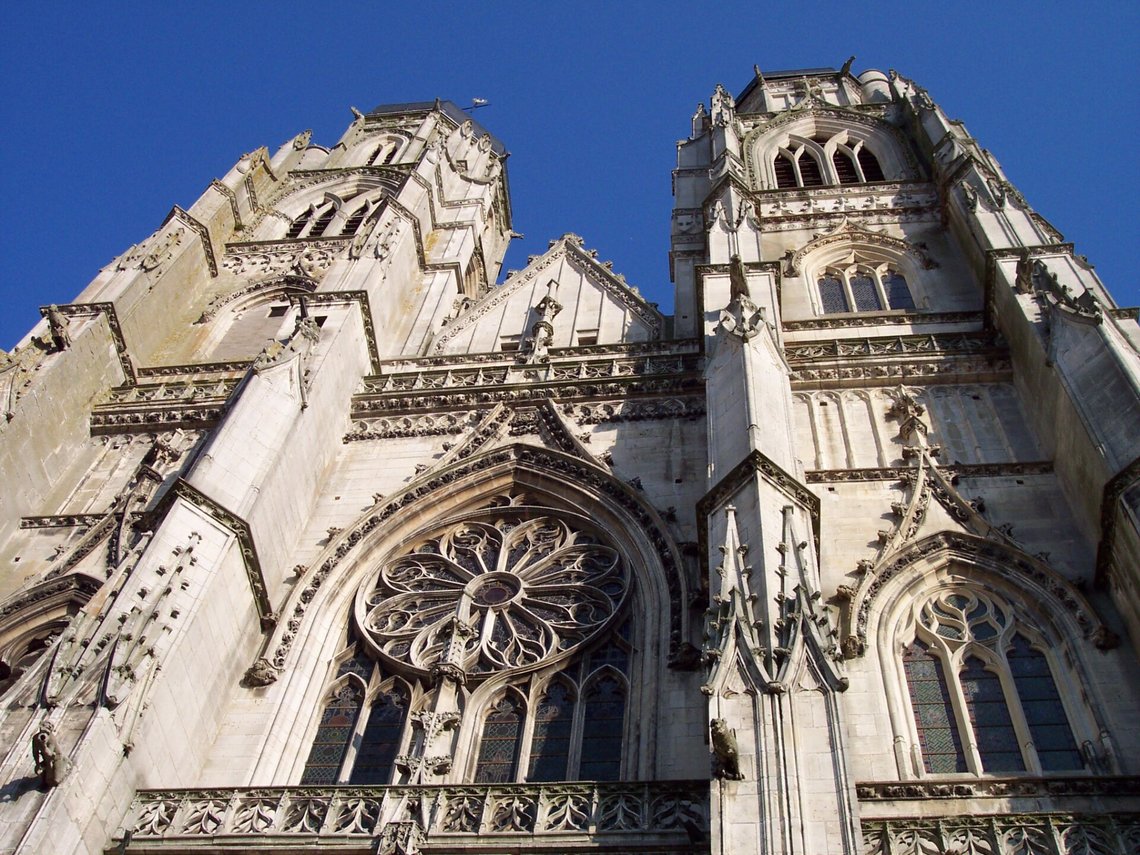
The Basilica of Saint-Nicolas-de-Port in Lorraine, France. A man has been arrested after stealing and destroying a relic of Saint Nicholas, who has been venerated in the area for centuries. Photo: TitTornade / Wikimedia Commons (CC BY-SA 3.0).
Perpetrator’s background unknown
French media have not yet disclosed the man’s name, age, nationality or religious and political affiliations. It is therefore unclear whether the desecration was motivated by Islamist, anti-religious or other ideological beliefs. The man’s own statement indicates that he wished to destroy an object of religious significance, but provides no definitive clarification of his background. The perpetrator is due to appear in court in December.
The Catholic organisation AGRIF has announced that it will take legal action in the case and demand that the anti-Christian nature of the crime be taken into account. The relics of Saint Nicholas have been preserved and venerated in the French town for over 900 years. They have survived the Black Death, the Hundred Years’ War, the French Revolution and two world wars. But modern-day France proved too dangerous.
The origins of Father Christmas
Saint Nicholas was a bishop in Myra, in what is now Turkey, in the 4th century. He is particularly known for his generosity towards the poor and children, and is regarded as the historical origin of the figure of Father Christmas.
In Lorraine, the saint has been venerated for centuries. The Basilica of Saint-Nicolas-de-Port is an important pilgrimage site, where relics attributed to the saint have been kept since the Middle Ages. The damaged bone fragment was one of six relics in the basilica. The most important relics, which are kept in the church’s treasury, were not affected. The parish has expressed deep sorrow at the destruction.
“Beyond the cultural and historical value of the artefact, this is first and foremost a profound attack on our history, our faith and the devotion of generations of pilgrims”, reads a statement from the parish dated 6 November.
The Bishop of Nancy and Toul, Pierre-Yves Michel, calls for prayers for the perpetrator, whom he describes as ‘somewhat disoriented’. In the interview he explains the Church’s attitude towards relics:
Venerating relics is not fetishism. It is an act of faith that connects us to Christ.
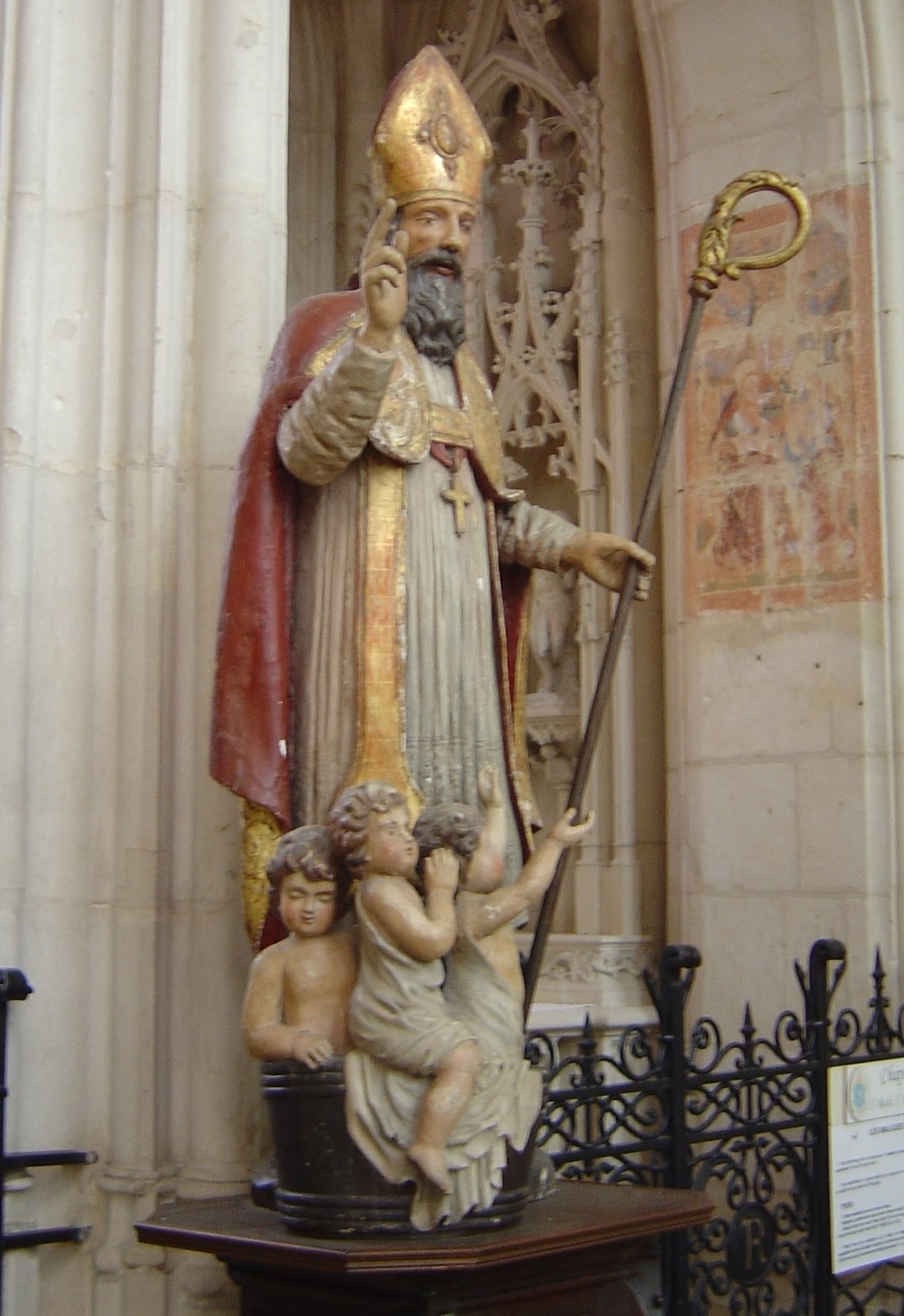
Statue of Saint Nicholas in the Basilica of Saint-Nicolas-de-Port. Photo: Jospe, 2013 / Wikimedia Commons (CC0).
Increasing number of attacks against Christians in France
The desecration comes at a time when the French authorities are recording an increasing number of anti-Christian acts. According to France’s Ministry of the Interior, 843 anti-Christian incidents were recorded in 2025, an increase of nine per cent on the previous year. As many as 87 per cent involved attacks on property, including theft, vandalism, desecration and arson. The number continued to rise in the first half of 2026, with 458 cases recorded compared with 433 in the same period the previous year. The figures are also mentioned in a letter to the French Senate.
The basilica in question has itself been the target of several incidents. In February, two minor fire incidents were recorded in the building. The theft and destruction of the relic is thus the third incident of vandalism or theft this year. It is not known whether the incidents are linked.
Statistics from the French authorities document an increase in anti-Christian acts, but do not establish that these share a common religious or political motive.
French cultural heritage under pressure
The desecration follows several high-profile thefts from French museums and cultural institutions. In October 2025, French crown jewels worth around 88 million euros were stolen from the Louvre in Paris. Other valuable cultural artefacts have also gone missing. Among them are a Celtic gold neck ring from Vix and the bronze binding of Salvador Dalí’s deluxe edition of The Apocalypse of St John, a volume weighing around 210 kilos in total.
The author Laurent Obertone has reacted strongly on X and drawn parallels between these thefts and the desecration of the relic of St Nicholas.
‘A civilisation left to the mercy of looters,’ he wrote.
Whilst several of the art thefts may have been motivated by financial gain, the desecration of the relic of St Nicholas stands out in that the perpetrator himself is said to have expressed a desire to destroy a religious symbol.
The tradition will continue
Despite the desecration, the time-honoured torchlight procession in honour of Saint Nicholas will go ahead as planned on 5 December. The procession dates back to the Middle Ages and attracts thousands of worshippers and visitors every year.
A special penitential mass following the desecration is planned in the basilica on 20 November.


